


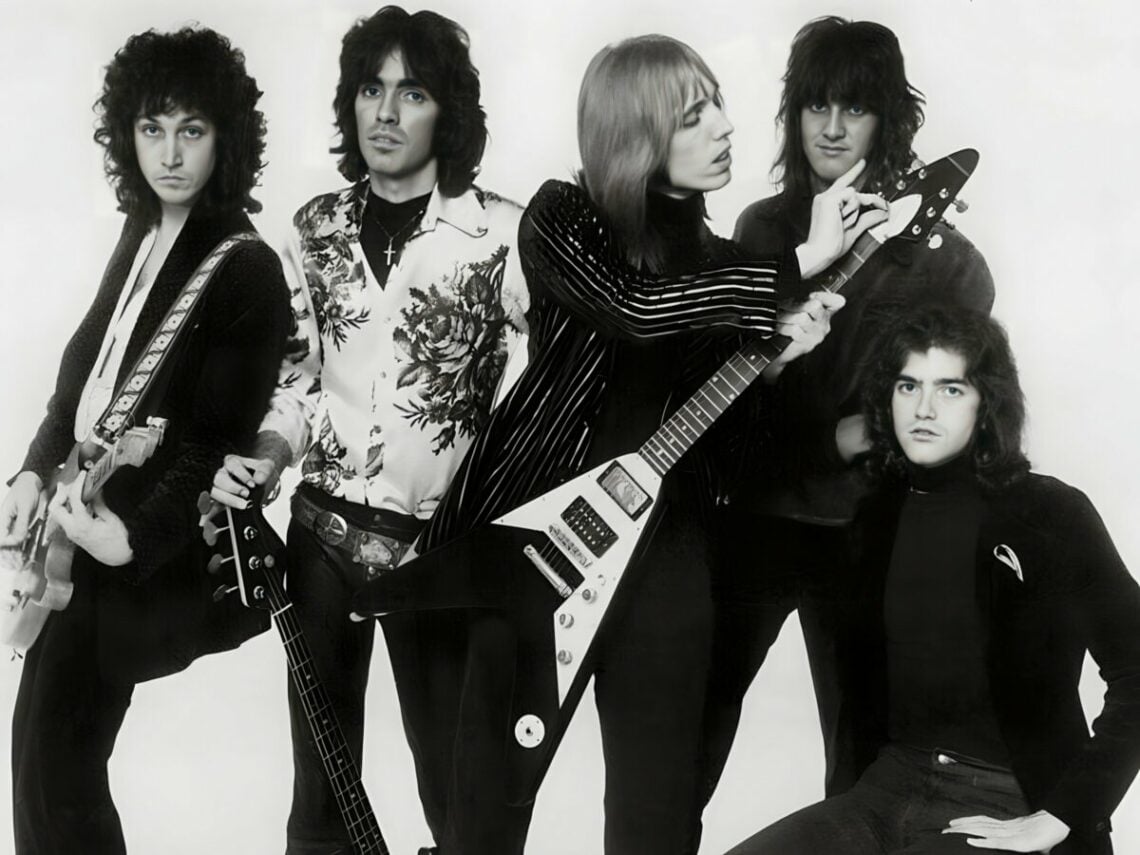
Tom Petty on the Heartbreakers’ tragic “wake-up call”

When Tom Petty left us on October 2nd, 2017, at the premature age of 66, the music world was devastated. It was the final heartbreak in the history of the band that Petty had started way back in 1976, but certainly not the first.
Throughout their long history as a group, The Heartbreakers managed to make it through their hardest times relatively unscathed, and they underwent plenty of personnel changes over the years. Founded in 1976 by three former Mudcrutch members – Tom Petty, Mike Campbell, and Benmont Tench – the original lineup included Ron Blair on Bass and Stan Lynch on drums.
Having played on the group’s first four albums and each subsequent tour, Blair had begun to consider leaving the band and was increasingly unavailable for live dates due to burnout. The group tried out several replacements for Blair, including legendary Stax bass player Donald ‘Duck’ Dunn, before landing their new full-time bass player, Howie Epstein. Petty first spotted Epstein while producing an album for Del Shannon, the rock and roll idol most famous for his 1961 hit Runaway.
In addition to his playing, Epstein’s backing vocals immediately became an integral part of the band’s sound from the very first album he played on, 1982’s Long After Dark. The group continued to scale new heights, and in 1985, they backed Bob Dylan at the inaugural Farm Aid festival.
Dylan was so impressed with the Heartbreakers at Farm Aid that he recruited the southern rockers to be his backing band for two world tours over the next two years. Injecting Dylan’s music with a new lease of life, they embarked on his most fun, energetic and engaging tours in years.
By the time the band shared a stage with Dylan on August 9th and 10th in 2003, however, Howie Epstein had recently died, and Ron Blair was back on the bass. In the intervening 16 years, The Heartbreakers split up, reformed, and released their top-ten-selling album, Echo. Whilst the band was reclaiming their place near the top of the charts, Epstein was struggling with personal problems and drug issues – something that each of the band had plenty of personal experience with over the course of their careers.
“I’ve lived life pretty hard. I took an adult portion of life and squeezed it into a very short amount of time when I was younger”, Petty told Rolling Stone in 2006. “We lived hard, we didn’t sleep much, we travelled all the time. In this job, you don’t realise that you’re getting older.”
Having had to quit the reformed band to try and get to grips with his problems, Epstein died on February 23rd, 2003, from complications related to his drug use. He was only 47. Following Epstein’s death, Petty wrote in Rolling Stone that “there’s a great sadness, because Howie was never not a Heartbreaker. He just got to where he couldn’t do it anymore. It’s like you got a tree dying in the backyard. And you’re kind of used to the idea that it’s dying. But you look out there one day and they cut it down. And you just can’t imagine that beautiful tree isn’t there anymore.”
When he was asked again about his former bandmate in the 2006 interview, Petty described Epstein’s death as “a big wake-up call”, considering the years of hard living that he had done himself and recalling his own struggles with addiction. That wake-up call, at least, allowed Petty to hold his own issues at bay long enough to run a few final victory laps with both the reformed Mudcrutch and the surviving Heartbreakers.
