


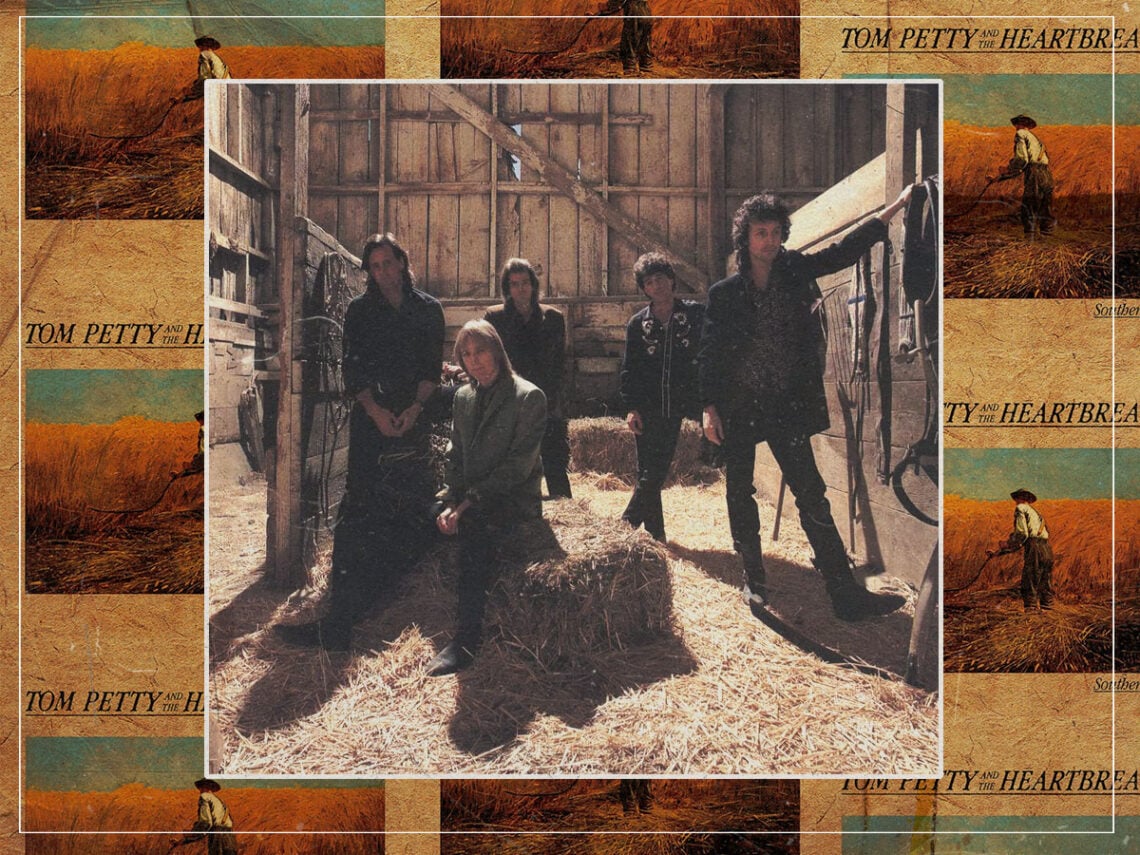
Tom Petty – ‘Southern Accents’

Every piece of Tom Petty‘s music has always been about finding one’s place in the world. Throughout his time in the spotlight, the characters that populate songs like ‘Refugee’ and ‘Breakdown’ all have their backs against the wall, looking for some way to fight against their oppressors to pave the way for something better on the horizon. While Petty may have got the one-up on his higher-ups during the making of classic albums like Damn the Torpedoes, Southern Accents finds him just as lost as he used to be.
When recording the project, Petty’s vision of making a double album that would tell the tale of the American south ultimately fell through, leading to him narrowing everything down into a great single album. Even though Petty may have been disappointed that his idea never saw the light of day, what’s left of it remains some of his career’s most incredible heights.
Opening up with the glorious sounds of chiming guitars, ‘Rebels’ sets the scene for what the aborted concept album would have been, as Petty sings about a man too much of a mess to realise that his dreams of being a rebel are over. While the song may have been constructed piecemeal from different takes, the whole thing sounds seamless, as the smattering of horns gives the track a more refined touch.
Outside of working with his longtime producer, Jimmy Iovine, Petty’s collaboration with Dave Stewart of Eurythmics is evident from the first handful of tracks. While a song like ‘It Ain’t Nothin’ To Me’ fits in lyrically with what Petty is going for, the looping atmosphere indicates Stewart’s synthesised beginnings, based around different loops rather than a central catchy hook.
While Stewart may not be the best fit for every song, the track ‘Don’t Come Around Here No More’ remains one of the most mystifying pieces in Petty’s catalogue. Featuring a dominating sitar, the entire track feels like a trip into Wonderland, culminating in the drums risking in the second half against Mike Campbell’s searing guitar.
Beyond Petty’s songs, the greatest strength of the album comes from the input of Benmont Tench and Campbell’s way of steering the work. Instead of the customary lead breaks, their way of breaking up the sections of tracks like ‘Dogs on the Run’ with simple riffs says more with a few notes than most guitar heroes do with 100 of them.
The instrumentation is only in service to a good song, though, and the best parts of the album make way for Petty’s most revealing works. Although there are a handful of tracks where Petty inhabits a character like ‘Spike’ and ‘Mary’s New Car’, the title track may be one of the most emotionally gripping pieces of the heartland rock genre.
Painting the picture of his youth and seeing faint glimpses of his dead mother when he was dreaming is enough to make any emotionless listener well up a little bit, especially set against the simple melody. With just a few strokes, Petty created a Southern rock answer to standards like ‘Let It Be’ or ‘Bridge Over Troubled Water’.
Since the album does have a few clunky tracks like ‘Make It Better (Forget About Me)’, it does make you wonder what could have been. As much as the project has shining moments, one can’t help but wonder what it would have sounded like had Petty worked with the demos, one of which would become the Don Henley smash single, ‘The Boys of Summer’.
All we’re left with is the album in front of us, though, and it’s still one of the best risks Petty ever made. Even though some songs seem pedestrian compared, sometimes it takes those very entries to appreciate a track like ‘The Best of Everything’. There may be a handful of 1980s clichés in the production and sonic costumes that don’t suit Petty the best, but with time, this is the kind of album that deserves to join records like Damn the Torpedoes and Full Moon Fever as one of the greatest sonic adventures of his Petty’s storied career.
