


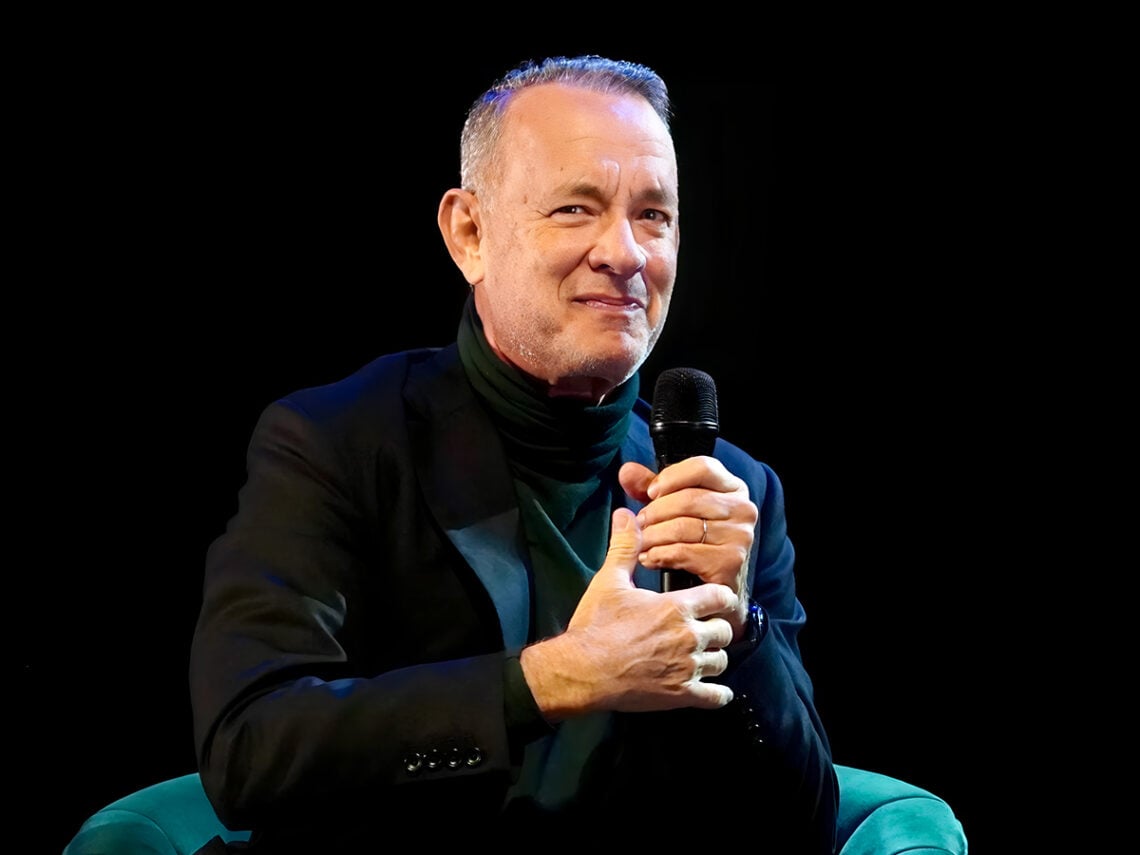
Tom Hanks’ favourite Tom Hanks performance: “I don’t know who that guy is”

Early in his career, Tom Hanks had an issue with typecasting. He was a charming, boyish, goofy screen presence who fit perfectly into light comedies, but casting directors seemed to feel that there was no way he would be able to convincingly pull off a dramatic role. His breakthrough appearances in 1984’s mermaid caper Splash and 1985’s CIA slapstick comedy The Man with One Red Shoe weren’t great films, but thanks to his undeniable likeability, they became his calling card. Unfortunately, they also became a self-fulfilling prophecy.
When Hanks tried to branch out, the results were, at least at first, disastrous. Brian De Palma’s 1990 adaptation of Tom Wolfe’s best-selling novel The Bonfire of the Vanities was so poorly received that it put the careers of nearly everyone involved – including Bruce Willis and Melanie Griffith – on hold. Luckily, Hanks clawed himself out of an early professional grave by reteaming with Big director Penny Marshall for the shamelessly sentimental period baseball comedy A League of Their Own two years later.
Reflecting on his career path during this period during an interview with The Los Angeles Times, Hanks struck a tragically self-aware and almost pathologically objective tone. “I think I have a pretty good handle on myself as an entity, in regard to commerce,” he said. “My strength is I’m funny. I naturally make people laugh, although not necessarily out loud.”
Even with that self-awareness, however, the actor felt that he had more to offer acting-wise. Sure, his fate was sealed when he played an overgrown child in Big, but he had immediately tried to avoid typecasting by splitting the difference with a character who was an acerbic stand-up comic in David Seltzer’s Punchline. Hanks even felt that his work on the film was his best yet.
“It was the first time I saw myself in a movie and thought, ‘I don’t know who that guy is,’” he said.
Hanks stars in the film as a chronically underprepared and unenthusiastic medical student who spends his evenings bringing down the house at comedy clubs. Sally Field plays the housewife yearning for comedy stardom, who he takes under his wing. It’s a benign, occasionally funny comedy, and Hanks pulls off his Jerry Seinfeld impression rather well. He even prepared for the role by actually performing stand-up routines at comedy clubs, remembering later that it was absolutely terrifying and often unsuccessful with audiences.
More importantly, however, he showed the kind of pathos that he would later demonstrate in countless other films. The actor could do broad comedy in movies like Money Pit and The ‘Burbs, but as he later demonstrated in everything from Sleepless in Seattle to Saving Private Ryan, that innate persona of decency and likeability could be channelled into more serious emotions.
Some of Hanks’s earliest films have inexplicably become popular in recent years, including Splash and Turner and Hooch, but for an early glimpse into the potential he was carrying around all the way back in the ‘80s, Punchline is a much better calling card for the actor, and one that he can still be proud of all these decades and Oscars later.
