


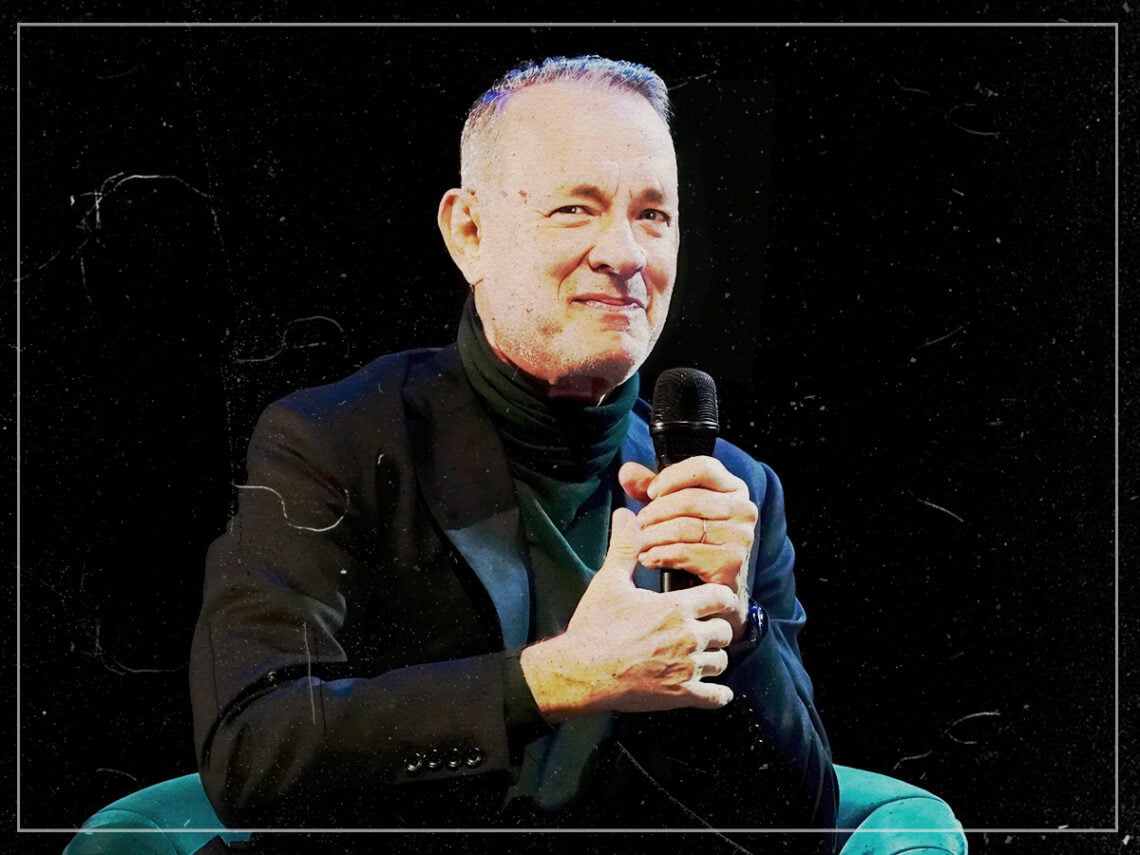
Equine respect: Tom Hanks on the director who “treats actors like horses”

Any prospective actor getting in front of the camera for the first time could only ever dream of having a tiny portion of the true feast that Tom Hanks has enjoyed throughout his performative career. Having written himself in the very history of American cinema, Hanks remains one of its most significant names,
His accomplishments in Hollywood reach far and wide. Hanks has carved out a niche for himself as a sort of “America’s uncle” figure with a series of acting efforts mostly of benevolent characters, including in pictures like Forrest Gump, Saving Private Ryan and The Green Mile.
Now, naturally, as one of the most famous modern actors of all time, Hanks has been afforded the opportunity to work with some of the greatest directors of all time, including Steven Spielberg, on five occasions, plus Ron Howard and Robert Zemeckis. Hanks also had the good fortune of working with the legendary Clint Eastwood, with whom the actor once made a strange comment about his directing style.
“He treats actors like horses,” Hanks once noted before pointing out the way that many other directors want to command their cast and crew on set with a little more vigour, “In other movies, they make a big deal about ‘action’. ‘Rolling, we are rolling, people. And everybody stand by. AND ACTION!'”
However, that’s precisely where Eastwood differs from his contemporaries, preferring a subtler approach and one that is certainly kinder on the ears of his cast and crew. Hanks explained, “Clint goes like this [spins finger around], and everybody else goes like this [spins finger around]. He says, ‘Okay, go ahead’. And then you do it. And maybe he’ll say, ‘Just take that again. Just do it one more time.’ And then you do it, and he says, ‘All right, that’s enough of that.'”
If one wonders where such a method came from for Eastwood because Hanks certainly did, then it’s understandable. Still, it actually goes right back to the beginning of Eastwood’s career when he was working on the western television show with actual horses. “He said when he was doing Rawhide, he had all these old movie directors who just loved the megaphones, and that whole build-up to ‘action’ would make the horses [freak out],” Hanks noted. “So one day he said in his inalienable way, ‘Is there any way that you could just tell us to go?'”
Eastwood certainly has a fearsome reputation within Hollywood and was known for playing rugged antiheroes with gravelly voices in his prime acting days. However, his directing style, as revealed by Hanks, shows a man with a softer side and an innate kindness to his co-workers. “What’s it like working with Clint?” Hanks signed off. “He treats us like horses.”
The director, who marks one of the rare instances where a figure has had as great a directing career as their acting one, had once admitted that every actor ought to try directing one time to gain a level of understanding about the profession. It was essential in order to come to better terms with the kinds of pressures that directors are under.
“I actually think every actor should direct at some point to learn the hurdles and the obstacles the director faces and the concentration it takes–a concentration equal to that of the actor, just in a different way,” he once said. “When the director wanted another take for reasons other than performance, I didn’t bog down and say, ‘Come on, what do you need that for?'”
Watch the full interview below.

Never Miss A Tale
The Far Out Clint Eastwood Newsletter
All the latest stories about Clint Eastwood from the independent voice of culture.
Straight to your inbox.