


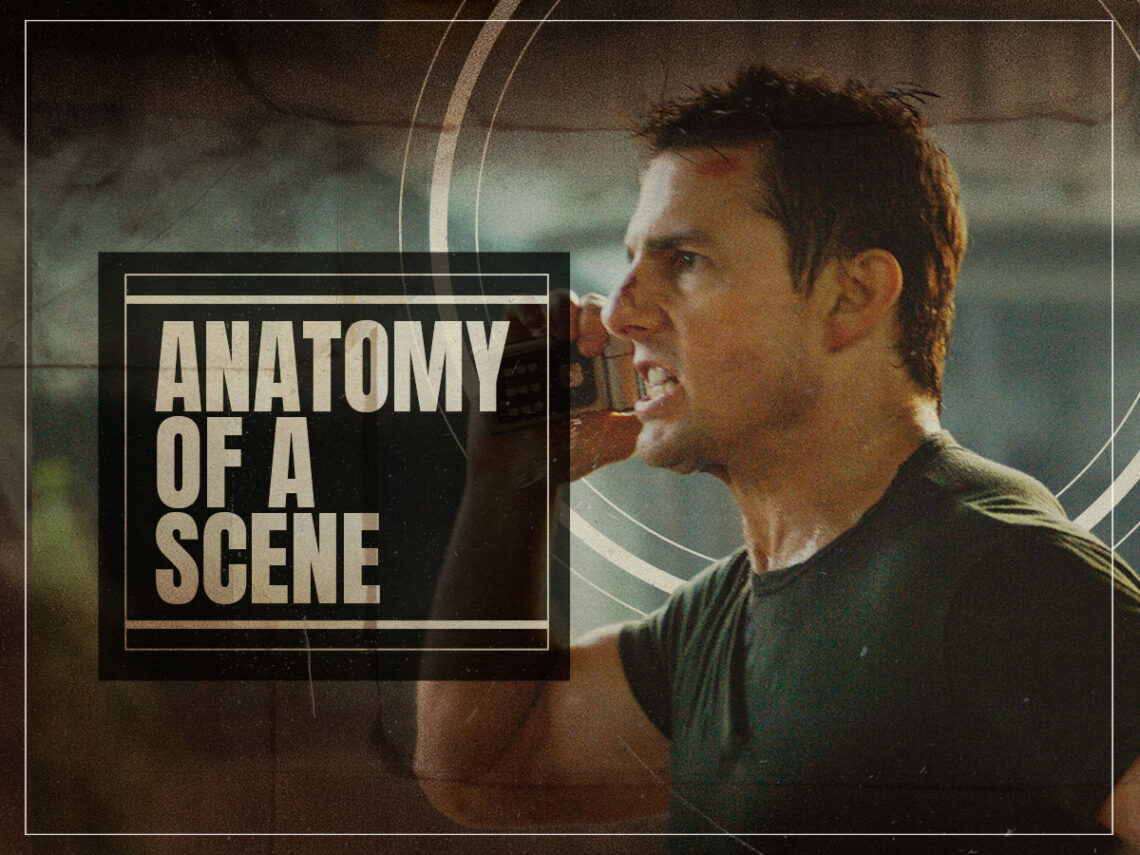
Anatomy of a Scene: Tom Cruise sprints all the way to self-parody in ‘Mission: Impossible III’

Will Tom Cruise even bother to read a script that doesn’t feature at least one scene that features him running? If the answer is yes, then it’s probably because the material is very strong, and he’ll find a way to write one into the screenplay anyway.
He’s in on the joke to a certain extent, not least of all because his Instagram bio proudly proclaims that he’s been “running in movies since 1981”, but the lasting legacy of Mission: Impossible III cutting him loose to bound through a Chinese fishing village appears to have gone completely over his head.
Cruise has underrated comic chops and knows exactly when and where to drop a one-liner, but he also comes across as somebody who takes themselves very seriously. When he signs on for a production, it usually doesn’t matter who the director is because there will only ever be one person in charge, and it isn’t always the guy wielding the megaphone.
JJ Abrams’ directorial debut is the most notable example, seeing as he only got the job because Cruise was a massive fan of Alias. Before taking the reins on the blockbuster espionage sequel, the creator of Jennifer Garner’s spy romp had directed precisely four episodes of television, and yet, here he was being handed the reins on a $150 million sequel that previously had David Fincher on board.
It might have been the production team’s idea to use Shanghai as a shooting location, but was it an extended sequence that lasted for over three minutes and existed for the sole purpose of showing off how fast Cruise could run and how long he could run for really Abrams’ idea? Did it really hail from the mind of co-writers Robert Orci and Alex Kurtzman? Was it a call made by the leading man’s longtime producing partner, Paula Wagner?
Of course not. It was Cruise, and it was the exact moment he burst through the barrier of self-parody. He was still reeling from his bizarre couch-jumping escapades on Oprah and his public feud with Brooke Shields, in which he denigrated psychiatry and celebrated Scientology in a double-pronged bout of bad press, so he needed a win to remind audiences that he was an A-list megastar and not just an odd little fellow.
For the most part, Mission: Impossible III accomplished that and benefits immensely from Philip Seymour Hoffman’s delicious turn as the franchise-best villain, Owen Davian. Every single one of these movies needs to end with Cruise saving the day and the world, but the third instalment’s high-speed sprint through a crowded market can be pinpointed as the exact moment Cruise transcended the barrier between a movie star to become a persona.
Why was that specific location in Shanghai chosen? Because it had the most room for Cruise to run in. Why was a specialised rig adopted by the camera crew that could track everything in one unbroken take? Because it showed off how fast he could run and that he could do it for an extended period of time without having to take a breather. What, in the grand scheme of Mission: Impossible III, does it actually accomplish? Other than reminding people that he can really, really fast, not a great deal.
Tom Cruise wants to run; he wants everyone to know he can run, and he won’t rest until the world finds out how fast and long he can run. It’s a weird fetish that sneaks into virtually every movie he makes, but Mission: Impossible III wasn’t just the tipping point; it became the definitive example of his favoured onscreen pursuit.
