


How ‘Titanic’ nearly killed a cult horror classic

As the brains behind the Resident Evil franchise, Mortal Kombat and Alien Vs Predator, Paul W.S Anderson is no stranger to blockbusters. There was a time, however, when he was still relatively uninitiated to the ways of Hollywood. Like all young directors, he needed to find his feet and learn from bad experiences. One such learning curve came during production of the 1997 cult horror classic Event Horizon, which was very nearly sunk by James Cameron’s box office smash hit Titanic.
By the time he started work on Event Horizon, Paul W.S Anderson was riding high on the success of his 1995 film Mortal Kombat, which grossed over $122 million worldwide. His next move was to start work on a film that blended gothic horror with sci-fi. He ended up with a script about a spacecraft called Event Horizon, which suddenly reappears above Neptune after being lost for seven years. When a rescue team go to investigate, they discover the ship is home to a demonic entity born from a rip in the fabric of spacetime. It’s perhaps for this reason the film is so often referred to as a space-bound version of The Shining.
In many ways, Event Horizon was the perfect project for Anderson and his team. His cinematographer, Adrien Biddle, had just finished work on Alien, which also features a creature-infested spacecraft, and Anderson was able to indulge his interest in medieval and renaissance art – taking inspiration from painters like Hieronymus Bosch to create the hellish landscape of the film.
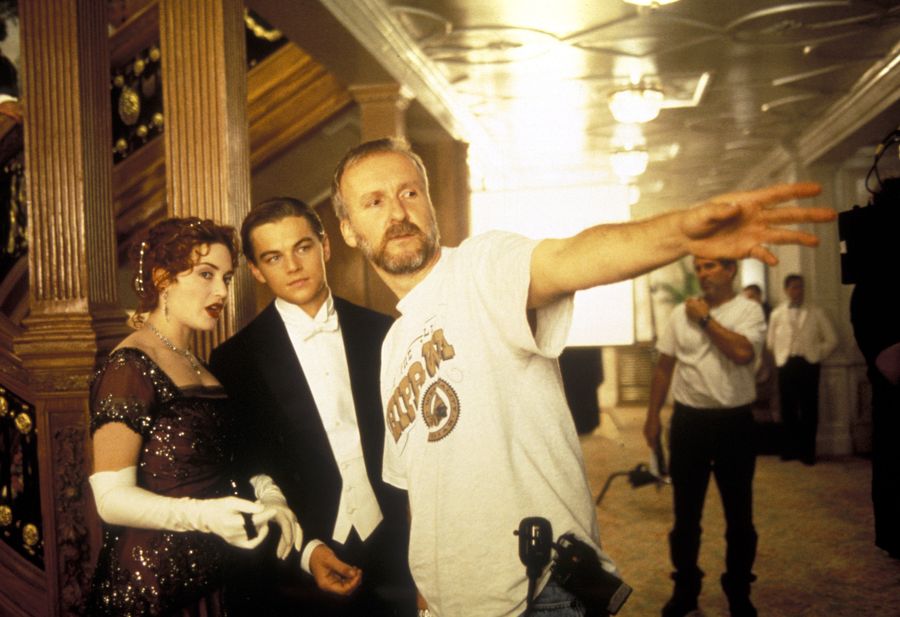
The USS Event Horizon got off to a good start, but it quickly became apparent that another even bulkier ship was looming out of the fog: HMS Titanic. Anderson’s film was originally supposed to be released in the autumn, but when Paramount pictures – which was co-financing Cameron’s project – changed the release schedule last minute, he found his film had been pushed back to the summer season. The director would claim that this was the reason Event Horizon did so poorly at the box office: “For a movie like Event Horizon, I think Halloween would have been more appropriate,” he told NME. “[It’s a] scary movie. It’s definitely not a summer movie.”
According to Anderson, James Cameron was partly to blame. “Originally, Titanic was supposed to be a summer movie, a big summer movie,” he recalled, “And then Cameron told them (Paramount Pictures and Universal Pictures), that they weren’t getting it until Christmas. Suddenly, Paramount had an open summer slot.” Paramount’s willingness to release Event Horizon at such an unsuitable time illustrates just how little involvement they had with the project.
According to Anderson, the first time they really understood what kind of film Event Horizon was when they were sat watching it at the test screening. “When the studio saw his 130-minute rough cut, they were not happy,” he remembered. “I [quickly] discovered the people at Paramount hadn’t really been paying attention to what we were shooting, because at the test screening they saw all the Visions of Hell, which I’d never had a single [studio exec] note about, but now they were horrified by it and hadn’t realised how dark and unpleasant the movie was.”
Although Event Horizon was dismissed as little more than an Alien knock-off on release, it wasn’t a total flop. So many years later, many regard the 1997 film as a classic example of ’90s sci-fi horror. Indeed, it’s certainly one of the goriest and most nightmarish blockbusters of the era. Who knows, maybe if production on Titanic hadn’t overrun, things would be different.
