


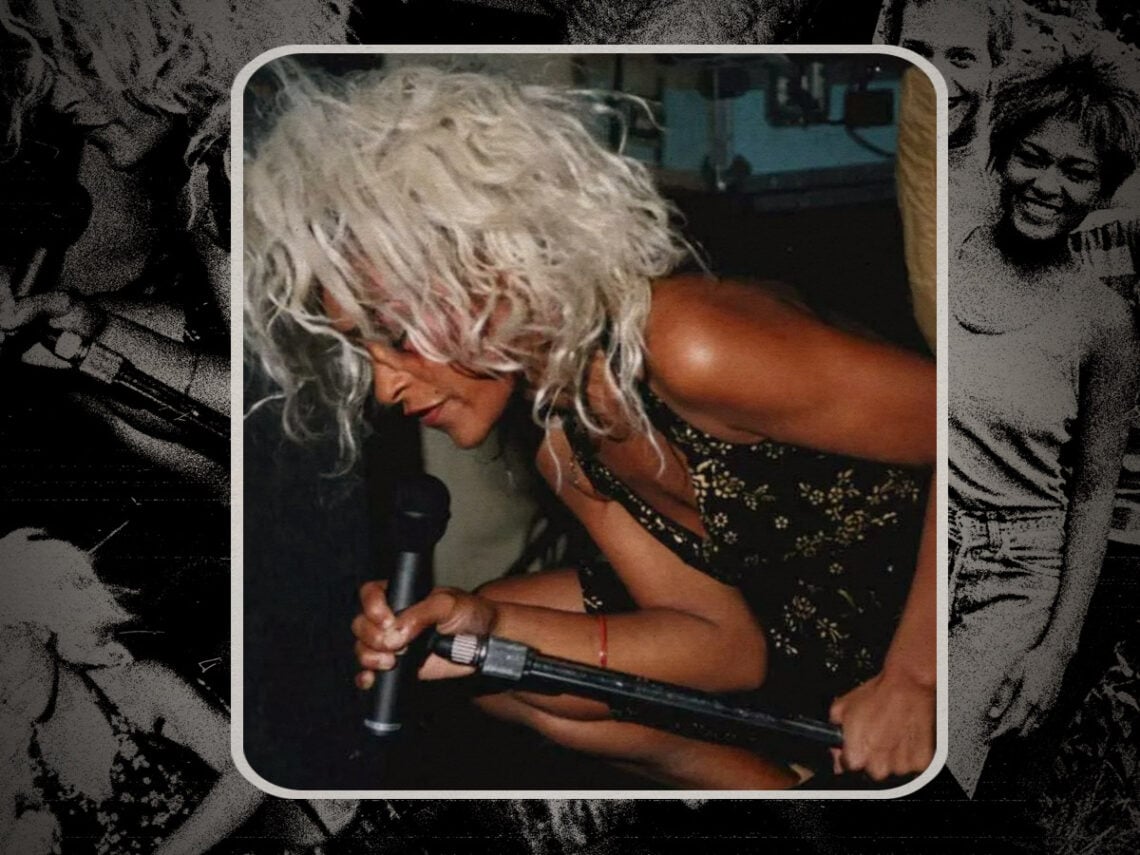
Tina Bell: The queen of grunge

Before grunge was dominated by white men wearing plaid shirts who’d become spokesmen for a disaffected youth, its sound was innovated by Tina Marie Bell, a Black singer-songwriter from Seattle who pioneered the genre’s sound and vision.
Tina Marie Bell was born in Seattle, Washington, on February 5th, 1957, the third of ten siblings and the eldest daughter. She first tried singing at Seattle’s Mount Zion Baptist Church and tried out the performing arts, on stage at the Langston Hughes Theater, also in Seattle. It would be in the early 1980s, however, that she would begin to hone her true voice as a musician. In the decade prior, Bell had placed an advertisement in the paper, looking for a French tutor to help her learn lyrics for a Langston Hughes production. Through this, she met her soon-to-be husband, Tommy Martin; the two eventually married and had a son, TJ, in 1979.
In 1983, the pair founded a band called Bam Bam, named after an acronym of their surnames, “Bell And Martin”. Bell assumed lead vocals, Martin played guitar, and they played alongside bassist Scott Ledgerwood and drummer Matt Cameron (of later Soundgarden and Pearl Jam fame). Cameron would later be replaced by Tom Hendrickson, and Bam Bam honed a sound that fused proto-grunge with punk and sludge metal, innovating an unconventional tone that would slowly permeate Seattle and later, the world.
At the helm, Bell was a powerhouse. Her vocals were low-registered and haunting, and her presence possessed a cool aura that commanded attention. In an early video for their single ‘Ground Zero’, a song inspired by the threat of nuclear war, Bell poses along a waterfront in a white leather jacket, slowly grooving along to the jarring instrumentals. In front of her band, she had the same energy, a distinct confidence radiating off of her. Bam Bam was one of the originators of the “grunge” sound, which was later thrown into the mainstream, commodified and adapted into countless iterations of alternative music. But, Bam Bam got lost in the shadows of the explosion of the “Seattle Sound,” never earning their due recognition, on account of racial and gendered prejudice.
Bell was sometimes subject to racist attacks on stage, though in their local scene, Bam Bam’s popularity was a salvation. She caught the admiration of a young Kurt Cobain, who once was a roadie for Bam Bam; Ledgerwood recalls, to The Seattle Times, Cobain “sitting at the side of the stage hugging his knees” at their shows. Bam Bam had the Melvins open for them, and they performed at Seattle festivals, laying the foundation for the Seattle scene that would soon become known for its mythical stature as the originator of grunge. Still, despite the origins of rock ‘n’ roll being traced to Black women like Sister Rosetta Tharpe, audiences at the time showed extreme difficulty in recognising Black women in the genre.
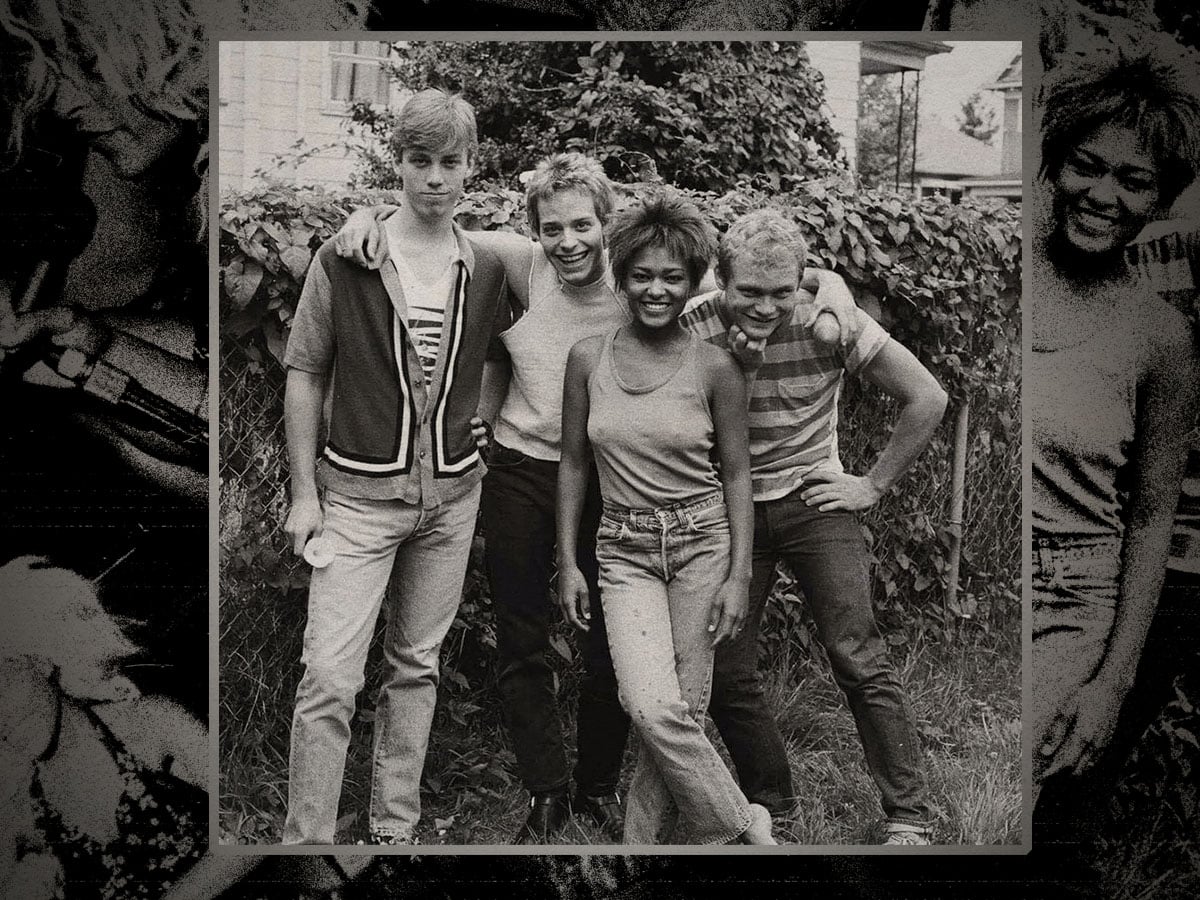
“America was certainly fucking not ready for a Black girl up front in a hard band, let alone as a media sweetheart, no matter how gorgeous she was,” Ledgerwood said to Please Kill Me. “As far as Bam Bam being suppressed? There’s probably several reasons, but race and gender clearly played a major role.”
Bam Bam would release their EP, Villains (Also Wear White), independently in September 1984. Recording at Reciprocal Recording Studio, theirs would be the first grunge record made in the location, preceding more widely known, early grunge recordings. Nirvana, for instance, would later record their demos for Bleach and Incesticide there, and Bam Bam’s producer and owner of Reciprocal Recordings, Chris Hanzsek, would later produce Soundgarden, Mudhoney, the Melvins and more from the Seattle underground. Bam Bam recorded an album’s worth of material at Reciprocal Recordings, some of which made it on their EP; the rest would not be heard until 2019, appearing on Free Fall From Space, produced by Martin and Hanzsek. Other later-released material includes Bam Bam House Demo ‘84, released in January 2019, and an expanded version of Villains (Also Wear White), released two years later in 2021.
That same year, a tribute concert was held for Bell in Seattle’s Central Saloon, with Cameron and Ledgerwood’s inclusion alongside a cast of Seattle-area musicians. Bell passed away in 2012, at just 55 years old, of cirrhosis of the liver. Disgracefully, the coroner estimated that she had passed two weeks prior to her being found, and all of her belongings had been thrown away before her son, TJ, could claim them.
“She was a writer and a poet and a vocalist, gone,” TJ remembers on the Sound and Vision podcast, continuing, “My brain can’t help but take it here, but she remained [and] continued to get disrespected even in death… It’s hard to come to terms with that, but it also makes me realise that she was privy [to] that, that whole time, and that came out in her music, that came out in her performance and, at a certain point, it got exhausting.”
In her absence, the imperative to keep Bell’s legacy and importance in founding the grunge sound becomes stronger. As generations both past and present continue to reckon with the biases that have stifled voices like Bell’s from being heard, her memory persists.
