


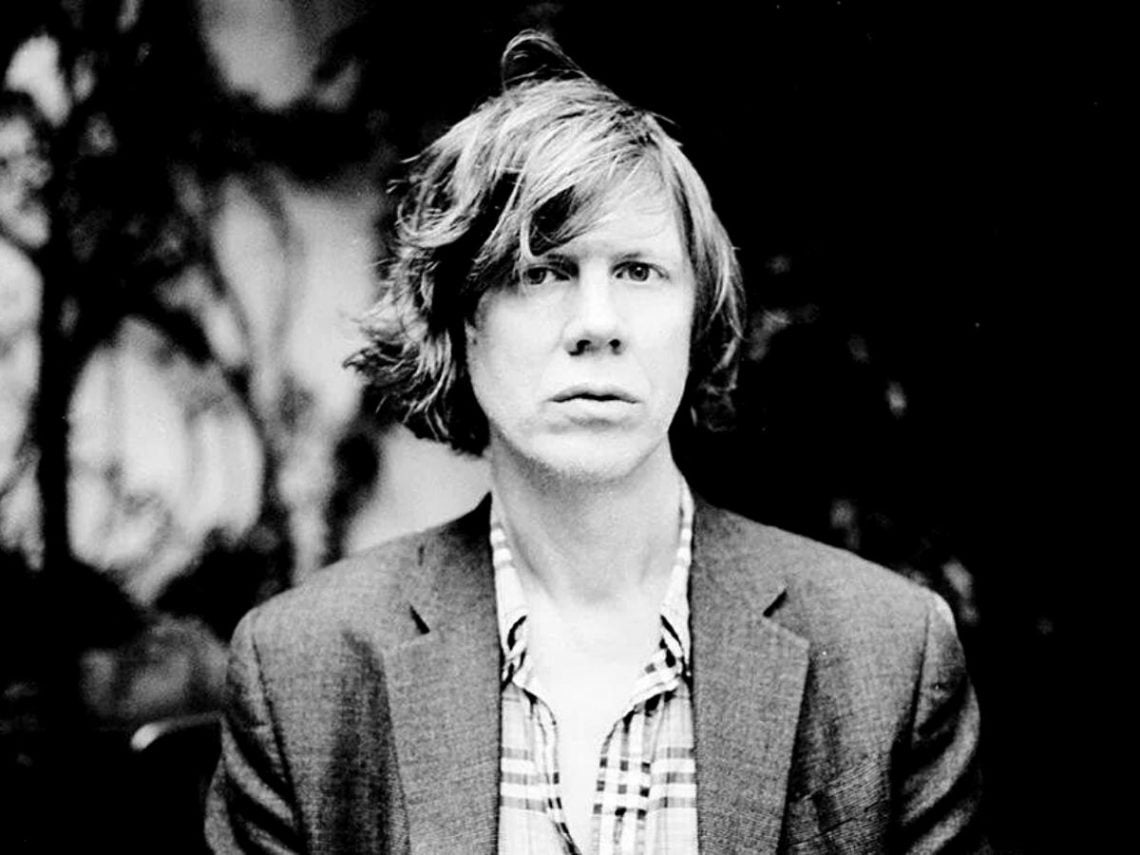
Thurston Moore, Radiohead and the dream of “releasing music for free”

As much as the hippie generation enjoyed the idea of freedom and creativity independent of “the man” and financial structures, we don’t live in a perfect world. In the wise words of Peep Show’s Mark Corrigan, “There are systems for a reason in this world: economic stability, interest rates, growth. It’s not all a conspiracy to keep you in little boxes, alright? It’s only the miracle of consumer capitalism that means you’re not lying in your own shit, dying at 43 with rotten teeth. And a little pill with a chicken on it is not going to change that.” This is something of which former LSE student Mick Jagger and Sonic Youth’s Thurston Moore are intensely aware.
Whether we like it or not, art is intrinsically associated with economic clockwork. Artists need time to create and perform; therefore, if they want to become successful and give up the burger van day job, they must submit to a network of often greedy managers, record labels and undesirable touring commitments. This has always been the case, but the modern climate is particularly merciless.
In 2020, Moore released his seventh solo album, By the Fire. Reminiscent of the Sonic Youth sound, the release pushed few boundaries in terms of stylistic outlook, but Moore posited a political idea with the album’s launch. “I put out By the Fire as a political move,” Moore told Spin at the time. “Any time you put out a record, a book, a fanzine, a blog, a cassette, a CD, whatever you’re doing, that’s a political move.”
In the album, Moore hoped to evoke the idea of commercialism as a double-edged sword. By sharing his music, he is “engaging in a social world”. He titled the album By the Fire “because of that,” fixated on “the idea of people sitting around a fire and dialoguing.”
Speaking to the French publication Exit Musik at around the same time, Moore elaborated on his idea of politics in music. “The United States is divided like never before in terms of ideology. And bringing this energy is important, it is also a way of being progressive in our creative impulse,” he explained. “And to use that as a model of expression.”
The album bears little resemblance to Bob Dylan’s ‘Masters of War’, but by Moore’s metrics, all art is political. “I prefer to release a positive and creative record rather than an angry and violent one. It is in this sense that it is political, in my opinion,” he offered. “I’ve always thought that records are inherently political. From the moment it is commercialised, and therefore shared, [music] becomes political.”
The Sonic Youth guitarist and co-creative lead continued, imagining a utopia in which all music is free. “I would love the privilege of releasing music for free,” he added. “Radiohead did it, right?”
Moore, of course, speaks from a comfortable position as an established artist who can sustain a healthy income on Sonic Youth royalties and reissues. However, he doesn’t underestimate the importance of his position as a creative luminary with a far-reaching platform. When creating By the Fire, Moore felt liberated from financial necessity and, hence, could express himself freely. “Having a voice is political,” he noted. “That’s something that’s always interested me about being in a band.” Where, in the past, labels, deadlines, and bandmates had meddled with Moore’s vision, By the Fire was “really… what I wanted to do, I wasn’t asked to do it, I had time alone at home since I couldn’t go on tour, like many musicians,” he explained. “That allowed me to construct this record differently.”
In 2007, Radiohead made history as the first established rock band to release an album without financial motivation. Whether it was a shrewd publicity stunt or not, fans commended the British band’s decision to offer the brilliant In Rainbows as a pay-what-you-want download in mp3 format.
Moore would like to have released By the Fire in a similar way, calling Radiohead’s move “cool”. However, his financial situation wasn’t quite accommodating at the time. “I think Radiohead has been so successful that they can afford it,” he said. “I would love to have the opportunity to do that.”
While Moore hasn’t released his albums for free in the past, he said it is “possible” he might follow Radiohead’s example in the future if solvency permits. “I often give music,” he concluded, noting how he has already dabbled in the idea. “Several compilations are sold, then the money is donated to associations, not to the artists who participated.”
Listen to ‘Hashish’ from By the Fire below.
