


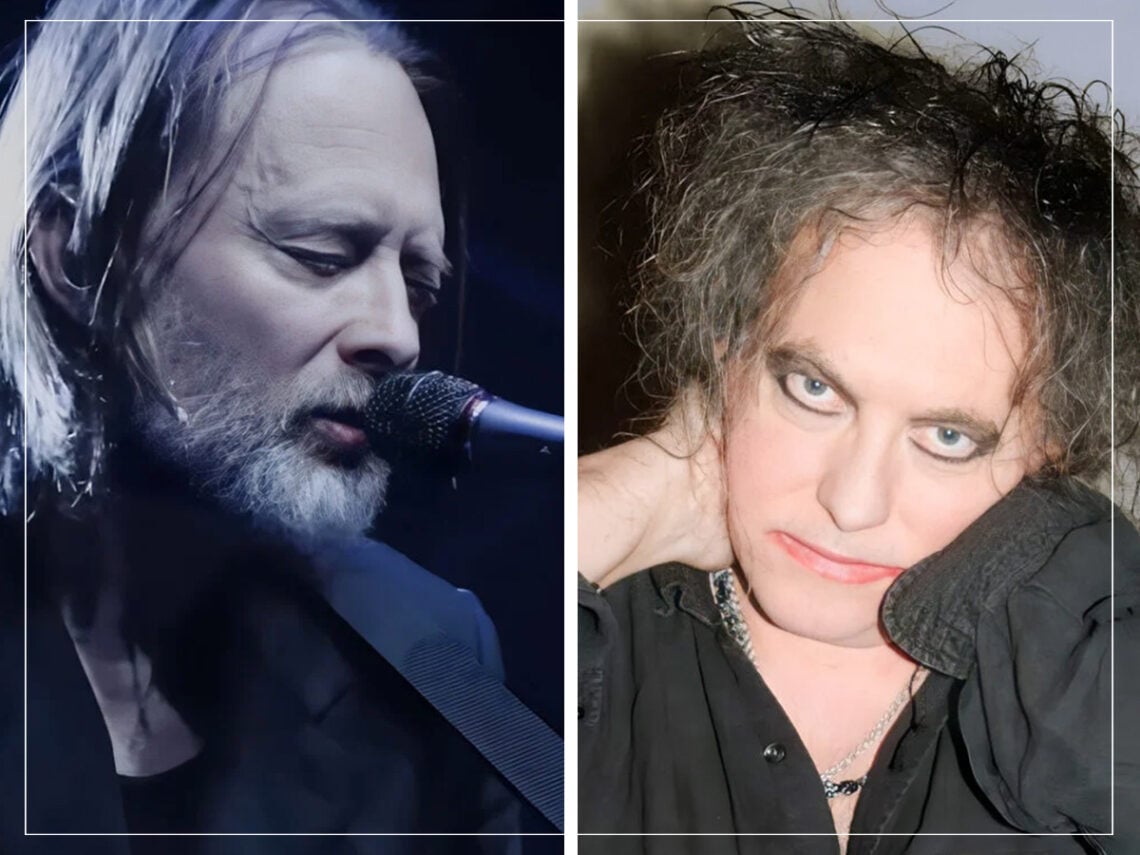
Thom Yorke and Robert Smith among 10,500 creatives to sign petition against AI

A number of notable names in the creative industry have signed a petition warning artificial intelligence companies that any unlicensed use of their work will be considered a “major, unjust threat” to their livelihood. Among the famous individuals to put their name to the letter are Radiohead singer Thom Yorke, Hollywood star Julianne Moore, and The Cure frontman Robert Smith.
The petition results from an ongoing legal battle between creative professionals and tech firms that are using their work to train AI models like ChatGPT. Creatives allege that any use of their intellectual property without permission is a blatant breach of copyright.
The statement notes, “The unlicensed use of creative works for training generative AI is a major, unjust threat to the livelihoods of the people behind those works, and must not be permitted.”
Creative professionals from various branches of the industry have come forward to back the statement. Authors, musicians, composers, and actors have all signed the petition, stating that any use of their work to train AI software would be viewed as a breach of copyright. Kazuo Ishiguro, Ann Patchett, Max Richter, and Kevin Bacon are among the signees.
The letter has been organised by British composer and former AI executive, Ed Newton-Rex. He recently spoke about AI companies’ unfair attitudes towards creating software, arguing that the care they show creatives is unjust compared to the care they show engineers and designers.
“There are three key resources that generative AI companies need to build AI models,” he said. “People, compute, and data. They spend vast sums on the first two – sometimes a million dollars per engineer, and up to a billion dollars per model. But they expect to take the third – training data – for free.”
Why are creatives worried about AI?
People in the creative industry are worried about the increased use of AI because it could begin to be used for various branches of storytelling and creation within the industry. Lisa McGee, the creator of the hit comedy Derry Girls, recently spoke out against the use of AI in the creative sector and criticised ITV’s job advert looking for a “head of generative AI innovation” who will help “shape the future of content creation.”
McGee said that she found the news “incredibly depressing and, considering how AI material is generated, unethical.”
Producers and broadcasters would opt to use AI instead of actual writers because it would be much cheaper in the longterm. However, in order to train AI to write like a quality screenwriter, AI companies need to use stolen examples of quality screenwriting. This applies to every aspect of the creative field, including literature, music, and art.
“If the broadcaster has a spare £95,000, they would be better off investing in screenwriters rather than gimmicks,” said Ellie Peers, the general secretary of the Writers Guild of Great Britain, “There’s no shortage of story ideas out there, though sadly there appears to be an unwillingness to pay for them.”

Never Miss A Beat
The Far Out Music Newsletter
All the latest music news from the independent voice of culture.
Straight to your inbox.