


‘There Will Come Soft Rains’: a Soviet adaptation of Ray Bradbury

Any discussion about modern sci-fi literature is simply incomplete without the mention of Ray Bradbury, the pioneering American author who left an indelible mark on the 20th century. Although he is primarily known for his immensely popular novel Fahrenheit 451, Bradbury’s body of work is a fascinating collection of writings that raise important questions about the human condition. His unique vision has touched people all around the world, resulting in an interesting Soviet adaptation.
Titled There Will Come Soft Rains, Bradbury’s 1950 short story imagines a city in California that has been completely annihilated by nuclear warfare. However, there’s one house that still contains automated robots that once served its former residents, now continuing to function even though there’s nobody around anymore. Bradbury’s story was, in turn, inspired by Sara Teasdale’s eponymous apocalyptic poem, which was written during the horrifying 1918 flu pandemic.
Due to the ominous nature of his sci-fi works, Bradbury was routinely asked about the future of human civilisation. He famously answered: “People ask me to predict the future, when all I want to do is prevent it. Better yet, build it. Predicting the future is much too easy, anyway. You look at the people around you, the street you stand on, the visible air you breathe, and predict more of the same. To hell with more. I want better.”
Bradbury’s version of There Will Come Soft Rains maintains that the world will continue to exist without us, just like Teasdale, who was convinced that the end of humanity would mean nothing to a wholly indifferent universe. However, Nozim To’laho’jayev’s 1984 animated adaptation of Bradbury’s story is particularly interesting because it doesn’t have that sense of reassuring gentleness. Instead, it paints a harsh landscape that painfully bears the scars of our unforgivable blunders.
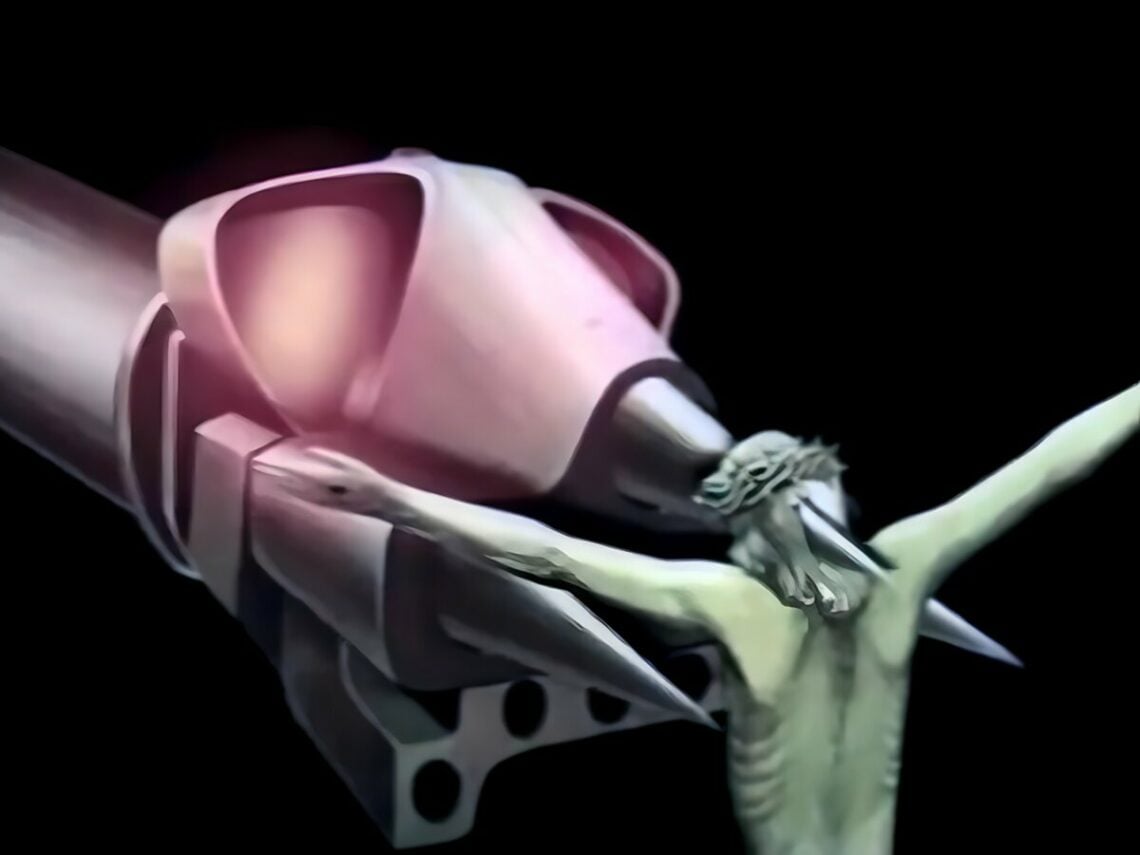
Almost menacing in tone, the film adaptation is set at the beginning of the year 2027 and depicts the same material – a strangely empty house that is only inhabited by a robot designed to serve customers that no longer exist. Permanently severed from its teleological structure, the robot is a tragic absurdity forced to repeat a Sisyphean task. When a bird flies into the house through a crack, the automated system treats it as a threat and ends up burning everything to the ground.
While both Bradbury’s short piece and Teasdale’s poem are integral parts of the story’s evolution, Nozim To’laho’jayev’s interpretation of the apocalyptic message is truly unsettling and politically charged, given its emergence from the Soviet Union. The final scene of the film is truly heartbreaking, showing the bird in a moment of overwhelming desperation as it keeps trying to fly into a screen that hosts a virtual image of greenery and the innocent bliss of a permanently lost past.
Watch the film below.
