


The writers who inspired CMAT’s wordy approach to lyricism

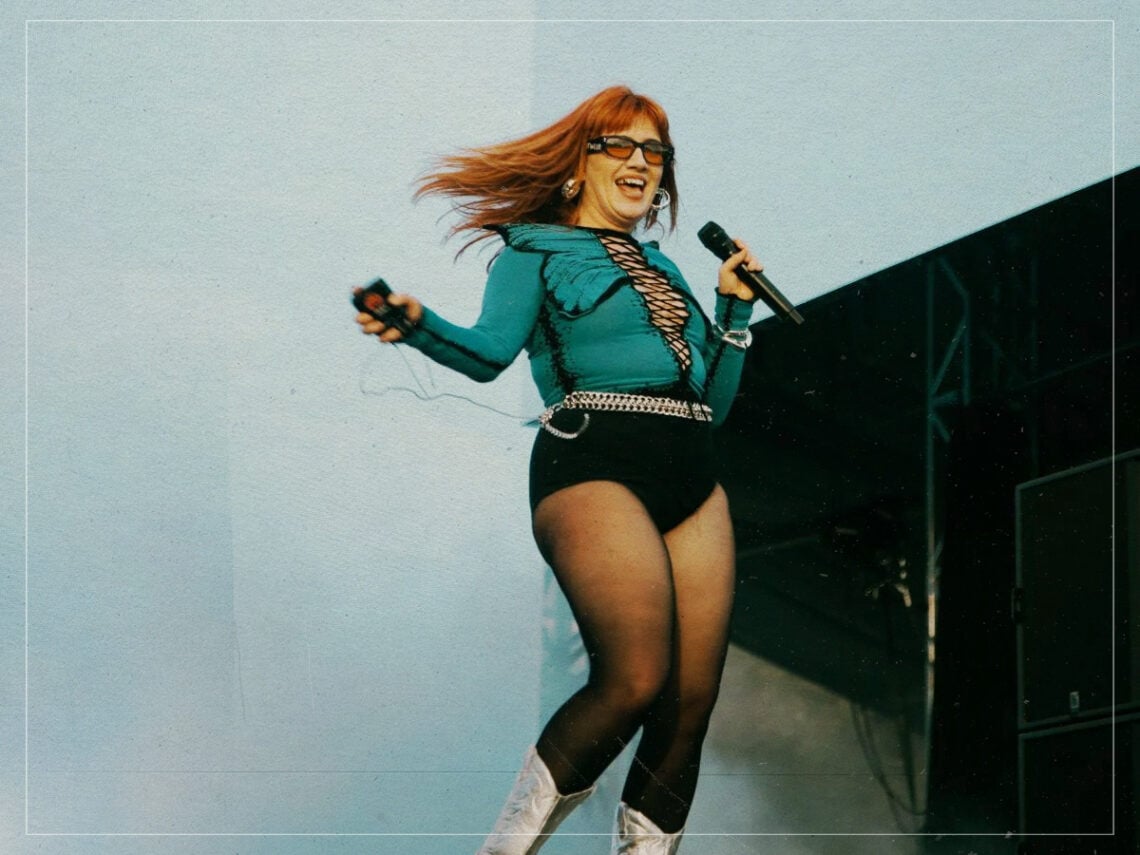
If your parents are still trying to convince you that music was better in their day, they clearly haven’t been to see a CMAT gig.
Currently on tour and gearing up for an even bigger 2026, the Irish songwriter is finally reaping the rewards of a career that’s lasted longer than the overnight success headlines would have you believe. CMAT, aka Ciara Mary-Alice Thompson, has been a vital voice in the modern music industry, ever since her 2022 debut album If My Wife New I’d Be Dead and right up until her recent critically acclaimed Euro-Country.
While the recent year has framed her as one of the most captivating performers in contemporary music, the career she’s crafted since that debut in 2022 has been one largely built on writing. Both for herself and others, namely Blossoms, a band with whom she wrote the hit ‘I Like Your Look’. Simply put, CMAT’s poetic voice is deeply admired within the music scene, and when all the glamour of her recent acclaim is stripped away, it’s that written ability that protects her legacy as an artist.
Often a lyrical whirlwind that draws contemporary and traditional influences into its orbit, CMAT’s approach to songwriting is far from rudimentary and often presents as something of a dramatic monologue that blends conversational wit with emotional vulnerability. A lot of the time, it’s so brilliant because of how it feels like an inherent extension of her. Songs may start softly, almost like a quiet conversation in a pub with CMAT, before ending with the profundity of a late-night revelation that, in turn, endears you to the very heart of this unique artist.
And like any artist of her era, she got there through a life lived at the sharpest end of modernity, shaped by crippling economic crises, social injustice and in the entertainment industry, continuously thinly veiled misogyny, but while those experiences formed her writing style, she also took cues from the literary greats, particularly those from her home country, Ireland.
Writing sessions for Euro-Country largely took place in New York, and while CMAT sat there, battling homesickness and creative block, she turned to a trusted audiobook. “I remember very distinctly listening to the entire audiobook of Circle of Friends by Maeve Binchy,” she explained, “There was a two-week period where I was alone in the house by myself, just writing, and every time I needed a break, I did housework and listened to it. It’s like a comfort book.”
Binchy was joined by a catalogue of Irish writers, such as Marian Keyes and Sally Rooney, who CMAT described as “Irish women” who fall into the category of artists who “seem to not be able to write anything under 600 words”.
In trusting those voices, CMAT has placed trust in her individual approach to songwriting that does away with succinct lyrical soundbites and instead indulges in the desire to be verbose. But this modern music scene, spearheaded by the likes of her, is quietly championing individualism over artistic homogeneity, and with that, an audience that begs for authenticity in deeply inauthentic times.
CMAT’s discursive approach, which has catapulted her to success, isn’t to say that the next great star should follow suit. The only thing they should copy from her is her unwavering determination to be an artist of the self, and absolutely nothing less.
