


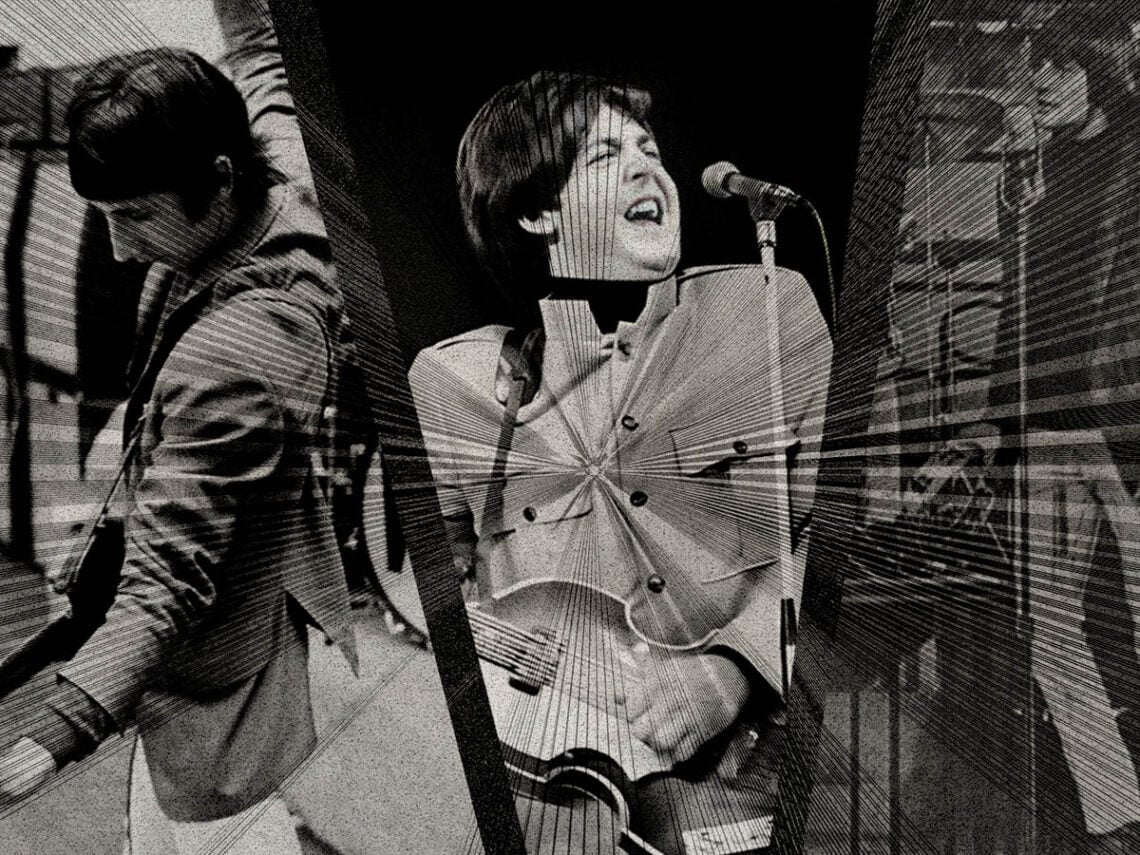
“Me and Pete Townshend had a rivalry”: The Who, The Birds, The Beatles and the loudness war that led to heavy metal

Eddie Vedder made it perfectly clear that his life was irrevocably altered by The Who when he declared, “Imagine, as a kid, stumbling upon the locomotive that is Live at Leeds. ‘Hi, my name is Eddie. I’m ten years old, and I’m getting my fucking mind blown!”
Young Vedder was one of many. And Pete Townshend knew it. “We sort of invented heavy metal with Live at Leeds,” the guitarist claimed. But perhaps it would be more accurate to say that they simply got there first. In truth, a three-way war had been underway for a while to see just how raucous rock ‘n’ roll could get.
It’s a fact often forgotten, thanks to the uncanny amount of innovation the era fostered, that one of the precluding factors to musical development in the 1960s was a deficit of available technology. The artists, in essence, were ahead of the tech that was on offer.
As David Byrne explains it in How Music Works, there is a symbiotic relationship between venues, technology and music, each adapting to a change in impetus from one prong of the triumvirate. If a band gets big enough to attract a stadium-size audience, but they have to stop because they literally can’t hear themselves over the crowd, then soon enough, PA system technology will improve, and that, in turn, will lead to a change in musicology as bands experiment with bigger sounds.
This was the cat-and-mouse race towards heavy metal that was afoot in the 1960s. Rock ‘n’ roll was drawing greater crowds, which meant that larger venues were needed, and that meant that a sound fit to fill the space was required, and that meant that Ronnie Wood was at loggerheads with Pete Townshend. “Me and Pete Townshend had a sort of rivalry back then to see who could get the loudest.”
So, they both pleaded with Marshall to up the ante. At the time, the modern-day amp giant was just a small British upstart. But the key to its success was how closely it worked with the scene it was supplying. Wood, who was in The Birds at the time, and Townshend who was on the brink of a breakthrough with The Who when the decibel war began “kept on pushing Jim Marshall to make amps with more watts and volume controls that went up to 12!”
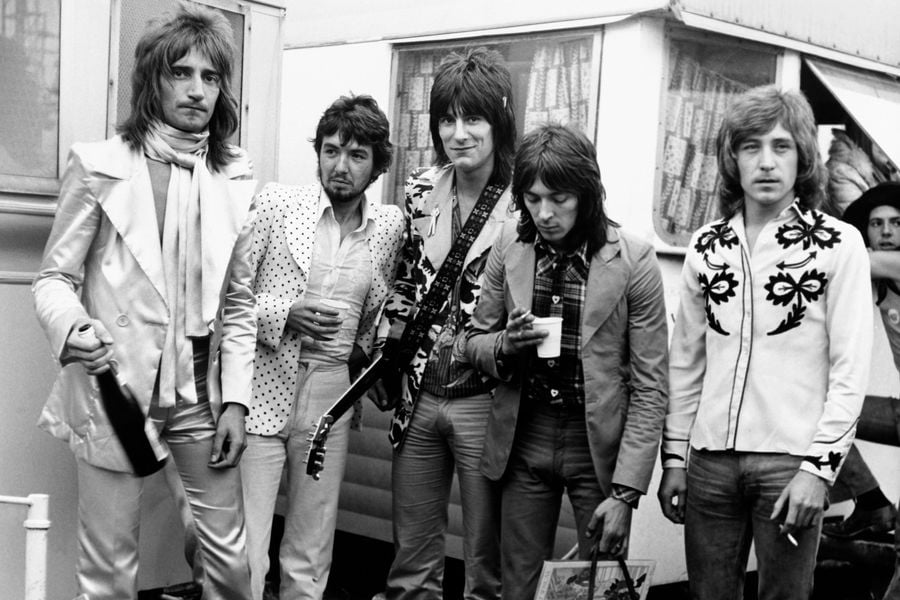
Jim Marshall desperately tried to oblige. Wood and Townshend had evidently observed the increasingly liberated crowds coming to their shows and knew the key to success was ever-mounting energy.
So, it stands to reason that if you have a baying mob in attendance and a newfangled amp that surpasses even the Spinal Tap measure of 11, you’re not going to go up on stage and gently strum ‘You Are My Sunshine’. Moreover, if you factor in the fact that you’re in a private ear-splitting war with your friend/foe, then heavy metal soon seems like an inevitability.
In Wood’s How Can It Be? A Rock and Roll Diary one entry from 1965 recalls the moment that Marshall managed to make good on the future Rolling Stones man’s request for a 100-watt head and 8×12 speaker cabinet to create a stack of amps. Townshend just so happened to be in the Marshall shop when Wood was collecting his ground-breaking kit, and his only words were, “You bastard”.
But Townshend was belligerent, and he wasn’t about to admit defeat, pick up a 12-string acoustic and join Cliff Richard’s band. For the next three years, engineering rock music that could truly rattle the rafters like a flat pack wardrobe on a faultline was at the front of his thinking.
Eventually, in 1968, while Paul McCartney was leafing through a magazine, he came across a review of the forthcoming album The Who Sell Out, in which a critic described the track ‘I Can See for Miles’ in a manner akin to a guttural beast from the underworld, the way Cormac McCarthy might describe a category five hurricane.
Paul was perturbed. This was during a period when he was becoming known as ‘the soppy one’ in The Beatles. The Who had seemingly created the “heaviest” song rock had seen to date. McCartney was seething, ambivalent, impressed and peeved in equal measure. At the time, the counterculture movement was growing its hair out, so to speak, and McCartney was worried that being dubbed the clean-cut kid was even worse for his street cred than it had been only a matter of months ago.
So, he vowed to outdo his contemporaries when it came to cutting loose. And he did so without ever having heard ‘I Can See for Miles‘. As he recalled in an interview with Radio Luxembourg to promote the release of ‘Helter Skelter’, “I’d read a review of a record which said, ‘and this group [The Who] really got us wild, there’s echo on everything, they’re screaming their heads off’. And I just remember thinking, ‘Oh, it’d be great to do one. Pity they’ve done it. Must be great – a really screaming record’.”
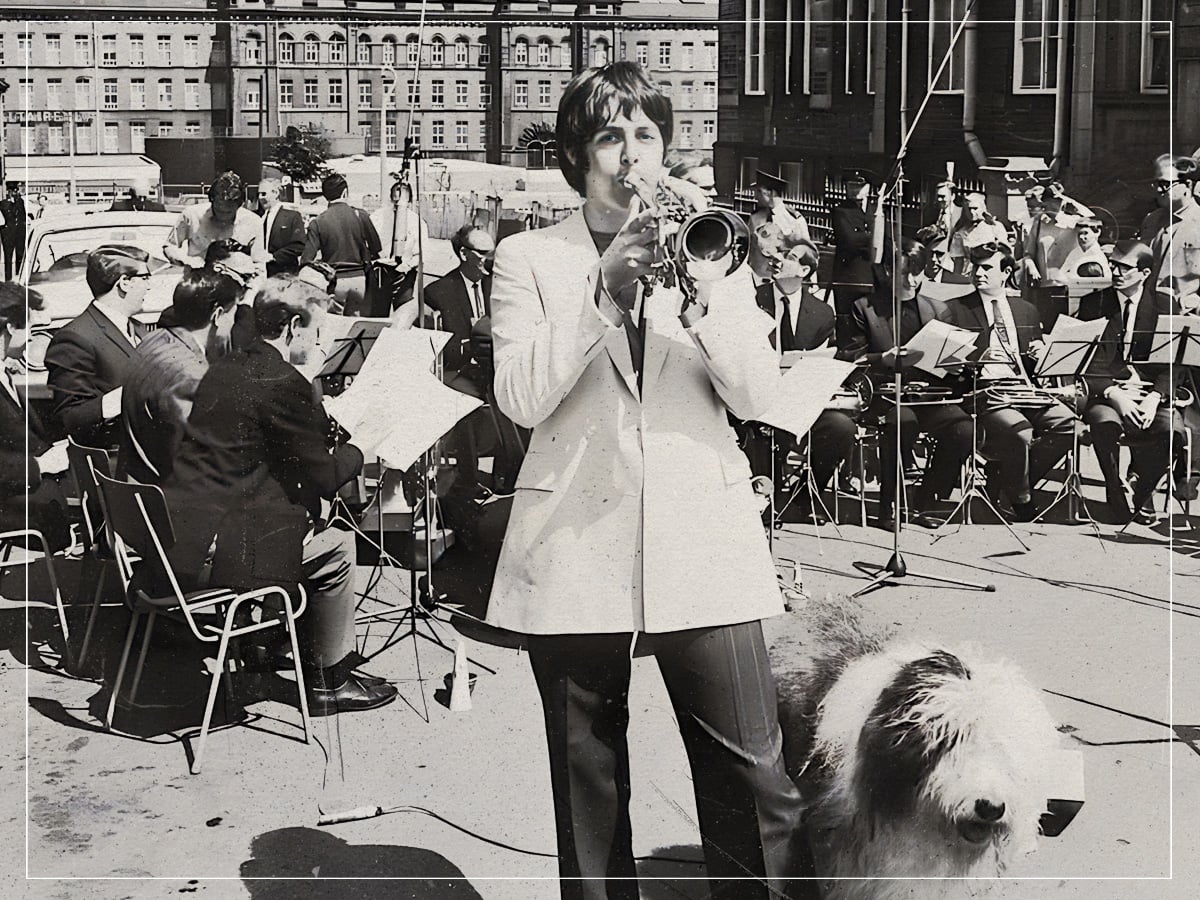
He would soon be disappointed, opining that the critical prose had rather overhyped the heaviness of The Who. “I heard their record and it was quite straight, and it was very sort of sophisticated,” McCartney recalled. He had already decided what it must sound like in his head, and his picture didn’t match.
“It wasn’t rough and screaming and tape echo at all. So I thought, ‘Oh well, we’ll do one like that, then’. And I had this song called ‘Helter Skelter’, which is just a ridiculous song,” he continued. “So we did it like that, ‘cos I like noise.”
The result was so chaotic that it ended up becoming embroiled in the crime that just about killed the 1960s. It was claimed in court that Charles Manson had inferred that the Fab Four were forecasting an impending apocalypse with the “first heavy metal song”, as it would later be known. While that might be vaguely ludicrous, the Manson Family’s murders were so horrifying that few people cared to question it, trapped in the morose stupor of the crime.
Alas, as mentioned, Townshend is a belligerent bastard, and just as quiet reflection seemed to sweep over counterculture, he reignited the heaviness war. A lack of amplification might have forced The Beatles to retire from the road, but thanks, in part, to his own private battle with Wood, and now inadvertently with McCartney, booming shows in big spaces were possible.
So, slipping into the slipstream of the darkness abounding, exactly six months and five days on from the killings, The Who took to the stage in Leeds and delivered rock ‘n’ roll’s darkest, heaviest, loudest show to date. It was recorded for posterity, and has been blowing minds ever since. The rest is history… very loud history.

Never Miss A Beat
The Far Out Beatles Newsletter
All the latest stories about The Beatles from the independent voice of culture.
Straight to your inbox.