


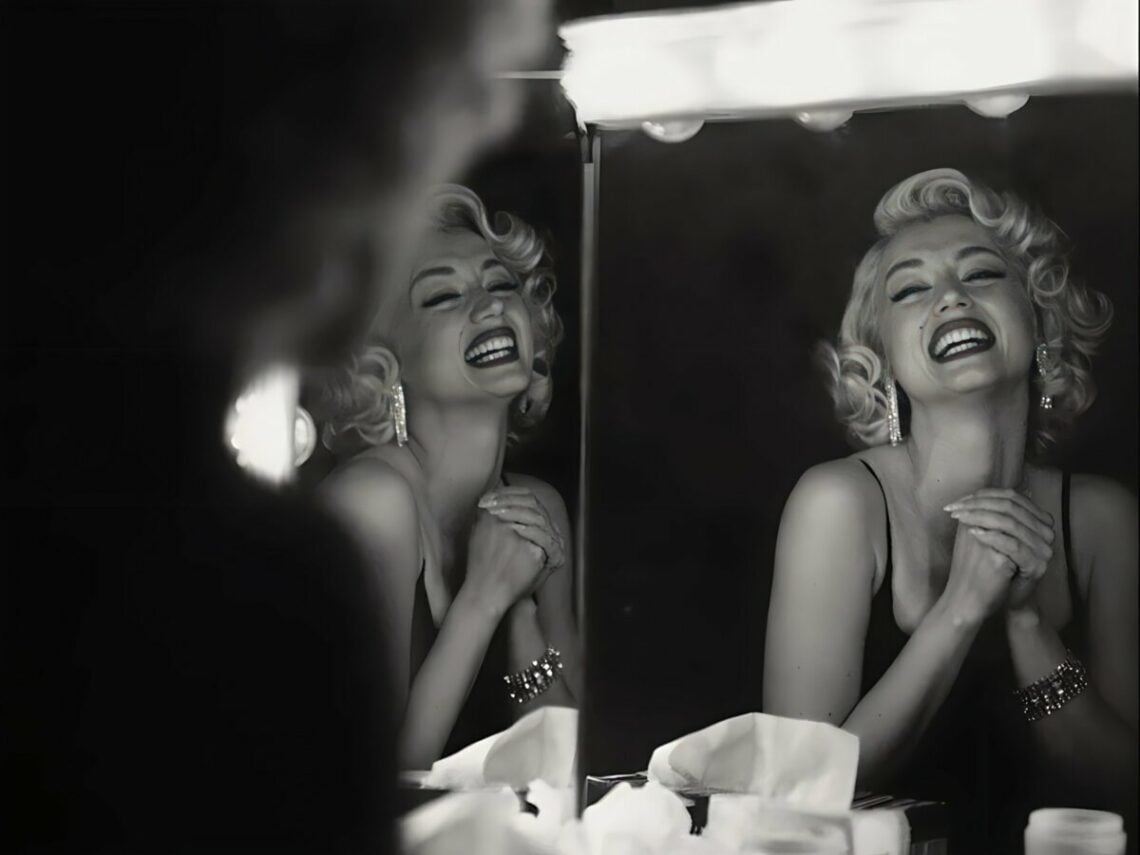
The “vulnerable” role that filled Ana de Armas with “fear and insecurity”

Andrew Dominik’s divisive Blonde, based on Joyce Carol Oate’s novel, sat somewhere between a biopic and a cautionary tale about fame, starring the most famous woman of the 20th century. It was Ana de Armas who was tasked with portraying Marilyn Monroe, one of Hollywood’s most coveted and complex figures. The actor drew a lot of the ire from fans for her performance, largely stoked by Dominik’s creative choices, namely to include gratuitous scenes of sexual assault and abortion.
Although critics were quick to dismiss Blonde as largely fictional trauma porn, de Armas’ performance was entirely convincing, likely because she shared the same crippling stage fright as Monroe. While Monroe became a role for Norma Jean to play, de Armas had to play Jean “playing” Monroe in a dizzying feat of depersonalisation.
“I experienced a lot of fear and insecurity,” de Armas told AnotherMag. “I felt in a very vulnerable position. Not just in specific difficult scenes – the whole process was overwhelming for me. Most of the time I thought I was doing it wrong. I was thinking, what are these American actors thinking of me? They know this person better than me, they’ve grown up with her. What are they thinking about my accent?” Director Dominik could sense her discomfort and advised her to utilise it because that was how Monroe always felt.
“She was feeling insecure and unprepared and judged and undervalued all the time. So I had to trust my emotions were adding to the layers,” she said. One emotional hurdle was how de Armas tackled Monroe’s relationship with her absentee father (Monroe allegedly grew up believing Clark Gable was her biological father).
The tendency was for de Armas to play up a feeling of anger, and she admits the choice was “too strong” in early scenes. “I got defensive and angry and [Dominik] said, ‘You’re not allowed to get angry. Ever. Anger is not something Norma can afford.'”
The idea of swallowing that anger was one of the main strengths of de Armas’ performance. It mirrored what Monroe experienced so organically because it was a difficult emotional line to walk as an actor. De Armas posits that Monroe became such a huge cultural commodity to find the sense of belonging she had always missed.
“At its heart,” she explains, “the movie is about her looking for an absent father. Part of the reason I think she became Marilyn Monroe was to be so visible there’s no way he could not find her. You see how a childhood of feeling unloved and unwanted led her to need love, attention, need someone with her always. So I thought, OK, if I can’t get angry, what are my options? How else can I survive? And I started to explore all these other feelings.”
