


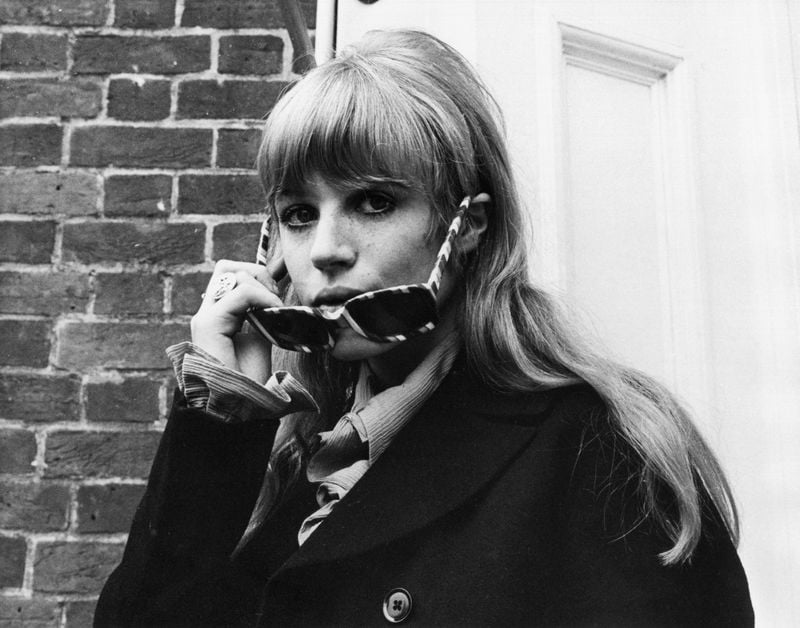
The voice behind the muse: Marianne Faithfull’s 10 greatest songs

“It is with deep sadness that we announce the death of the singer, songwriter and actress Marianne Faithfull.” The statement came as a shock to everyone when it was posted on social media on January 30th. A ‘60s icon, someone who contributed towards the modern music industry and our perception of rock ‘n’ roll so significantly, was no longer with us. “Marianne passed away peacefully in London today, in the company of her loving family. She will be dearly missed.”
As soon as news of Faithfull’s passing was announced, people began talking about her influence. She was known a great deal in the ‘60s as she was in a relationship with Mick Jagger and was said to be the inspiration for a number of Rolling Stones pivotal hits, including ‘Wild Horses’ and ‘You Can’t Always Get What You Want’.
While these are big contributions to the musical world, it would be unfair to only recognise Faithfull as a muse. She had an excellent voice and a limitless creative mind, which saw her write about love, loss, war, and all things in between. She gave her voice to a number of great songs throughout her time as an artist.
Here, we will look at some of Faithfull’s greatest contributions to music, including songs she co-wrote with others and some of her solo efforts. Both her voice and her lyricism are among the greatest in music.
Marianne Faithfull’s 10 greatest songs
‘Broken English’
Broken English, as both a song and album, marked Faithfull’s comeback, as she broke into the world of music with one of the most stunning and no-holds-barred protest numbers ever written. There were a number of protest songs floating around at the time, but none quite as direct and unwavering as Faithfull’s offering.
Here, she took aim not only at the Cold War, which formed the basis for the song, but also highlighted problems with people’s constant desperation to fight one another. ‘Broken English’ is one of the songs that Faithfull is most recognised for, and when you listen to her dynamic voice over such cut-throat lyrics, it’s easy to see why.
‘As Tears Go By’
‘As Tears Go By’ was the first original song that the Rolling Stones were able to come up with after they had made a name for themselves covering famous R&B artists like Muddy Waters. Keith Richards called it one of the most anti-Stones songs that the band ever recorded. That said, while it might have been far removed from what the Stones wanted to make, it became a quintessential piece of folk rock.
Faithfull sings beautifully on the track, and ‘As Tears Go By’ became one of her most famous songs. While she went to do work outside of the Rolling Stones and contributed to much more than just this track, it’s nice to be reminded of where things started.
‘Born To Live’
Music often offers us a shoulder during times of hardship, as Faithfull found when she was working on the track ‘Born To Live’. The song came to her as a form of therapy, as it helped her mourn the loss of loved ones. Now, it’s one that fans can turn to to do the same in the wake of her passing.
“All these memories came back hard. When I’d done that, Anita appeared, right there in front of me,” said Faithfull when discussing how the loss of her friend Anita Pallenberg inspired the track, “That’s the thing about these songs. They’re not just about these people; they’re about everybody who’s been going through this stuff. It’s so hard to lose your loved ones.”
‘With You In Mind’
On her final album from the ‘60s, Faithfull delivers some of her greatest vocal performances. The mysterious nature of her vocal tone is fully intact as she delivers on standout songs such as ‘With You In Mind’.
This song drapes a brooding melancholy that is equally sad and subtle. There is no escaping the fact that Faithfull has a tremendous amount of talent, and the range present in her vocals that made her such a musical icon can be heard on this song, which brings mixed emotions to the surface in the most complex way.
‘Sister Morphine’
Music wasn’t just something that Marianne Faithfull did for fun; it was an outlet for her during some of her most difficult periods. One of the clearest versions of Faithfull using music to bring to the surface things that she might overwise keep subdued is on the Rolling Stones song ‘Sister Morphine’, one that has her input all over it but that she struggled to be appropriately credited for.
“Marianne had a lot to do with ‘Sister Morphine’,” said Keith Richards when discussing how much of an impact she had on the writing process, “I know Mick’s writing, and he was living with Marianne at the time, and I know from the style of it there were a few Marianne lines in there.”
‘The Ballad of Lucy Jordan’
Faithfull didn’t just make waves in music; she also had a successful acting career. Her acting ability can often be heard in her musical performances, as she flaunts how emotive she can be while performing. This can clearly be heard in the song ‘The Ballad of Lucy Jordan’.
The droning synths that dominate this song are the perfect backdrop for the titular character’s nervous breakdown. Faithfull occupies this role beautifully. Her ability as a vocalist is undeniable, as she completely takes over the song with every single word.
‘Give My Love to London’
This is a great song that highlights not only Faithfull’s ability as a songwriter but also her sense of humour. As a famous muse, the questions she was asked in the press were often insensitive and rude. This song is about the press junkets she usually had to do in London and how much she detested them.
“I’m not that fond of London – when I go there I have to do ‘promo,’ which I detest, four or five days of it in a long bunch, and I come back just so pissed off and insulted,” she said in an interview when discussing her inspiration behind the song, “I must admit that is getting much better – people are not so insulting anymore.”
‘They Come at Night’
‘Broken English’ was famous for being an emotional protest song. Decades after its release, Faithfull never lost her compassion for her fellow humans; subsequently, even some of her last songs that she recorded were protest songs that rioted against hate and misinformation.
‘They Come at Night’ was a song she with Mark Lanegan. It was inspired by their producer Hai Willner, who said he believes a variation of the Nazis comes every 70 years, and he saw it in Trump, Isis and Brexit. Faithfull first performed the song in the Batican Theatre in November 2016, which was the first show in the Theatre after the terrorist attack a year earlier.
‘No Moon in Paris’
Towards the end of her life, Faithfull started working with Warren Ellis. He was a big fan of Faithfull, and when she passed, he shared the simple message, “Farewell Queen. I love you. Warren.” One of the songs of Faithfull’s that made Ellis the most emotional was ‘No Moon in Paris’, which he recalls in great detail.
“The way she does it is in the control room, with the backing track coming through the speakers,” said Ellis, “She was sitting in the corner on a chair with a microphone. She did that vocal, and there was silence. The whole place was in tears. Everybody was hanging onto anything they had their hands on. I was so overcome I had to go up to my room for half an hour. Then I went down, and she said, ‘Was that alright?’ It was quite funny; she’d absolutely destroyed the whole room.”
‘Don’t Go’
It seems fitting to end the list with one of Faithfull’s odes to lost loved ones. The track was initially written about her former guitarist, Martin Stone. “He was in a band called Mighty Baby and became a great friend who I got to know through AA meetings,” she said, “I didn’t know anything about his music career. It wasn’t the sort of music I like! He had to stop the music business because of the drugs and drink, then had a second career as a rare books dealer.”
While the track might have come from a subjective place for Faithfull, her skill as a songwriter and the emotion embedded within all of her lyrics mean that it’s impossible to hear the song and immediately apply it to your own life. It feels like the perfect ode to Faithfull as a performer, as she will be missed dearly.
