


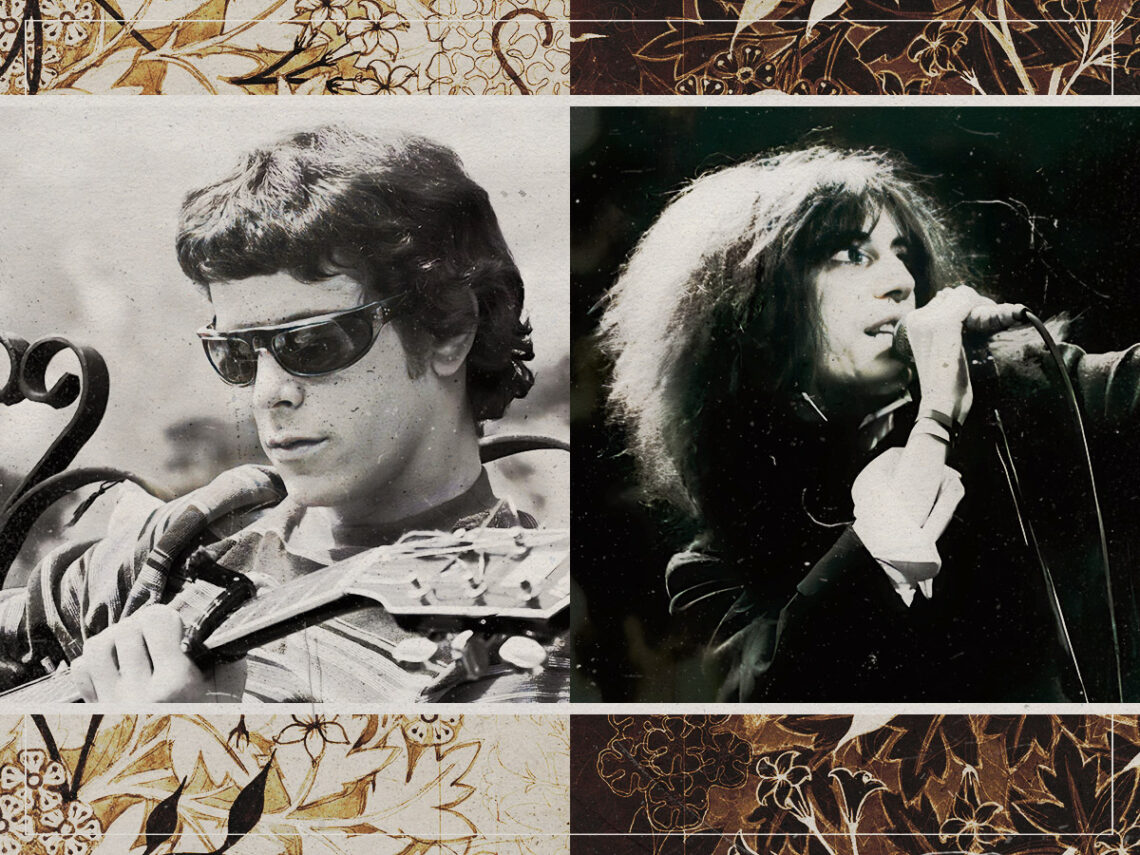
The Velvet Underground song that changed Patti Smith’s opinion of punk

It would be easy to believe that when Patti Smith broke onto the punk scene with her iconic debut album Horses, she had always been this type of artist. It could seem like she was always sure of exactly the type of creative she wanted to be, the sound she’d make, and how she would journey between punk and poetry. But in reality, The Velvet Underground were a vital puzzle piece, bridging the gap between Smith the writer and Smith the rocker.
Anyone who has read her memoir Just Kids will know Smith’s origin story well. Casting off small-town life, she packed a bag and ran off to New York to live as a Beatnik. There, she met the artist Robert Maplethorpe, and the pair navigated the city’s bustling subculture together. When they moved into the Chelsea Hotel, a whole world of musicians, writers, filmmakers, and artists opened up to them. It included names like Andy Warhol, Allen Ginsberg, Sam Shepard, Edie Sedgwick, and others.
In particular, the neighbouring bar, Max’s Kansas City, was a real scene. At one point or another, it hosted the likes of Iggy Pop, David Bowie, the New York Dolls and Alice Cooper as they raced to the top. It also hosted Lou Reed.
At the time, The Velvet Underground were Andy Warhol’s favourite project. In the late 1960s and early ‘70s, their music and performances were getting more and more led by art and film as their rock and roll sound evolved into something altogether different. That’s what hooked Smith in.
“I met Lou at Max’s Kansas City in 1970,” she told The New Yorker. “The Velvet Underground played two sets a night for several weeks that summer. The critic and scholar Donald Lyons was shocked that I had never seen them, and he escorted me upstairs for the second set of their first night.”
With hits like ‘Sweet Jane’, ‘Beginning to See the Light’ and ‘I’m Waiting For The Man’ already out in the world, it’s incredible to imagine how the energy at their shows must have felt, hearing these tracks live at their prime. That’s what Smith remembers, adding, “I loved to dance, and you could dance for hours to the music of the Velvet Underground.”
But in particular, she remembered one track. Describing it as “A dissonant surf doo-wop drone allowing you to move very fast or very slow,” Smith remembers hearing the band’s 17-minute long epic, ‘Sister Ray’ live. The track came to stand for everything Smith loved about punk and exactly the type of artist she wanted to be.
Smith was hunting for her place in this punk world, and Lou Reed felt like a key. “I didn’t understand his erratic behavior or the intensity of his moods, which shifted, like his speech patterns, from speedy to laconic,” she said, critiquing the recklessness of the scene. However, Reed seemed to have the thing she was looking for: genuine artistry and dedication to that. She added, “But I understood his devotion to poetry and the transporting quality of his performances.” Sonically, the improvised track would also come to inform Smith’s own heavy and explorative use of spontaneous and improvised recordings on her albums.
“Lou brought the sensibilities of art and literature into his music,” she said of the musician’s impact, “He was our generation’s New York poet, championing its misfits as Whitman had championed its working man and Lorca its persecuted.” Through his work, especially on ‘Sister Ray’, Reed stood as proof that poetry and punk could combine. It was a statement that Smith could recite whole pieces without having to try to make them short, snappy, or catchy, as long as the spirit of the art was there.
That impact is heard loud and clear on Horses as Smith presents her own version of ‘Sister Ray’ or what she called “our own land of a thousand dances,” in the form of ‘Land’. The Patti Smith Group’s own extended odyssey through different sounds and stories, much like Reed’s, his influence on the music is clear.
