


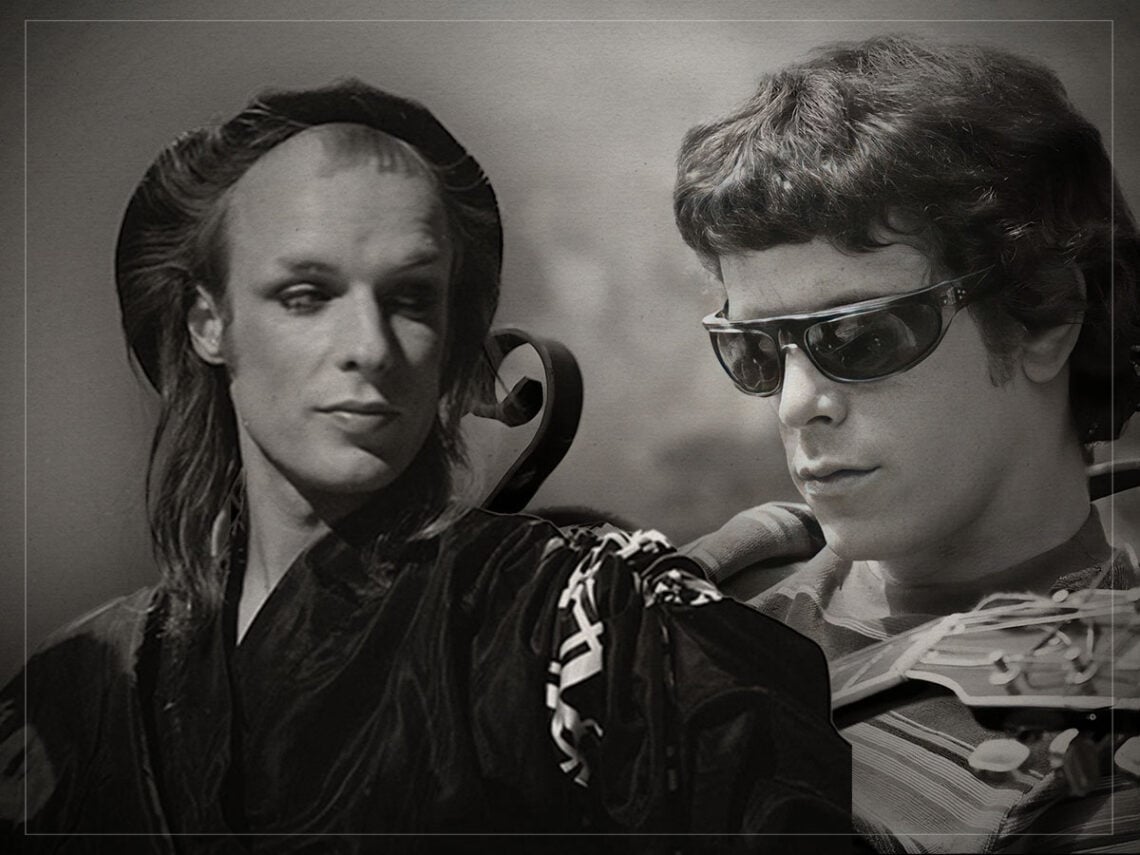
The Velvet Underground changed Brian Eno’s life and British culture forever with one record

No artist is an island. Even the most innovative and inventive creatives need that initial spark of inspiration, and in the 1970s, Brian Eno needed that spark of inspiration to be accessible, or even kind of crap.
The key here is that while Eno grew up around a musical family, with a father who played saxophones, bassoons, organs and more, that doesn’t really translate to rock and roll. In the quiet town of Melton in Suffolk, Eno had the joy of being encouraged in his fine art endeavours, but it wasn’t exactly like there was a thriving rock scene to encourage him.
So for a long time, he strayed down the artistic yet academic path, experimenting as much as his degree at Ipswich School of Art would allow. But slowly, his penchant for stranger projects crept in, and all of them seemed to have a musical element, like lining up some pianos and making a ball bounce between them, calling it ‘Piano Tennis’.
Then, in 1969, a series of moments changed everything for him. The first was when The Who’s Pete Townshend dropped in for a guest lecture, bringing the world of punk and rock to the sleepy town school. As he talked, Eno realised that his world and Townshend’s world weren’t two separate, alien planets. Hearing about his own origins in Chiswick and his lack of formal music training, a sense of permission began to grow. Slowly, he was starting to realise that maybe he could just make music.
That lit the match, then the release of The Velvet Underground’s self-titled third album, was the flame. “It’s one of my big albums,” Eno told Uncut, reflecting on hearing this record as a turning point, “It made a huge impact on me, and it has done ever since”.
At a time when he was beginning to flirt with the idea of rebelling against the more traditional art world to run off into music instead, Lou Reeds’ band seemed to have bottled that spirit. “They broke so many rules. Look what it did with drumming! Instead of having a hairy guy hitting a big drum kit, there’s a girl with one drum, and she plays the simplest things,” Eno said. The list went on: “Sterling was fantastic; a very lyrical player. Early on, you had John playing viola”.
But crucially, Reed seemed to appear as the perfect role model. “You have Lou, who was an enthusiastic but not great guitar player. I thought, ‘Wow, I can probably play like that’,” he said as the scrappiness of the leader felt accessible to him.

Digging deeper, though, there is undeniably a sort of kinship between Reed and Eno. Just like the British artist, Reed started out in more traditional settings, looking for an escape. He started out as an English student in college, writing stories and poems and looking for a way to excite himself. Like the beat generation that came before, both Eno and Reed appear as smart men who enjoyed learning but wanted to break out of the confines, and so DIY music allowed them that.
“That band represented a convergence of a lot of thoughts,” Eno said, and overwhelmingly, the prevailing one was that he wanted to make music. The same year that the record was released, Eno moved to London, getting involved with the Scratch Orchestra and throwing himself headfirst into the city’s avant-garde scene like The Velvet Underground did in the world of New York.
