


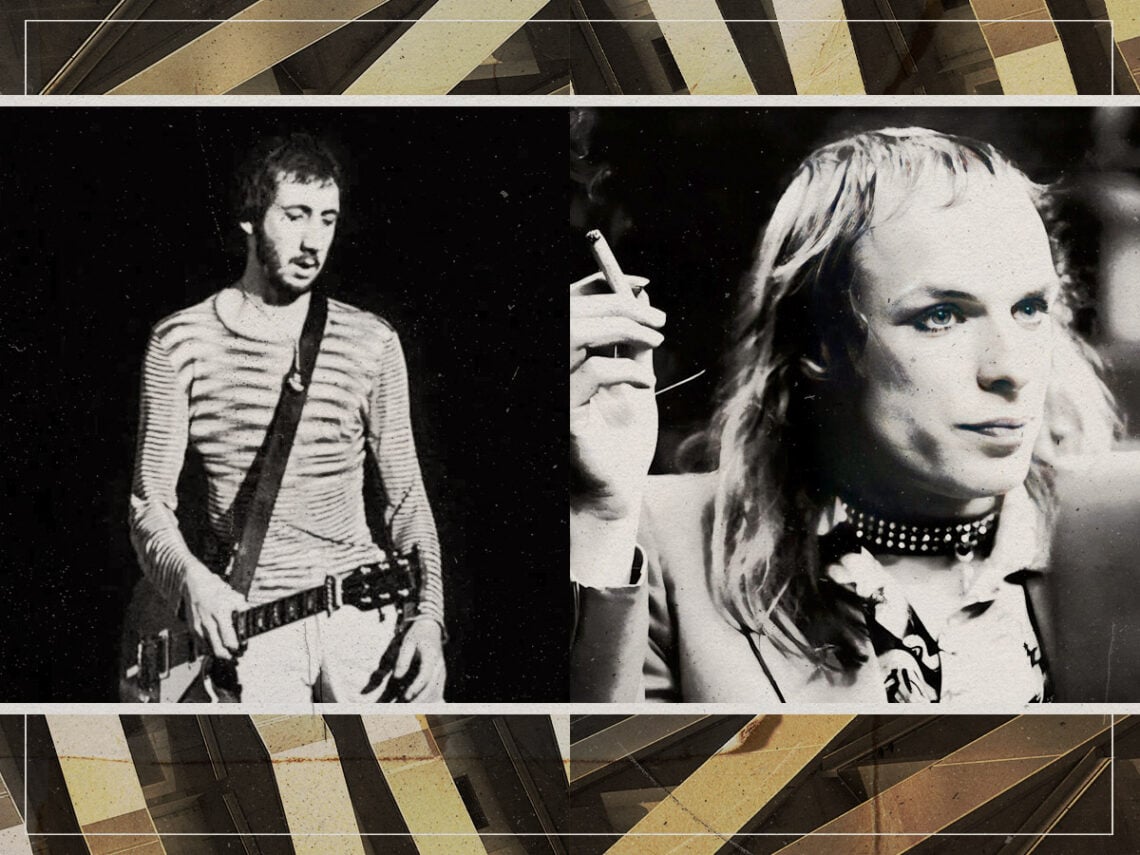
Was Pete Townshend jealous of Brian Eno?

Rock and roll might have originated from across the Atlantic, but it was the British groups of the 1960s that really cemented the style as being a beacon of art and creativity. London during the mid-1960s was practically bursting with defiant, groundbreaking rock outfits, but few would have quite the same impact as The Who. From their humble beginnings in the mod subculture, the young rock rebels soon became one of Britain’s defining rock bands, much to the disappointment of their primary songwriter, Pete Townshend.
Townshend had been a disciple of rock ‘n’ roll from a very young age, having first been inspired to pursue music by very early rock records like Bill Haley’s ‘Rock Around The Clock’. It was only a matter of time before the young guitarist became involved in the music world himself, where he found a natural affinity for adrenaline-fueled rock and roll. However, this flirt with rock was only meant to be a temporary hobby, and in 1961, Townshend chose to enrol in art school, where he would pursue his true desire of becoming a graphic artist.
As you might expect, the success of The Who quickly got in the way of Townshend’s studies at Ealing Art College. In fact, by the time Townshend’s band had morphed from The Detours into The Who, they were already a pretty in-demand live act around London. As a result, the guitarist was forced to drop out of art school in 1964 to focus on music full-time, although he always imagined he would eventually return to his studies.
After releasing their first single, ‘I Can’t Explain’, it became clear that Townshend’s artistic endeavours would have to be put on hold. The track came to define the sound of the swinging sixties, and its follow-up, ‘Anyway, Anyhow, Anywhere,’ established the blossoming pop art movement on the mainstream music scene. The Who gained a reputation for raucous, loud live performances and the kind of anarchic chaos that every rock band should strive for, but Townshend never forgot his artistic ambitions.
If you look at those early Who records, Townshend’s time at art school is plainly evident. Not only did their music draw from the pop art world, but their third album, The Who Sell Out, showcased the postmodern genius of the guitarist’s songwriting.
Nevertheless, Townshend found himself jealous of other, more artistically accomplished musicians like Brian Eno. Speaking to The Guardian, the guitarist once shared, “I think if I hadn’t been bullied into the band, I would have been happier as an art student. I would have been happier in a Brian Eno world. That was the stuff I was trained to do.”
Townshend seemed to think his artistic ambitions were being ignored during the early days of The Who, saying, “I’ve been talking about it all my life as a rock star, and people have been going, ‘For fuck’s sake – shut up and play your guitar.'” Yet, even in the face of incredible fame and success, he always maintained the attitude of, “I’ll go and do the band, and then I’ll come back to art school and be an artist.”
Inevitably, the global fame amassed by The Who prevented Townshend from returning to Ealing Art School as he intended. Seemingly, though, the guitarist eventually accepted that The Who were a stunning artistic endeavour in their own right. “I couldn’t work out why I wasn’t fulfilled by it. So there were periods when I was sarcastic,” he revealed, “I look back and think, ‘Didn’t I realise what I had?’ I had this fantastic band, and I don’t think I realised what I had in the guys until we made Quadrophenia in 1973.” I suppose it is better late than never to realise you are an essential part of one of the most important rock bands of all time.
