


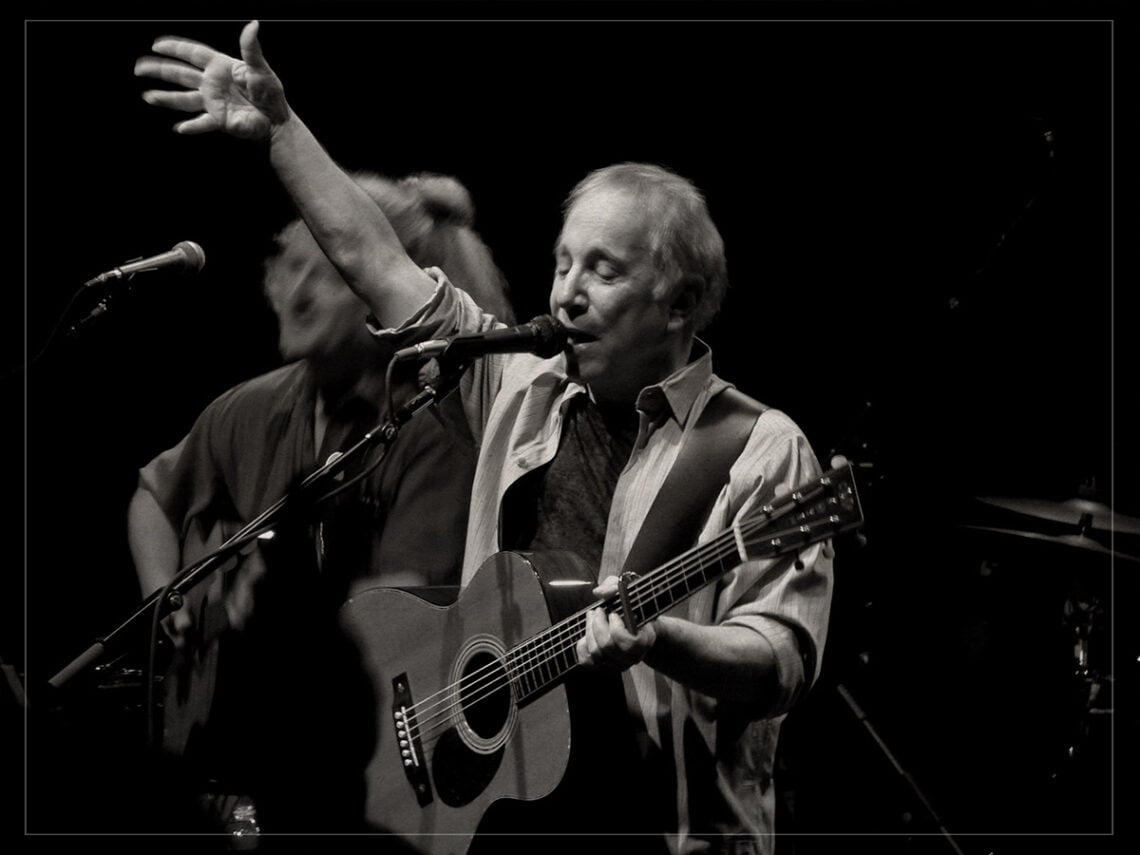
The two songwriters Paul Simon thought got better with age: “At the peak of his powers”

This year, Martin Carthy refreshingly proved that music isn’t just a young person’s game. At 84 years old, the folk artist became the oldest Mercury Prize-nominated musician in history, reminding the world that crucial artistic stories are to be told in all periods of life, not just adolescence.
Because music, like all entertainment industries, tries to force modernity, youth and sex onto us incessantly, projecting this idea that after 29, life no longer becomes interesting. Reality, however, proves that in some cases, it’s the opposite, with wisdom growing stronger with every passing day and through that wisdom comes artistic intrigue.
But in many cases, we fail to see it. The peak of an icon’s career is long in the rearview mirror by the time they reach riper ages and feel less inclined to put pen to paper for something original, but every now and then, when they do, they achieve brilliance. Take Carthy’s Transform Me Then Into A Fish, or Black Sabbath’s 2013 record 13: both prove there are important stories to be told at any point in life.
So how about Paul Simon? One of the greatest songwriters in history who upon bursting onto the scene at 24 years of age, delivered the world with classic hit after classic hit. Remaining faithful to the pursuit of art, Simon is still writing original music, with his most recent album Seven Psalms released in 2023. But unlike Carthy and Sabbath, it doesn’t quite rival some of the finest work he has ever penned, and so refutes my original question of does age bring with it better musical ideas?
“Well, I don’t know. Can’t really address that,” Simon once explained in 2011, talking about the very same sentiment and the work of his peers around him, “Although I must say Leonard Cohen’s doing pretty well at 70.” He continued on, labelling more artists who have continued to make great music as they’ve ripened in age, noting, “And Randy Newman’s last album, Harps and Angels. Fabulous. Really great work. So he’s definitely, definitely at the peak of his powers”.
He discussed how creativity may find itself being expressed through many avenues without looking at superlatives to describe those paths, highlighting, “The creative impulse is varied. Paul McCartney’s writing a ballet. Neil Young is very involved in film. Bob [Dylan] paints. He makes these incredible gates, iron gates. Really beautiful, where he welds things together. So they’re very creative.”
It’s a classic case of critics overanalysing what is a natural disposition for artists. They don’t view creativity in chapters or eras quite like we do but see it as a natural byproduct of their daily lives. Should it be compared with their previous work? It doesn’t seem like that’s for them to say; instead, they continue on writing music that feels truthful to their contemporary experience, and ‘better’ remains subjective.
