


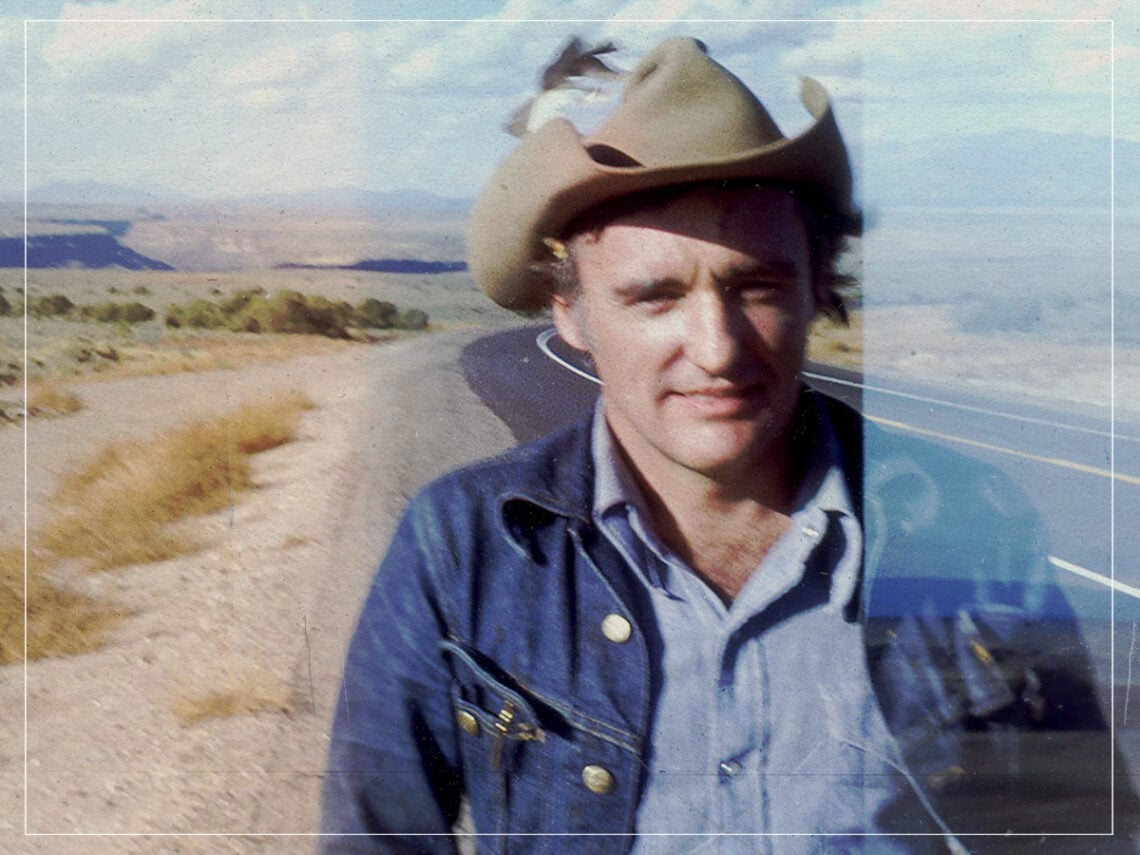
The two most charismatic actors of all time, according to Dennis Hopper: “Half the party would leave with him”

American cinema as it exists today would not be possible if it weren’t for the work of Dennis Hopper, who helped to initiate the New Hollywood movement when his film Easy Rider proved that there was a future for transgressive, independent projects that spoke to a wide audience.
As an actor, director, writer, and visual artist, Hopper did work that was far before its time, even though he managed to get into a few feuds along the way, with perhaps the most significant aspect of his style being that he reinterpreted some of the archetypes of the golden age of Hollywood and found a way to make them feel relevant to a new generation.
Thus, it shouldn’t come as a big surprise that Hopper was highly influenced by some of the acting giants who came before him, including two actors, who he said in an interview, have “this type of magnetism”.
According to him, true charisma is related to a theory that he had about the behaviour among animals, noting, “I’m going back to sort of the ape theory. There’s the apes and they all go, ‘Ooh, ooh, ooh, ooh’, and they leave the room and none of the female apes follow, but then there’s this one ape, that’s been sitting over there, gets up and leaves, and all the females and all the males follow them, and that’s like, there were three guys, when they were young.”
The first actor that fit this description for him was James Dean, who he noted “was a star only in Hollywood and New York because he never had a picture that was successful until after he was dead”.
Dean helped to establish a new movement in anti-authoritarian cinema with Rebel Without a Cause, the groundbreaking coming-of-age film that defined teen culture in the 1950s. However, the actor was killed in a car accident when he was just 24 years old and never lived to see the success of his next two films, East of Eden and Giant, both of which earned him posthumous nominations for ‘Best Actor’ at the Academy Awards.
The other actor Hopper singled out was Marlon Brando, who he said “would come into a room” and then “half the party would leave with him”, whereas when speaking about non-actors, he said the same description applied to Bob Dylan, but that he never saw the same attention towards Elvis Presley.
Like Dean, Brando first broke out as an icon of anti-establishment cinema when he starred in the biker film The Wild One, which was a massive influence on Easy Rider, but his roots were in the stage, hence he would later be best known for bringing the same intensity to his film performances that he did to the theatre.
Brando’s biggest break came when the Broadway run of A Streetcar Named Desire became so popular that the cast returned for a movie adaptation from director Elia Kazan, who later directed the actor in On the Waterfront, which has been hailed as one of the best American films ever made, winning eight Academy Awards, including ‘Best Picture’, ‘Best Director’ for Kazan, and ‘Best Actor’ for Brando.
Brando and Kazan were similar in more ways than one, as they both gained reputations for being notoriously difficult to work with, with the two men finally getting to work with one another in Apocalypse Now, where the friction became so intense that they nearly broke out into a fistfight, truly upholding the essence of apes in the wild.
