


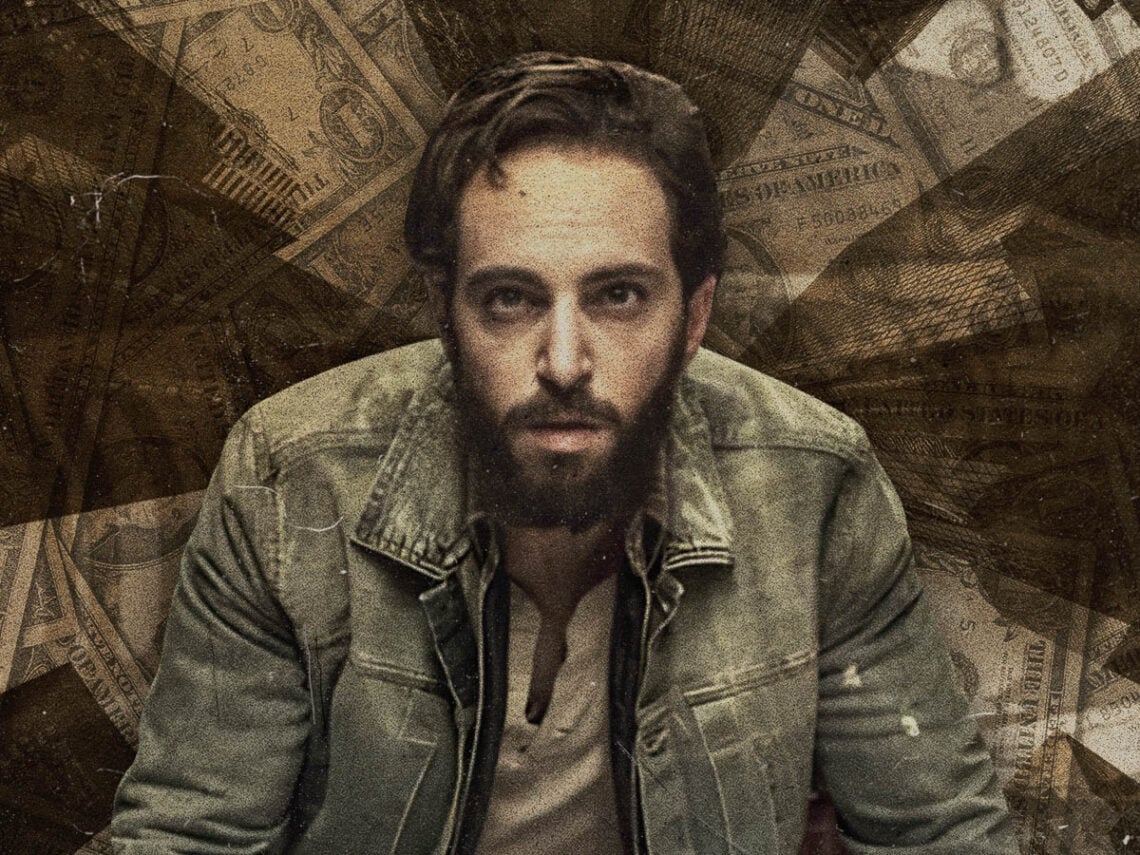
The True Crime of Zachary Horwitz: How not to be a Hollywood hopeful and the dangers of pursuing a dream

Johnny Carson once said that “in Hollywood if you don’t have a shrink, people think you’re crazy.” The rigours of a world where everyone is tirelessly striving for the same dream and the manufactured spotlight of success can be taxing, but the ultimate stress is that it can also all appear to be in vain. When Zachary Horwitz finally acquired his mansion and starred alongside Brian Cox, he appeared to be one of the rare ones who made it through the wringer and achieved his dream.
Horwitz moved to Hollywood without any connections or film qualifications, but he defied the odds and ‘made it’. As he told Swagger Magazine for their big cover story, “[he arrived] with nothing more than his dog, a few suitcases, and a big dream”, and soon he was travelling by private jet to his $6million Westside mansion. The extremes he went to in order to achieve this lifestyle epitomise the dark underbelly of the glossy world we are dealing with. His tale of desperation and deceit also serves as a damning portent to society at large and illuminates the false nature of how we harness our hopes and dreams.
In 2011, Horwitz and his college girlfriend Mallory Hagedorn shipped out from Indiana University and ventured to Chicago to pursue Horwitz’s first entrepreneurial dream of setting up a juice bar. He soon piled his savings into Fül and opened the doors to his first customers. His adult life was off to a promising start. With the business going relatively well, he looked set to be a symbol of American free enterprise.
While setting up his life in the Windy City, Horwitz began performing in the local theatre as a way of meeting new friends. He soon started taking part in comedy shows, going to acting classes, and steadily falling in love with his new hobby. Within a year, the hobby seemed to be more of a priority than Fül, and the business was ostensibly in danger.
However, Hagedorn’s worries about the juice enterprise were soon washed away with a massive windfall of good fortune for the young couple. Fül hadn’t yet been open for a year, but it managed to catch the eye of Starbucks’ founder Howard Schultz. Horwitz showed his girlfriend an email from the billionaire chain mogul saying that he was impressed by Horwitz’s business acumen and drive. It continued to offer Horwitz a lucrative job in Los Angeles as the leader of the entrepreneur outreach program for his venture capital firm Mavron. This was simply too good to turn down.
So, the young couple shut down Fül for good and headed over to the West Coast. While Hagedorn began pursuing a career as a hair stylist, Horwitz was building up his esteemed position in Mavron. He would frequently be called away from social events to meet with Schultz, and the Starbucks founder was proving so demanding with Horwitz’s workload that the young hopeful began drinking a lot more and taking Adderall and Xanax daily.
Naturally, this distressed Hagedorn. However, she was reassured by Schultz’s personable ways and the fact that he would even sometimes email her directly. She had call to be optimistic that this stressful period would soon be over, and her partner could rise up the ranks and organise his workload.
The truth, however, would have distressed her far more. Schultz, like everyone else in the war bar – a few loyal customers in Chicago, had never heard of the failing juice bar Fül, and he certainly hadn’t heard of Zachary Horwitz. All of the supposed communications from the renowned businessman were falsified by Horwitz by creating a fake email address and sending correspondence to himself. The real reason he had moved to Los Angeles was to pursue his new dream of becoming a Hollywood A-lister. He had secretly been auditioning around the clock and scheming to fund his ambition.
Sadly, he lacked natural acting skills, and roles were not forthcoming. However, ask anyone in Hollywood, and they tell you that this is actually a very small part of the battle. When you couple that with Marlon Brando’s decree that “most of the successful people in Hollywood are failures as human beings”, you have yourself a very dangerous cocktail.
So, Horwitz changed his tact and went by converted to the stage name Zach Avery and soon decided to prioritise networking with the right people above auditioning. He met two young fellow hopefuls, the would-be directorial duo Julio & Diego Hallivis. While he didn’t have much of an acting CV to wow them with, he did have his trump card: Howard Schultz. They, like everyone else he had spun this lie to, were impressed and decided to go into business with this keenly driven individual.
Together, they created a company called 1inMM, a production company that would allow them to fund and make their own films. They would achieve this through networking and then garnering profits by selling off the rights to the movies. This allowed Horwitz (now going by Avery) to land a few roles to boast about, including an appearance in the Brad Pitt war movie Fury… albeit as an uncredited extra.
Nevertheless, his lifestyle seemed oddly outsized to his humble career. His money was, however, ostensibly coming in from his successful production scheme. 1inMM managed to enter a partnership with a major TV distributor in Latin America. The plan was simple: acquire cheap English films and sell them, lease the distribution rights to Spanish-speaking countries, bolstering Netflix and HBO’s catalogues in the region.
However, while this ticked things over, the newly christened Avery wasn’t content with merely being an uncredited extra. Alas, he wasn’t as far as his portfolio was concerned. If you take into account all the falsehoods, he was a fledgling Hollywood star with links to billionaires, his own international production company and ties to Netflix and HBO.
Thus, he began to sell this picture to investors—the first of which were his old friends from home. Luckily, his friends happened to be working in investment banking. So, they assessed his claims and pledged him loans from their personal savings. The licensing agreements that he had with Netflix in order to sway their personal funding were, once again, falsified by Horwitz.
He did manage to repay the initial investments with the promised interest before deadlines, seemingly ratifying his claim that his scheme printed money. So, his friends began to get their families involved, and the Ponzi scheme was afoot. All the while, with money flooding in, Horwitz married his long-term girlfriend, started a family of his own, worked on his acting craft and networked his way into a few bigger roles, including a leading role in the 2020 film Last Moment of Clarity.
He was a trusted industry insider. So, his banking buddies set up JJMT Capital and began sourcing an investment network to help fund his production scheme. During an era when streaming was beginning to look like the definitive future of entertainment, his lucrative business model seemed like a sure-fire draw for investors. Ordinary citizens were already looking to put pension funds into firms like Netflix and Disney+, and here you had someone operating an even more lucrative short-term payback system.
In the end, JJMT ended up funnelling $490million into 1inMM through a network of ordinary investors. Naturally, this bolstered his CV, and he was cast in projects like the Ralph Fiennes-directed The White Crow. He began to establish his own Hollywood narrative, telling Swagger: “I always had that little dream of getting ‘discovered’ and almost immediately cast in the perfect film, but that’s all it was in reality… a dream. The pursuit of this career takes determination, perseverance, and a ridiculously strong mind.”
He failed to mention the Ponzi scheme or even his production company in sanitised terms. And nobody seemed to look into his steady uprising. It wasn’t until a private investor named Jim Russell got involved that things began to look amiss. While weighing up investment opportunities with 1inMM, Russell became concerned about why Horwitz would refuse to send proof of financials and instead provided emails from HBO as evidence of funds and transactions. They tentatively provided $80million in loans over the next few years while attempting to scrutinise the scheme more closely.
Thus, the red flag seemed glaring to them when in 2019, Horwitz’s loan repayments suddenly began to falter. He had skimmed too much money to be able to repay them. The Ponzi scheme had worked by Horwitz paying initial investors in his non-existent streaming rights enterprise with funds acquired from further investors, all while he skimmed cash off the top for his high-flying lifestyle. However, new investments began to falter. He was left with a deficit of the money he had frittered away personally. In the end, it is alleged that the scheme involved $690million. The SEC claim that $227million of that was acquired since 2018, when Horwitz began defaulting on all payments.
He has since been sentenced to 2022 years in prison, and his wife has divorced him, citing that he had been “deceiving and manipulating me and everyone around him, and he is not the person that I believed he was.” By everyone around him, she highlights the fact that he had essentially bankrupted a multitude of families who were fraudulently conned into investing.
While this story might be an extreme case, it does illuminate the dark side of the societal notion of a ‘dream’. All too often, that dream is a secondary symbol of success rather than a personal one. While the psychology of Horwitz must be examined throughout, one of the small but vital details lost in all this is that the impetus came when he innocently fell in love with acting while enrolling in local clubs in Chicago.
But soon, his sole motivation was a success rather than the contentment of doing something you love for the fun of it. Hollywood, in some ways, epitomises the dangerous instilment of modern society that everything has to be achievement-orientated and everybody has to win rather than partake.
