


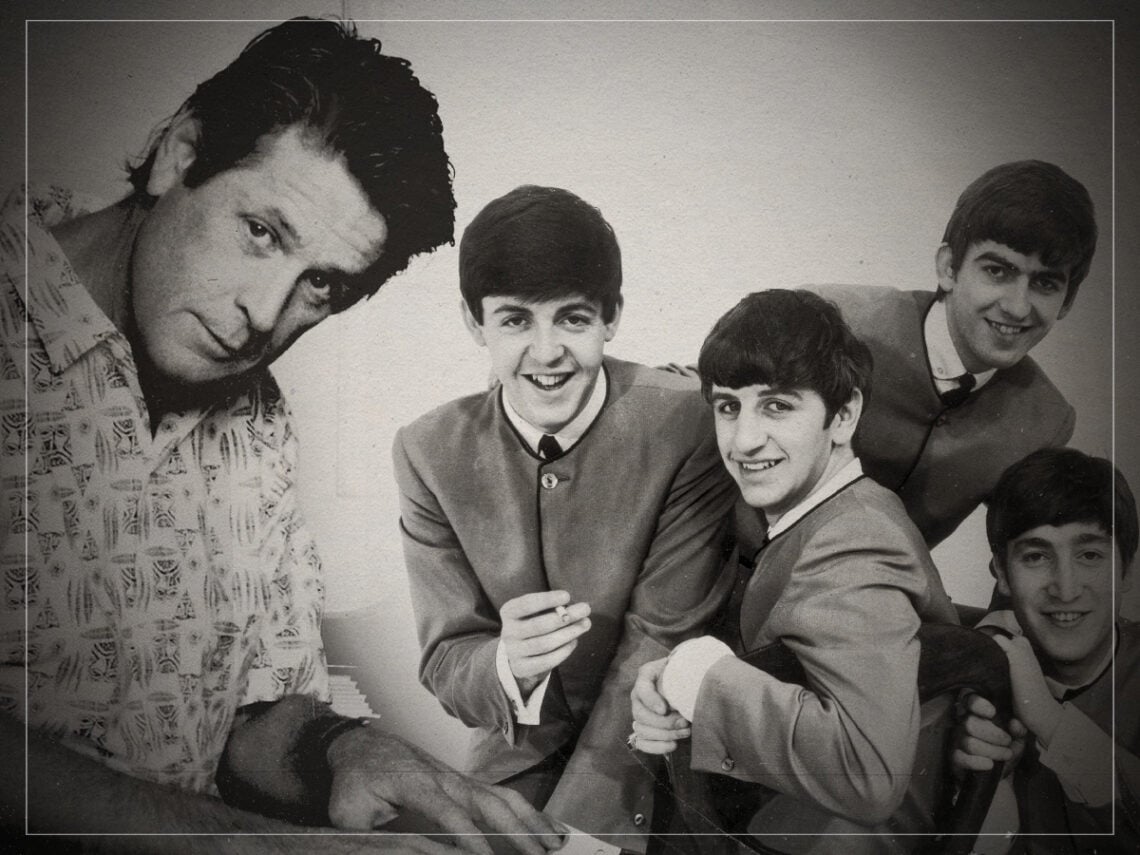
The tour that ruined Brian Wilson’s love of performing

For most people, the idea of touring still carries a kind of romantic sheen.
To a young band slogging it from service station to service station in a clapped‑out van, living off McDonald’s and adrenaline, the thought of private jets, hotel suites and a tour bus with a built‑in coffee machine sounds like the promised land. As AC/DC will tell you, it’s a long way to the top if you wanna rock ‘n’ roll, but the truth is that the machinery of touring – however glossy the packaging – always has a way of wearing people down. The scale changes, the budgets change, the catering definitely changes, but the human body doesn’t.
Exhaustion doesn’t care whether you’re sleeping on your mate’s floor or sinking into a five‑star mattress, and homesickness is homesickness, even if the room service menu is nicer. Even supermodels, whose lives seem impossibly curated from the outside, often struggle under the same relentless pace – as American supermodel Anok Yai once proved in a viral video filmed backstage at a fashion show, where she admitted “I know when I’m tired because I forget what country I’m in. I got really tired in New York and thought I was in Paris, and then in London after the show I thought I was in Milan.” It’s a snapshot of what happens when your life becomes a blur of airports, dressing rooms and unfamiliar ceilings: the body keeps moving long after the mind has checked out.
For Brian Wilson, his body finally refused to keep going on December 23rd, 1964. Overwhelmed by the so-called “British Invasion”, increasingly disillusioned with the Beach Boys’ surf-rock image, and exhausted by the pressures of effectively managing the group, The Beach Boys were only minutes into a flight to Houston when he suffered a severe panic attack. Al Jardine later recalled how terrified they all were: “He obviously had a breakdown. None of us had ever witnessed something like that” – clearly, years of pressure, breakless work (the band performed 181 times in 1964) and what was almost certainly clinical exhaustion had finally boiled over.
The Houston Press, in the blunt language of the era, reported that Wilson was crying and “screaming” on the cabin floor – unfortunately journalists weren’t exactly gentle about mental health in the 1960s, especially when the person suffering was a famous rock star. After the plane landed, Wilson begged to be sent home, but desperate to keep their ‘everything man’ with them, the band tried to settle him in a hotel. But the panic didn’t subside, and he was later found almost paralysed in his dressing room; the Beach Boys performed without him that night, then sent him back to Los Angeles.
Once home, Wilson made the decision, which was pretty radical for the time, to step out of the public eye. What was meant to be a short break stretched into a 12‑year hiatus, as he later explained: “I felt I had no choice, I was run down mentally and emotionally because I was running around, jumping on jets from one city to another on one‑night stands, also producing, writing, arranging, singing, planning, teaching […] to the point where I had no peace of mind and no chance to actually sit down and think or even rest.”
But stepping off the stage didn’t mean stepping away from the band, with Wilson remaining the creative engine of The Beach Boys, pouring everything into the studio. Without that retreat, perhaps we wouldn’t have Pet Sounds, Summer Days (And Summer Nights!!) or that stunning opening orchestral swell on ‘California Girls’. And while The Beatles seemed to enjoy the circus of touring far more than Wilson ever did, perhaps his withdrawal to the studio in 1964 might have lodged a quiet thought in their minds before their own exit in 1966. The success of Pet Sounds showed that putting the studio – and yourself – first could lead to new creative frontiers, not a fall from grace.
