


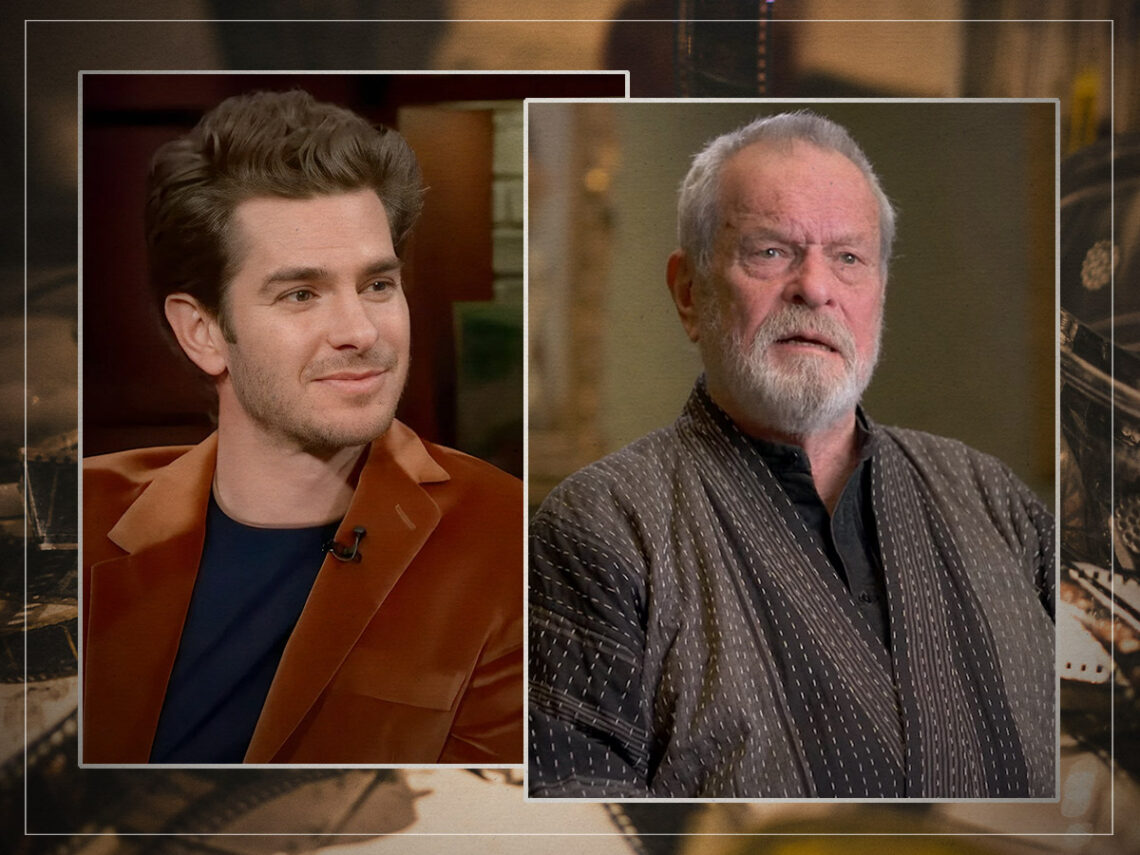
The Terry Gilliam film that Andrew Garfield adores: “A masterpiece of rebellion and insanity”

Andrew Garfield has developed past the point of needing to prove anything, with an ever-evolving screen presence that marks him as one of the greats through his captivating vulnerability and intuitive understanding of the human psyche.
After a meteoric rise to fame as Spider-Man, the actor charted new dramatic depths by working with directors like Robert Redford, Mike Nichols, Martin Scorsese, and David Fincher. After starring in some of the most acclaimed masterpieces of this century, the actor showed an eclectic taste in cinema.
However, while Garfield is now a seasoned veteran of the industry and all the madness it presents, he is still perturbed by the pure insanity of one director and his notoriously dystopian style, creating surrealist stories that make you doubt yourself and the evil beneath the surface of the world around us.
Many people felt like they were losing their minds after watching Fear and Loathing in Las Vegas for the first time, with a trippy and heightened style that capitalises on the drug-fueled madness that the central characters succumb to. It’s a distinct style that director Terry Gilliam came to be most well-known for, leering into the inner corners of our minds through dark and twisted subject matter that preys on the issues that define the real world.
Funnily enough, this is subject matter not uncommon to Garfield, with the actor diving into complex thematic arenas through films like Under The Silver Lake, Mainstream and Silence, although perhaps was able to fully lean into this side of his interests through his collaboration with Gilliam, with the pair working on the 2009 film The Imaginarium of Doctor Parnassus.
While it was another display of cryptic genius from Gilliam, you could argue that the director best articulated this style through his 1985 film Brazil, becoming to be most well-known for his dream-like odyssey about a man trying to find a woman who has been appearing in his dreams.
It’s a brilliant and dystopian melting pot of humour, darkness and biting satire, following the journey of one man as he battles through bureaucratic processes in a world that tries to prevent truth from coming to the surface. It couldn’t be more relevant today, with Garfield sharing his love for Gilliam and the film in the Criterion Closet by saying, “I adore it, it’s so inventive. It’s 1984-esque, it’s dystopian, it’s anti-capitalist, it is anti-commercialism, it is a masterpiece of rebellion and of insanity and Jonathan Pryce has never been so incredible”.
Ultimately, Gilliam presents the idea that our dream worlds become all the more enticing when faced with the chaos and pain of a broken world, something that becomes more present in our current world as people attempt to escape the horrors of everyday life through film and television. It’s a concept that Gilliam cleverly articulated through a story that both buries our heads in the sand and abruptly lifts us out of the fog, forcing us to reckon with the injustices of the world and ways that we cope with them in real life.
There is no doubt that the film has been an influence on the rest of Garfield’s career, and we can be sure to see more stories of this ilk cropping up as the dystopian world on screen continues seeping into reality.
