


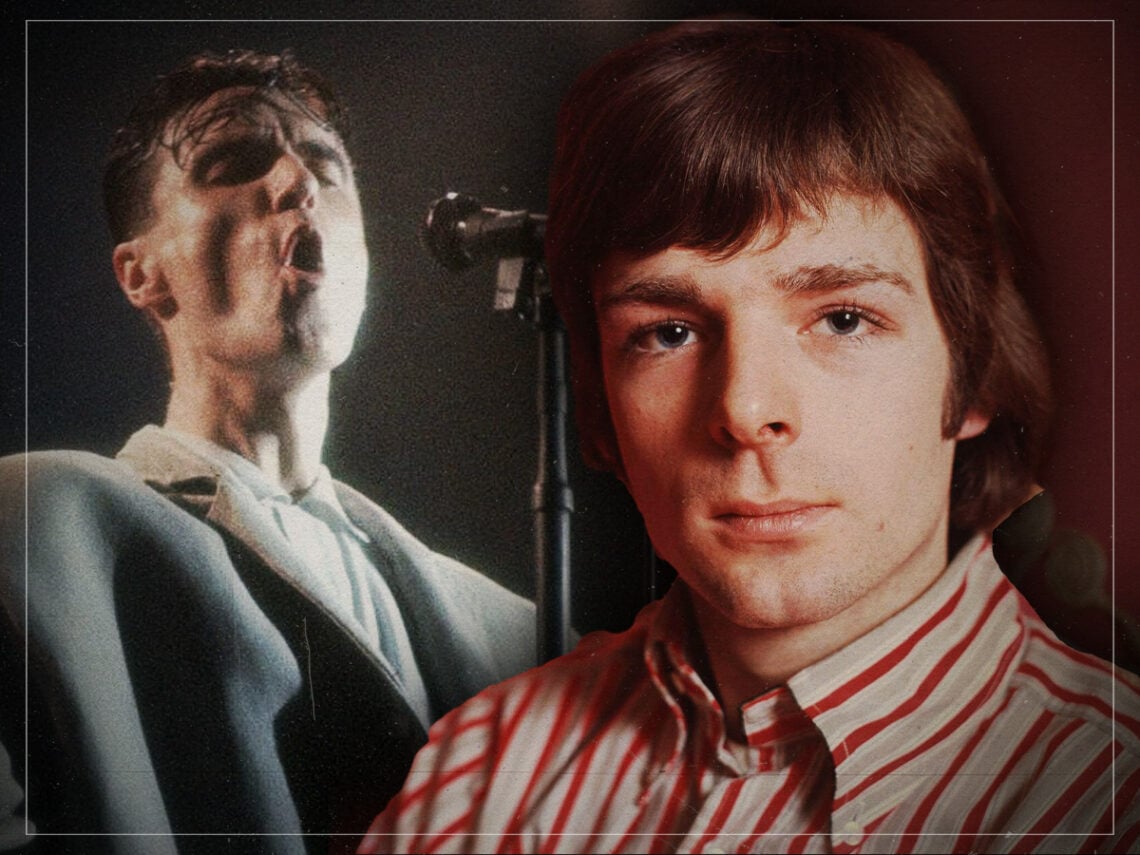
The Talking Heads song Richard Wright “couldn’t stop playing”

While many of the standard bearers of classic rock are too preoccupied with defending their own mythologies to distil praise down to the generations that followed them, Pink Floyd keyboardist Richard Wright was never stricken with this egotistical ailment.
His vocal fandom for the Talking Heads, as an example, was as much about the post-punk band’s general ethos as their sound, which saw him claim in 1996, “You could always tell that they weren’t writing to be commercial. They were just doing the music that they really felt”.
Wright didn’t make any mention of it at the time, but he might have also had a subconscious appreciation for how Talking Heads had broken up, a brutal but final parting of ways that left no room for the sort of slow, passive-aggressive, on-and-off demise that plagued Pink Floyd, a band Wright left and rejoined several different times between 1979 and 1996.
The rest of the Talking Heads certainly had a right to be pissed off with David Byrne when he abruptly pulled the plug in 1991, but they couldn’t exactly accuse him of sending mixed messages from that point forward. By contrast, Wright sometimes seemed to play the role of the innocent child in Pink Floyd, stuck between his feuding, soon-to-be-divorced parents, Roger Waters and David Gilmour.
By the time The Wall came out in 1979, his once vital contributions to the Pink Floyd sound had been squeezed down to a trickle of input: a few keyboard lines recorded in the studio late at night after his bandmates had gone off to bed. As such, Wright’s name wasn’t even included in the liner notes to the first pressing of The Wall, an oversight that was subsequently fixed, but which had nonetheless communicated the inevitable that would lead him to quietly exit Pink Floyd after The Wall tour concluded.
At roughly the same moment, with his musical future suddenly in question as the 1980s began, he heard the newest Talking Heads album and felt a jolt of inspiration.
“Remain In Light really knocked me out with all the cross-rhythms,” he said in a 1996 interview, referring to the Talking Heads’ 1980 studio album, often cited as their finest, adding, “[Tina Weymouth’s] bass never seems to come in where you’d expect it… Of course, I didn’t analyse it when I first heard it, but I just knew that there was something different going on.”
“I couldn’t stop playing ‘Once In a Lifetime’ when I first got the album,” Wright noted, “because it was the perfect example of that fantastic Talking Heads trick where they combine quirkiness with a real melodic ear. That’s not easy to do, especially if you’re trying to retain some integrity… There was something incredibly spontaneous about them.” He then went on to lament how he could never see them live, thanks to the burdens of being in a band, which severely limits the time one has to see others play.
It’s possible that he, as a member of the Rock and Roll Hall of Fame himself, might have finally seen the Talking Heads perform during their very brief, one-off reunion set at their own Hall of Fame induction in 2002. Three years later, Wright, Waters, Gilmour, and Nick Mason had their own last hurrah, performing together as Pink Floyd for the final time at 2005’s Live 8 concert in London; however, any hope of a lasting peace among the original Floyd line-up ended in 2008, when Wright died from lung cancer at the age of 65.
