


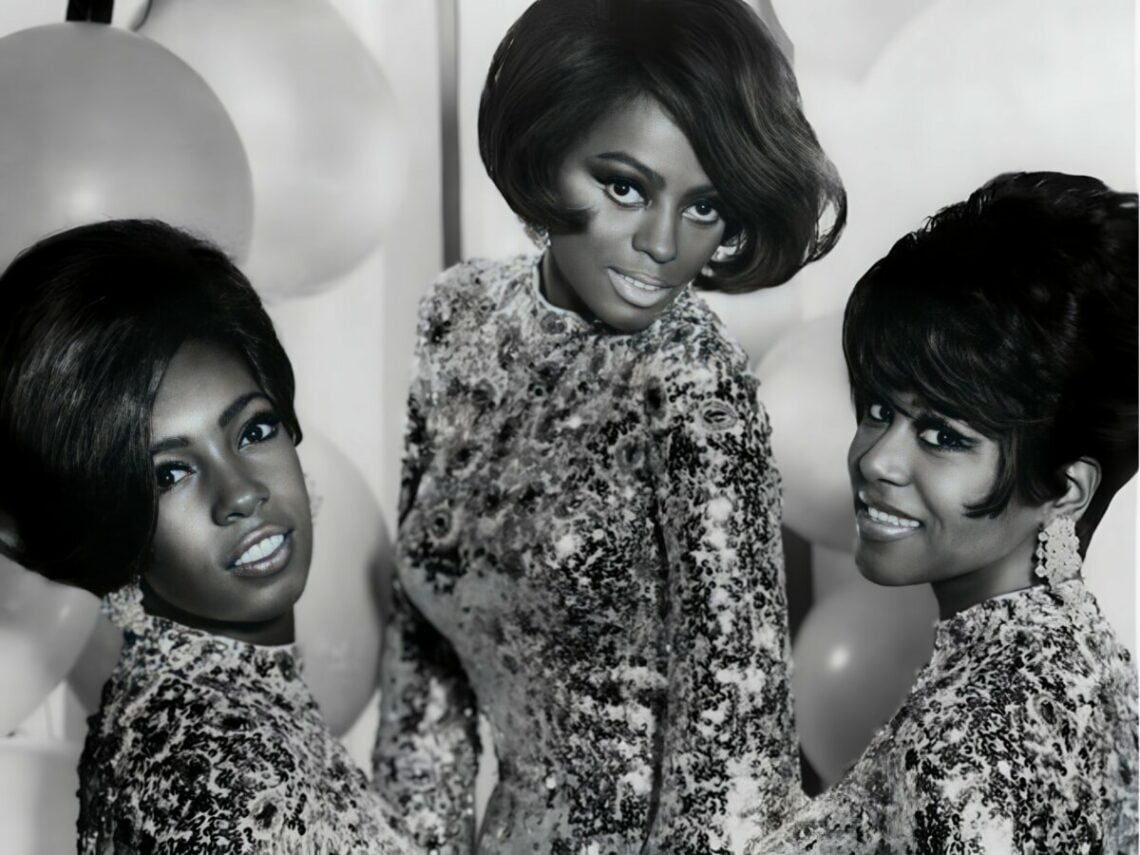
The Supremes: from Motown’s “no hit” joke to America’s most successful group

Motown Records orchestrated a cultural phenomenon during its 1960s heyday, bringing Detroit soul and R&B music to the masses by releasing countless now-iconic tracks. Nevertheless, the record label was always, at its core, a business. As such, label boss Berry Gordy was always chasing mainstream success and hit singles above everything else; hit records kept the lights on at Hitsville USA. The Supremes were among Motown’s most successful artists in that regard, but the Diana Ross-fronted group were not always on top of the Motown pyramid.
Gordy was still a young man when he established Tamla Records – the label that morphed into Motown after a few years – and, although he certainly had experience in the music industry, the early days of the label were dictated by trial and error. While finding its feet as a label, Motown released swathes of singles, varying in style from soul to surf rock, in an effort to see what stuck with the American music buying public.
Admittedly, Motown discovered the key to success much quicker than many other independent labels of the era. Barrett Strong’s ‘Money (That’s What I Want)’ marked the label’s first hit single, while The Marvelettes earned Motown its first number-one in 1961 with ‘Please Mr. Postman’. From then on, the label put out a seemingly endless run of now-iconic hit singles, dominating the US singles charts and launching a plethora of musical megastars like Stevie Wonder, Marvin Gaye, and Mary Wells.
The same year that Motown achieved its first number-one single, Gordy signed The Supremes after an endorsement from Smokey Robinson. Their first single released on Motown was the Diana Ross-led ‘I Want a Guy’, and the following two years would see the group release five more singles, alternating between lead singers. None of these singles courted the attention of the singles charts, and Gordy began to grow frustrated with the lack of returns on his contract with the group.
To make up for their lack of hits, The Supremes often pitched in on recording sessions for other Motown artists as back-up singers or, at their most underutilised, hand-clappers in the background of tracks by Marvin Gaye or The Temptations. Still, the group had earned the disparaging nickname ‘no-hit Supremes’ around the Hitsville USA studios and Motown offices.
So, how did the group go from being the laughing stock of Motown’s studios to their most successful export? In 1963, after a string of failed singles, Gordy began taking a personal interest in The Supremes, dictating that Diana Ross should be the predominant vocalist and managing them much closer than other artists on his label. This certainly gave the band a greater sense of cohesion and direction, but ultimately, it was the incredible songwriting team Holland-Dozier-Holland that pulled The Supremes out of their hit drought.
‘When the Lovelight Starts Shining Through His Eyes’ was written by the songwriting trio specifically for The Supremes, and it ended up reaching number 23 on the Billboard Hot 100; their first single to break into the top 40. From that point on, Holland-Dozier-Holland wrote an impressive run of groundbreaking hits for The Supremes, including iconic tracks like ‘Where Did Our Love Go?’, ‘Baby Love’. ‘Stop! In the Name of Love’, helping to make The Supremes one of Motown’s most successful groups.
Reflecting the importance of Holland-Dozier-Holland’s songwriting for The Supremes, when the songwriting trio acrimoniously parted ways with Motown in 1968, the group’s material suddenly became much less successful in the charts, often stalling around 30 in the Hot 100.
This led Gordy to completely revamp The Supremes as Diana Ross and The Supremes, and, eventually, Diana Ross left the group to go solo in 1970. Now, Diana Ross is a name renowned around the globe for her stunning vocals and extensive career in the music industry, a far cry from the ‘no-hit Supremes’ nickname banded around Hitsville USA during the early 1960s.
