


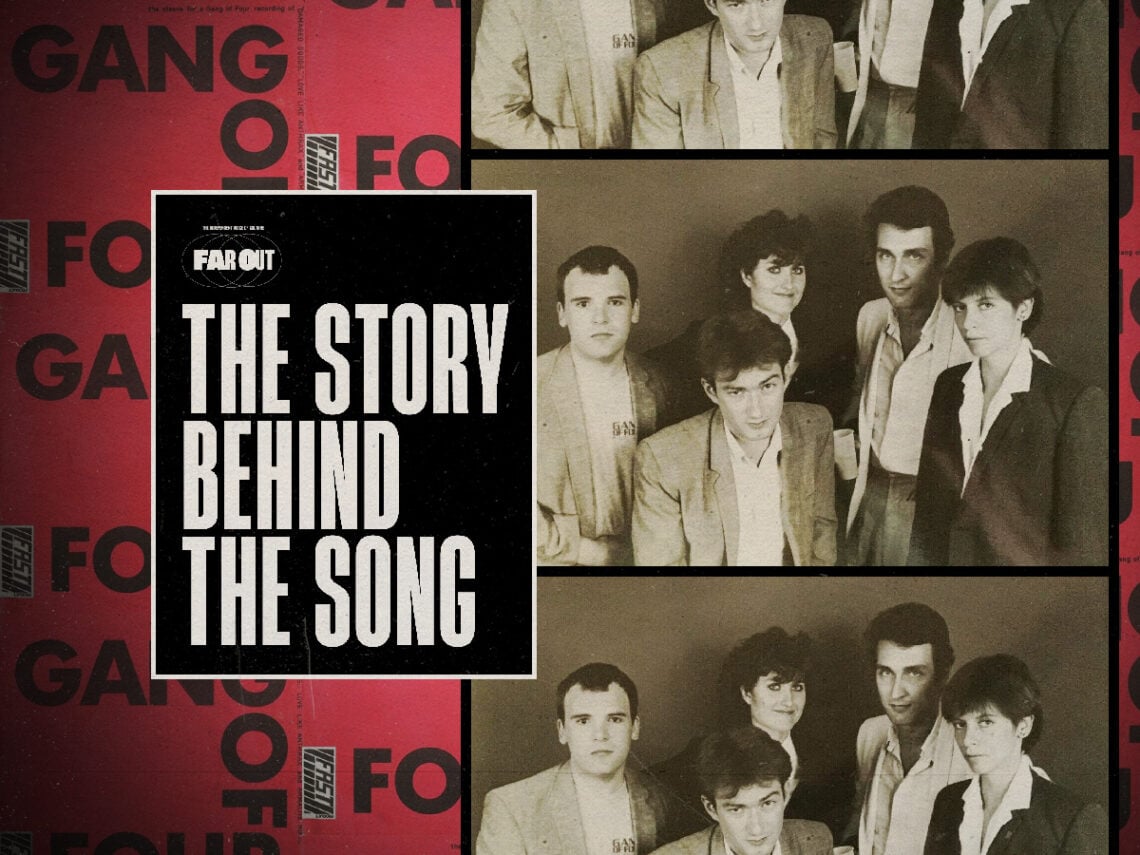
The Story Behind The Song: The supermarket origins of ‘Damaged Goods’ by Gang of Four

“Andy [Gill] and I had an extreme view about what we wanted,” Gang of Four frontman Jon King said in 2005, looking back at his band’s early days as art students in Leeds, “We didn’t want the music to be shrouded in mystery. We wanted every instrument to sound like itself…we wouldn’t use any tricks.”
Emphasising “authenticity”, as King put it, made sense as a pushback against the popular trends going on in the late 1970s, from disco to prog rock, but Gang of Four were soon pushing back against the original pushback, too, as they found themselves disenchanted with a lot of the punk rock scene, particularly the skinhead contingent that seemed to populate that territory.
“People weren’t quite clear what punk rock was all about at that time,” drummer Hugo Burnham said, “You had to be very specific about what you stood for, and we didn’t want to be the soundtrack to their [racist] bullshit.” And so, while hardly setting out with a specific manifesto of doing so, Gang of Four, arguably, invented ‘post-punk’.
From their earliest gigs, starting with a set in the Cellar Bar in the Leeds Corn Exchange in 1977, the band made it clear that they were diverging from The Clash or Sex Pistols’ playbooks. They had a similar manic energy on stage, but the lyrical content was a bit more high-brow and less on-the-nose, alongside which Dave Allen’s bass was bouncier, and Gill’s guitar work, while still rough and amateurish compared to, say, Mark Knopfler, was more distinctive and ‘out there’ than Johnny Ramone’s.
“Andy had this genius way of flicking his fingers and stabbing at the instrument like it was his personal enemy,” King told The Guardian in 2025, “which would become hugely influential”. [Gill died in 2020].
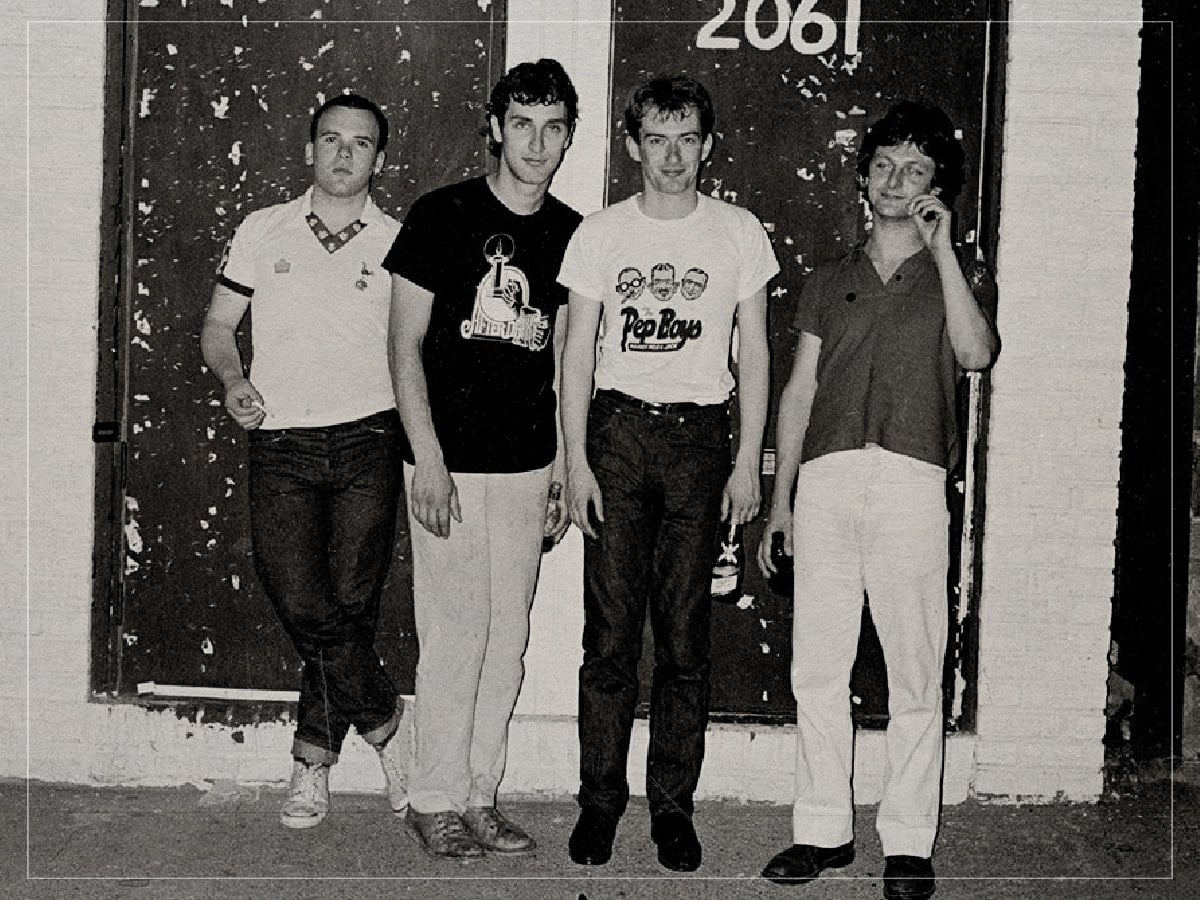
Gang of Four had a clear funk and R&B influence, as well, which King said made them more like a disciple of the Essex pub rockers Dr Feelgood than any of their punk peers. By the time they’d released their debut single in 1978, however, any such comparisons to the stuff of the past was out the window. “‘Damaged Goods’ opened the floodgates,” King claimed, “We brought funk to punk”.
While it was eventually re-recorded for their debut studio album, Entertainment, the original EP version of ‘Damaged Goods’ was laid down in a studio in Rochdale in October ’78. It was a satirical look at the sexual politics of the ’70s, but certainly through a mischievous, punky, and pun-heavy lens: “Give me the change you said would do me good / Refund the cost / You said you’re cheap but you’re too much”.
Some of the wordplay, King later recalled, was inspired by a walk through the aisles of a Morrison’s supermarket in Leeds, and reading one cost-savings sign that said, “The change will do you good”.
“I found this good starter for words,” King told Clash in 2009, “about a doomed relationship where legover [sex] had become, maybe, too much of a good thing. Or at any rate, a thing. Andy punctuates the main lyric with a call and response thing and sings the iconic mid-section: ‘Damaged goods, send them back!’ The music’s cute: alternate the guitar and bass: duh duh dink! Duh duh dink! And build the song around this R&B clatter among dynamic dropouts where everyone got to feature. We didn’t want a pop structure. We’d had it with dominant, subdominant, tonic chord progressions. So we had none, instead!”
The unusual and immediately attention-grabbing sound of ‘Damaged Goods’ made it one of the surprise indie hits of the year and one that would go down as one of the great debut singles in British rock history. Nonetheless, King and his bandmates saw very little financial benefit from its release on the small Scottish label Fast Product, inspiring them to jump ship to EMI and Warner Brothers for their first LP, which would include the updated and more generally recognised version of the song.
Taking a major label’s money didn’t make Gang of Four a lot of new pals in their old Leeds circles, but the band had also graduated beyond the old self-sabotaging rules of punk: To shake up the status quo, you had to be willing to mingle with it in a way.
King told the Yorkshire Post in 2022, “I suppose one of the reasons that what we did then is still being talked about now is because it doesn’t really sound like anybody else, and it’s not commercial at all. I mean, it’s outside of music. It’s very hard to think of, you know, a Taylor Swift song sitting alongside ‘Natural’s Not In It’ on the radio. I like Taylor Swift, I’m not dissing that kind of thing, but it’s not in the same world. And it never was.”
