


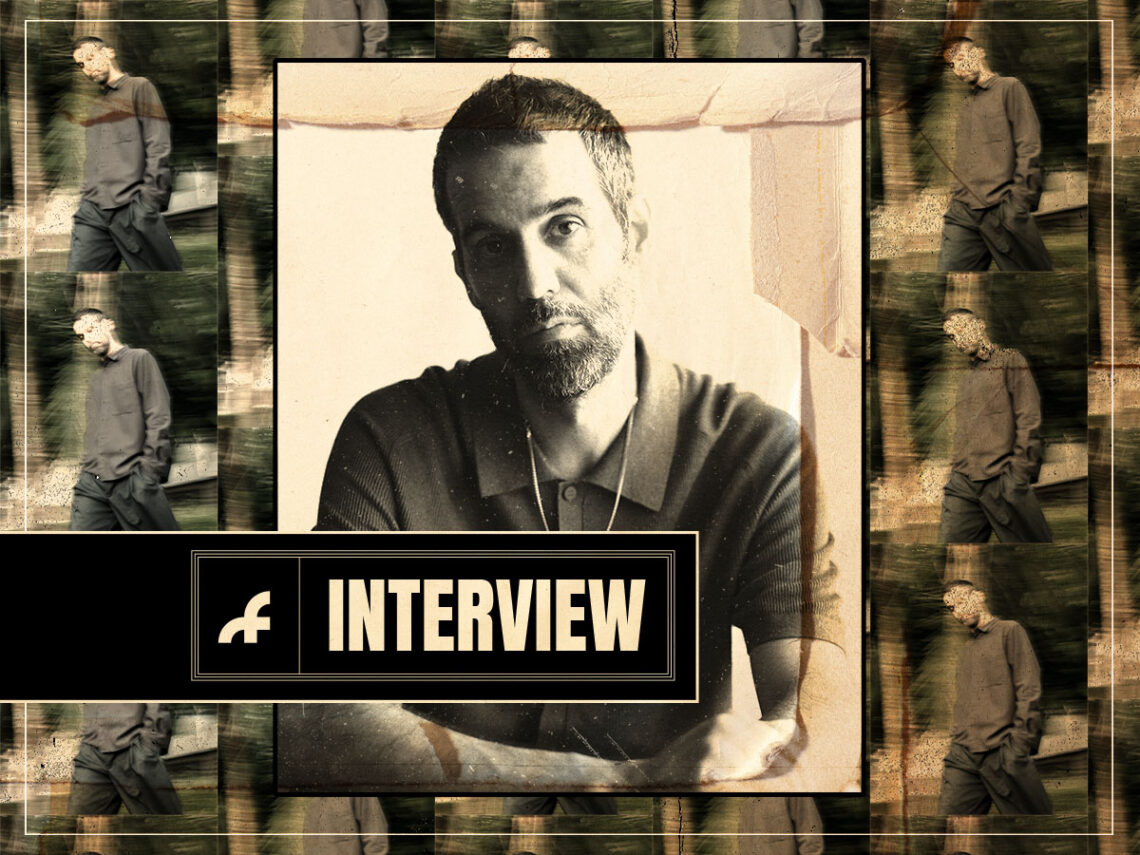
The stunning worlds of Zabala: “Music can generate a brand new space”

TikTok virality demands, the iron claw of streaming services, more for less, and a thousand other plagues have beset modern music. We’re inundated with the noisy rabble these issues raise. However, the inverse of this harsh commercial reality is that it has never been easier to opt out. A mass of artists around the world, cut loose by any promise of commercialism, have decided to explore the riches of everything else, freeing creativity from former confines.
Few artists exhibit that more than Zabala. I knew I’d like him before I’d even heard him. I clicked on the video for ‘Urtu’, not knowing I was still connected to the living room speaker – the craven undoing of many relationships – and I was met with imagery so stunning it was impossible to imagine the potential that the music to match was anything short of magnetic. Therein lies the appeal of ‘now’ for the modern artist—the chips might be stacked against them in many ways, but they have more to play with, more possibilities than ever before.
Speaking about those visuals, Jon Aguirrezabalaga, the Basque multimedia artist behind Zabala, tells me, “Visuals are an essential part of my project. From the beginning, it was clear to me that Zabala had no sense without certain images and visuals that could help create an artistic universe. That’s the reason why in every gig I play, my brother is on the stage with me VJ’ing and interacting with me with different kinds of images.”
That creates not only an embalming live show but also expands the world that Zabala draws from. “I feel really inspired by different kinds of visual arts,” he explains. “When I feel my creativity is blocked, I try to make new scores for films that I love, and most of the time, I come up with interesting things. ‘Molokai’ or ‘My Mexican Bretzel’ were composed that way.”
This perfectly signposts how the rise of technology has democratised the making of music. As the ambient musician Ryan Dann recently told me: “I think that there’s always been a part of me that wants to be a filmmaker, but it’s really expensive. And I’m just not suited to it. You have to be kind of a business person to be a good film person. I’m not good at any of that stuff. But the story of a film, the way that a scene moves, the dialogue, all that really resonates with me. And so I think I’ve tried to become a filmmaker through music.”

That’s a familiar tale, one ratified by Zabala’s own story—you can now make movies without huge funding. In his own way, Zabala is as much a filmmaker as he is a musician. His music weaves with a mystic narrative, like an improvised short, stirring up images at the whim of keys and synths. This outlook has also spawned a blossoming community of like-minded souls who are creative in their all near-enough neo-socialist manner.
Take the stunning video for ‘Urtu’, for example, “Rafa Zubiria, a friend of mine, has been living in Thailand for six years,” Zabala says. “He is an incredibly talented video maker, and he talked to me about the remains of the Chinese operas in Bangkok (really an underground thing nowadays) and how he thought that even being completely disconnected from my music, certain images could match a track I was composing at that moment. He already had the demo and built the video around it, but then the images he sent to me made me come up with brand new sounds and arrangements for the song, and that’s how I finished the track ‘Urtu’. By the way, it means ‘Melt’ in Euskera, the Basque language.”
This collectivism and connection to his native region has proved a constant source of inspiration, too. Signed to the Basque label, Forbidden Colours, the breadth of this influence is even lost on Zabala—an intangible tether. “I think we are never aware – or at least I’m not – about how our culture gets inside of us and impregnates our vision of the world and art. Maybe the cloudy weather makes us more prone to melancholy and introspection,” he muses.
“I barely use Euskera in my day-to-day life, but I’ve included it on the album on some titles like, ‘Tantak’ or the entire lyrics of ‘Nire Azala’, that Verde Prato wrote, and I really love. It is supposed to be one of the oldest languages still being used, and I’m sure that each language has a different way to explain the world. I wanted a part of that to be reflected on the album,” he says. Indeed, the record, No Club, feels like it couldn’t have come from anywhere else.
Yet, it is also not entirely reflective of the Basque region at all—it is a world unto itself. This speaks to the holistic way that Zabala records are holistically crafted as self-contained art projects. “The process is quite messy and unconscious, to be honest. I always have a bunch of synths, the guitar, some kalimbas… connected to different kinds of equipment, like reverbs, choruses and Roland Space Echo,” he explains.

Zabala continues: “I start playing, looking for some sound, melody or even a rhythmic motive that inspires me and begin to build something from there. I start to record different elements into my computer and, in the meantime, try to get a visual image of the sound, if this makes sense… Getting the right timbres, the different kinds of reverbs and sculpting the sound with the different plugins should make that image stronger and clearer, and the further I go mentally, the better I feel the music I’m doing becomes.”
Alas, Zabala isn’t alone in this. The irony is that creativity may have been expanded by the way in which commercialism has become more guarded, but many of those who have shunned it are forced towards their laptops because orchestras don’t come cheap. So, you have unburdened artistry blossoming, but quite often in a similar vein of ambience.
For Zabala, that’s almost part of the appeal. “I don’t think about standing out at all,” he admits. “I have been part of different musical projects when I was younger, and we used to think of the people that would listen to our music and how to make that fanbase bigger. Now, I only think about what music I would love to listen to and try to create it.”
He’s simply not bothered. “I make a living scoring for films and theatre and producing other artists, so Zabala is a sacred artistic place for me,” he says. The promise is simply that it offers him a chance to flex his creative muscles, like a child with a pen and a blank page. “Of course, I would love to reach more people but honestly, I don’t waste a minute thinking about how to get that.”
So, what does he think about? What is his aim? Because, when all is said and done, the music is still realised in a world where other people exist. “When I started the project six years ago, the label asked me to sum up in one sentence what Zabala was about. I think it still represents my aim: ‘Music can generate a brand new space, not real, not unreal, with its own rules, laws and dimensions. That is the place I am looking for.'”
