


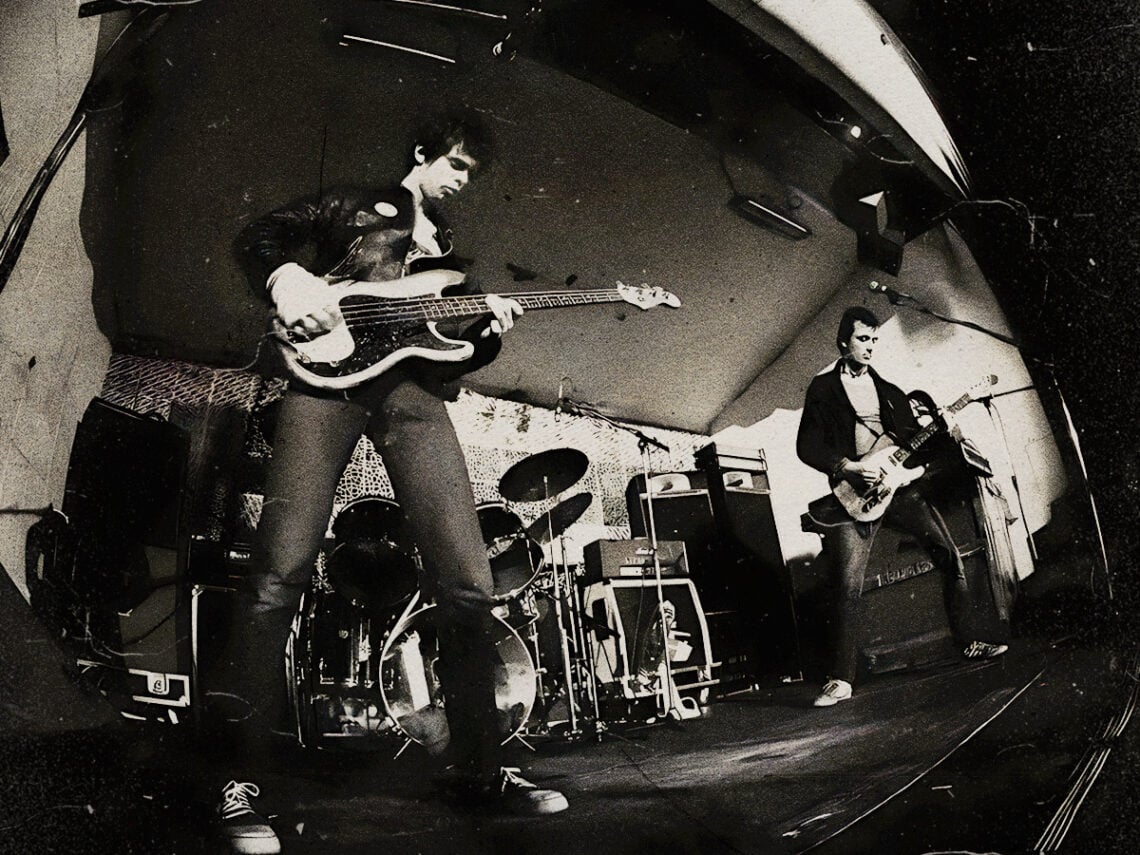
JJ Burnel picks his favourite prog rock song: “There’s one that always sticks in my mind”

Following the psychedelic wave in the late 1960s, rock music cascaded into several subgenres, including heavy metal, prog rock, and glam rock. Bands like Led Zeppelin, Kiss and New York Dolls somewhat blurred the lines between these stylistic territories, but each was easy enough to define. Prog rock, as championed by bands like Pink Floyd, Genesis and Rush, was identified by compositional complexity and intrepid thematic scope. It is easy to understand why prog rockers became the sworn enemy of punk adjacent musicians like The Stranglers and Sex Pistols.
Though they were more commonly associated with the glam rock wave, artists like David Bowie and Roxy Music had plenty in common with the prog rockers with their inventive approaches to songwriting, production and lyrical concepts. The fact that Johnny Rotten and Sid Vicious were enamoured with Marc Bolan, Bryan Ferry and Bowie but turned their noses up at artists like Pink Floyd and Genesis perhaps indicates a clash of scenes as opposed to the dislike of particular musical styles.
Speaking to Q in 2018, Led Zeppelin singer Robert Plant discussed how he and Jimmy Page came to appreciate punk music, especially that created by The Damned. “It had substance, and it also had a melody,” he reflected. “It had so much drive about it. That was where things needed to go. I quite understand that ‘Close to the Edge’ by Yes might be difficult for a 17-year-old kid in a bedroom to deal with or even a 77-year-old kid, but The Damned ‘Fan Club’ was just amazing“.
Punk music was an aftershock of the 1960s’ countercultural revolution. Attitude, fashion profiles and a youthful sense of belonging were far more important than instrumental virtuosity and lyrical elegance. Once the punks entered their 30s and learned how to play their instruments properly, they began to appreciate some of their more technically proficient peers. Speaking to The Telegraph in 2022, the Sex Pistols’ Steve Jones admitted that he enjoyed jazz fusion more than punk music these days. “I never really listen to the Pistols’ music anymore,” he said. “I’m fucking tired of it, to be honest with you. I’d rather listen to Steely Dan.”
The reconciliation of punk and prog rock didn’t just occur over time, either. According to The Stranglers’ bassist Jean-Jacques Burnel, the punks adored most prog rock acts behind closed doors. “It became cool to slag off prog, but what do you think these punk musicians did when they got home? Listened to the bands they’d been having a go at,” he claimed in a 2009 conversation with Louder.

It is worth noting that, strictly speaking, The Stranglers weren’t a punk group. “None of us were really punk. But it was an opportunity. Who cares what they call us? This is our chance to get in through the door,” Cornwell admitted to Classic Rock. Adding, “The necessity of adopting a pose appealed to our provocative nature.” If they weren’t punk by design, they certainly were with regard to spiritual outlook.
Musically, the component that separated The Stranglers from the punk pack in the late 1970s was their masterful keyboardist, Dave Greenfield. The traditional punk set-up was void of keys, but The Stranglers formed as a pub rock group before punk broke out and damned if they were going to oust a crucial teammate in the name of conformity.
It just so happens that Greenfield was an ardent prog-rock fan all along, a secret infiltrator of the trendy scene. Though he may not have waxed lyrical about Yes in the press, Greenfield’s exotic tastes rubbed off on his bandmates and helped distinguish The Stranglers as one of the UK’s first new wave bands. “I got into listening to prog rock through Dave Greenfield, The Stranglers keyboard player,” Burnel revealed. “When he joined the band about a year after me, he would play me a lot of different types of music, including quite a bit of prog – he was a big fan of Yes. And I did grow to like some of the music.”
Another prog group Greenfield introduced Burnel to was Caravan. The quirky collective from Canterbury led a successful career through their initial spell between 1968 and ‘78 with eight studio albums. They subsequently reunited on several occasions for extensive tours and a handful of records to keep their cult fanbase satisfied. “There’s one that always sticks in my mind because I really believe it to be amazing – ‘In The Land Of Grey And Pink’ by Caravan, from the 1971 album of the same title,” Burnel added, picking out a prog highlight.
When Burnel first heard ‘In The Land Of Grey And Pink’ he had “smoked a lot of dope”, and it “just blew” him away. “I loved the way it was arranged and the intricacies going on,” he said. “To me, it was the sort of music in which you could enjoy getting lost.” The bassist also noted that ‘In The Land Of Grey And Pink’ was a huge source of inspiration when The Stranglers composed ‘Down in the Sewer’ for the 1977 debut album Rattus Norvegicus.

Never Miss A Beat
The Far Out Punk Newsletter
All the latest Punk content from the independent voice of culture.
Straight to your inbox.