


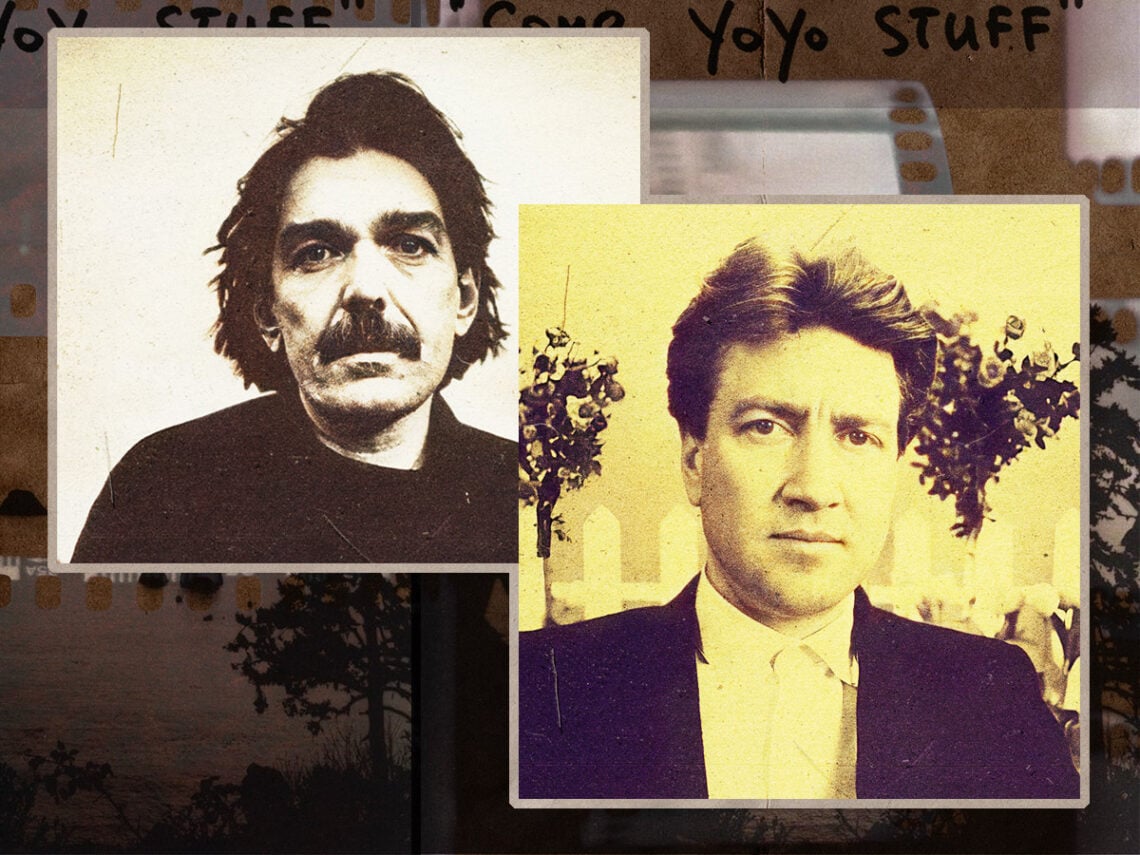
The strange meeting of David Lynch and Captain Beefheart

Don Van Vliet, more commonly known by his stage name and alter ego Captain Beefheart, was a monumental figure in the evolution of 20th-century music. A musical maverick who wove a complex tapestry of blues, free jazz, and rock into his compositions, he made an indelible impression on the cultural landscape. His seminal album Trout Mask Replica continues to challenge the very notion of genre, and his enigmatic persona captured the imaginations of fans and critics alike even after the Captain’s death in 2010.
With the same spirit of non-conformity and at the same time of cultural upheaval, albeit in a different artistic medium, David Lynch emerged as one of the most distinctive filmmakers of his generation. With a body of work marked by surrealism and psychological intensity, Lynch’s films challenged viewers’ perception of reality. His oeuvre, which includes classics like Eraserhead, Mulholland Drive and the cult TV series Twin Peaks, blurred the boundaries between the literal and the metaphorical, the conscious and the unconscious.
Despite their different artistic outlets, Beefheart and Lynch shared a similar ethos, embracing the experimental and the strange in their works. Both were multi-disciplinary artists — Beefheart was also a painter, and Lynch delved into music, painting and even furniture design. A striking intersection of their artistic worlds came in 1993 in the form of a short film by renowned Dutch photographer and filmmaker Anton Corbijn.
Corbijn’s film, Some Yo Yo Stuff, was a remarkable portrait of Beefheart in his post-music years. Living a reclusive life, tucked away in the Mojave Desert and focusing on his painting, Beefheart was captured in a beautifully intimate yet characteristically unsettling exploration of his life and thoughts, his philosophical musings on existence, art, nature and the world around him.
Lynch, not just a kindred spirit but a fan and actual friend of Beefheart’s, played an instrumental role in the film. Appearing in a segment where he projected questions to Beefheart, Lynch’s participation added a layer of intrigue and depth to Corbijn’s exploration of Beefheart’s artistic world. It was a fascinating dialogue framed by juxtaposing their idiosyncratic creative visions – the lyricism of Beefheart meshed with the deadpan recordings of Lynch. “Uh, Don, I know you’re from the desert,” Lynch says blankly. “I was – uh – wondering if you could maybe talk a little bit about the sun?”
Corbijn, reflecting on the creation of Some Yo Yo Stuff, once said in an interview with World Art in 1998, “It was a simple affair to make the film: His mother Sue opens the movie with the photograph that I took when Don and I first met, saying: ‘This is Don, my son,’ and, apart from David Lynch asking him a few questions via projected film, it is all Don’s thoughts on various matters. Some funny, some serious, but all sharp, poetic and beautiful. You really want to hear every single word he says—whether it’s about paint, Miles Davis, an ear (‘nice sculpture’) or the desert.”
The encounter between Captain Beefheart and Lynch in Corbijn’s film is more than just a meeting of two great minds; it’s an extraordinary confluence of surrealism, experimental art, and alternative philosophy. This film, and their meeting within it, marks the nexus of two creative forces that operated on a realm above your average painter, singer or director. It continues to captivate and inspire 30 years later.
Watch Some Yo Yo Stuff below.
