


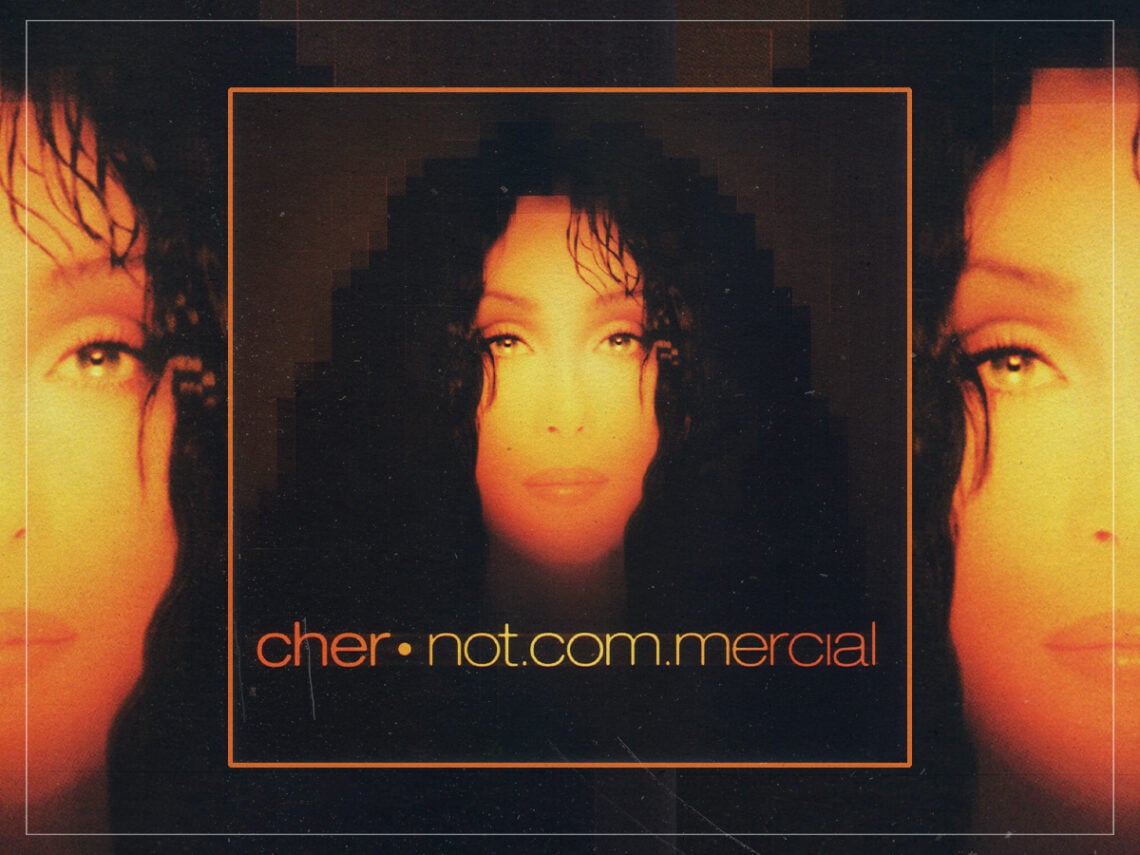
A rare glimpse at the real Cher: The story of ‘Not Commercial’

A retreat just outside of Bordeaux, France, seems as good a place as any to find yourself. Only that in 1994, Cher wasn’t in the market for too much soul-searching. Her business was more concerned with feeling alive with the magic of creativity and ignoring the traps that came with being one of the biggest pop stars on the whole planet.
When she reflected on this retreat years later, Cher had two main takeaways: one, that it was the push she needed to enter a realm productive enough to come up with not.com.mercial, and two, that it was a much-needed break from the fear of living up to the “untalented, stupid Cher” label others were so intent on sticking on her and proving true. In other words, it was a project that would provide the biggest unfiltered glimpse into Cher as an artist, sans the glitz and glamour of her career-defining façade.
This was, of course, a façade that would hook its claws into her reputation for all time, overriding any other hidden artistic aspects with the brute force of anthemic record breakers like ‘Believe’ and ‘If I Could Turn Back Time’. The biggest fallacy about her offering manifesting as nothing more than sequins and bodysuits in a clusterfuck of commercial iconography—the kind you might find in a school textbook beneath the words “signs and simulacra”.
But this isn’t a matter of pretence, nor is Jean Baudrillard the ultimate blueprint for establishing good art from bad. Most of us don’t even despise Cher’s hyper persona and aren’t opposed to the usual ‘Believe’ sing-a-long from time to time (unless you relate to that one episode of Buffy the Vampire Slayer where the Cher obsessive turns out to be a demon). But what she seemed to be battling in the spring of ’94 wasn’t a hatred for the legacy she’d curated, but rather a distaste for the disparity between how the world saw her and who she knew she could be.
As such, not.com.mercial was as much a journey into the unknown as a preparation for battle, but one that was only possible by her means to overcome writer’s block as the first hurdle. With France as her backdrop, Cher’s pen moved with a new fervour, words flowing out like she’d finally been able to take a wrecking ball to the wedge between shiny ‘Believe’ Cher and the genuine artist who more than deserved recognition.
Obviously, not.com.mercial became a rarity, shunned by the label and available only to those with the willingness to go searching for the real Cher, but the discovery becomes more than worth it, especially when it becomes clear that the moment ‘Still’ begins, we’re no longer in familiar territory. Instead, we’re introduced to a more grounded side to the singer with delicate roots in country, folk, rock, and pop. There’s also a newfound fervour to her vocal delivery that feels completely effortless, compounding her heartfelt lyrics in a way that feels entirely natural; we’re the moths to her flame.
Elsewhere, there’s a grittiness to tracks like ‘Sisters of Mercy’, showing a Cher that isn’t afraid of a more risky approach, free from the pressures of trying to fit any kind of radio paradigm. This sharpness prevails through some of the record’s best tracks, like ‘(The Fall) Kurt’s Blues’ and ‘Disaster Cake’, balanced in between the softer hues of ‘With or Without You’ and ‘Fit To Fly’. Lyrically, there’s also a lot more depth than what would be expected of a typical record from her, which supposedly isn’t all that surprising considering how they flowed out of her like freefall, like they’d been held in all that time behind the wall of falsities.
Perhaps the biggest downfall about the record isn’t the fact that some might find it too much of a pivot to fall into naturally, but the way it’s all but hidden from public view, available only to those who know of its existence or stumble upon it accidentally while looking into the more obscured corners of her discography. It was never intended to become a smash, as implied by its title, but its presence beneath layers upon layers of other misconceptions makes its story particularly poignant.
That said, maybe that was always the point. So long as Cher remains a symbol of artifice to the general public, the reality of her expression feels especially charming to those in its hold, like a rare gem poised for the deserving few who know there’s an entire iceberg beneath the familiar notes of her greatest hits. The kind that’s “so fucking dark”, as Cher said, and a real portrayal of the person behind the mask.
