


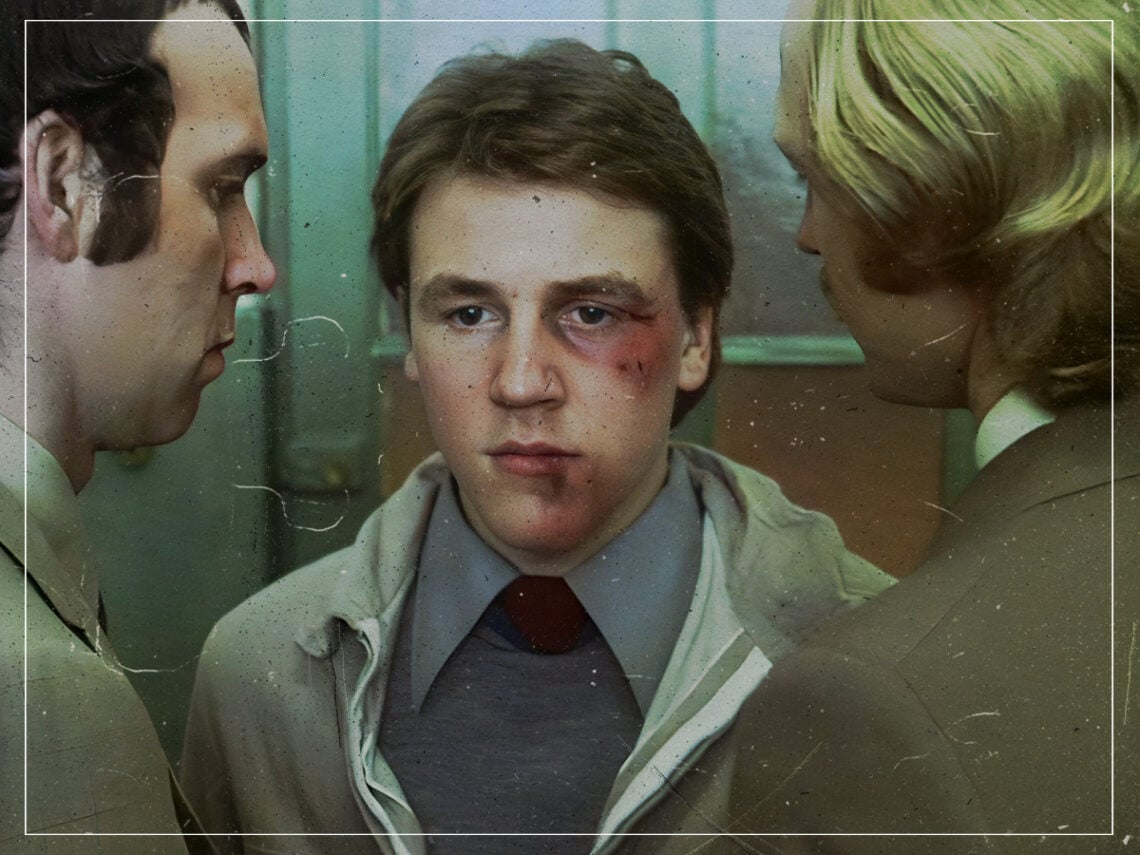
The story of how Ray Winstone landed his landmark role in ‘Scum’

For years, Ray Winstone has appeared on our screens as a tough guy with a recognisable East End accent, making some of Hollywood’s so-called scariest villains look meek in comparison. He has appeared in a range of both independent and mainstream films, establishing himself as one of England’s finest talents.
Yet, when Winstone was just starting out, he found himself thrust into the spotlight in a manner that he could not have anticipated. In fact, if you’d told a teenage Winstone that he would become a revered film star, collaborating with some of the industry’s most acclaimed filmmakers, he probably would have laughed in your face.
The actor grew up in London, becoming interested in drama and cinema from a young age. While he studied acting as a teenager, he also enjoyed boxing, which he took very seriously throughout his adolescence. Winstone was known for being a tough guy who wasn’t on his best behaviour at drama school, and as a result, he was expelled.
Luckily, acting became a saving grace, and everything changed for him when he flirted his way into a BBC audition that his friends were attending. Even though Winstone had little experience as an actor, he had never had a prominent role in anything. He used his charm to bag himself the audition, and once he was in the room, he channelled much of his own personality, which captivated director Alan Clarke.
Winstone was exactly what Clarke was looking for to play the lead character, and was particularly bowled over by the way Winstone carried himself. His background as a teenager who constantly found himself in trouble—and who had won many boxing matches—helped him secure the role of Carlin, a young offender.
The play caused considerable controversy due to its exploration of the borstal system, which was in desperate need of reform. The movie contains many brutal scenes of violence, including rape, and there are also depictions of suicide. Clarke’s attempt to highlight the desperate need to improve the conditions of borstals was immediately squashed by the BBC, who refused to broadcast it due to the extreme violence it showed.
The play was eventually adapted for the big screen by Clarke, with most of the same actors returning to recreate the story for a wider audience. Released in 1979, two years after the play was filmed, the cinematic version of Scum was praised by critics – even if conservative activist Mary Whitehouse tried to get it banned.
Winstone’s performance in Scum led him to secure more roles, such as parts in Quadrophenia and Ladies and Gentlemen…The Fabulous Stains, although his career wouldn’t properly take off until the 1990s. The Play for Today version of Scum would finally be shown on television in 1991, a year after Clarke’s death.
Reflecting on his career-defining role in Scum, Winstone once told The Yorkshire Post, “I was just a kid who’d been to drama school but in truth who had no real interest in being an actor. I actually done Scum for a bit of a laugh really. I just thought, ‘I never done anything like this before, I might as well do it.’” That decision would change his life forever.
