


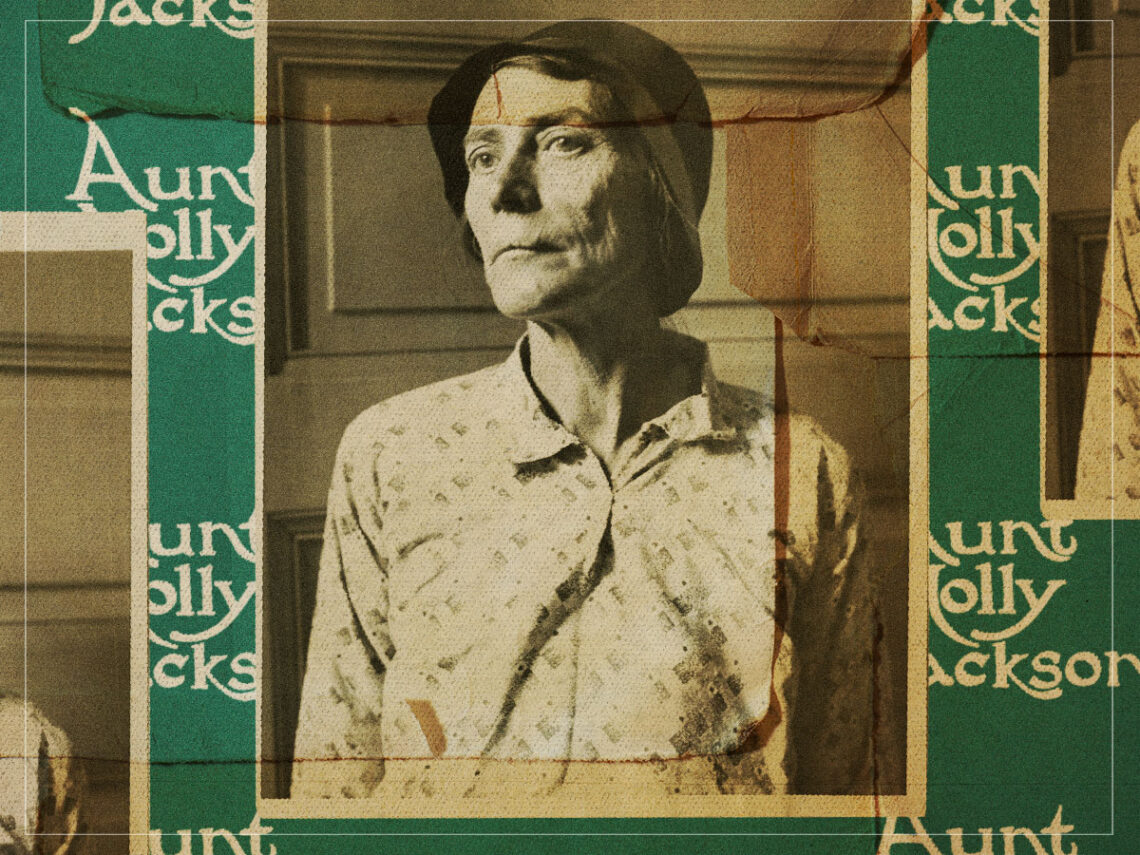
Aunt Molly Jackson: The story of folk music’s first introspective songwriter

When Aunt Molly Jackson was just six years old, her mother died of tuberculosis. Surrounded by the songs of her great-grandmother with a father who became a union organiser, Jackson’s artistic expression began to take shape, with a foundation rooted in personal loss, a drive for political change, and a knowledge of the power of folk storytelling.
When we think of folk pioneers today, it’s easy to get swept up in the one name that vowed to change the landscape forever: Bob Dylan. However, while Dylan as good as reinvented what it meant to be a songwriter who combined political awareness with sardonic wit, Jackson knew such a power decades earlier, combining lucid storytelling with the context of broader societal struggles.
Later pioneers, like Dylan and countless others, would take such observational and confessional styles and urge others to face up to the world that had been presented before them, transforming what it meant to place narratives at the forefront of artistic expression. Jackson, on the other hand, already seemed to possess such an ability from an early age, knowing that, above all, music was one of the only routes to take in the name of authenticity.
Born in Kentucky, Jackson knew hardship from an early age, experiencing poverty and broader cultural challenges that would later form the basis of her music. Living in remote Appalachian communities, she understood the true meaning of resource frustrations by observing the lives of coal miners, eventually allowing her knowledge of class injustice and suffering to infiltrate her artistry.
While this doesn’t necessarily seem like a new phenomenon—writing about the struggles that you know—what Jackson did for groups like coal miners was akin to giving minorities and ostracised communities a voice, giving their stories the type of emotional depth and resonance that they lacked to outsiders otherwise. She was an advocate, but she also understood the power of vocal unity, knowing what it felt like to be somebody surrounded by immense challenges without any real power to change the world.
These sentiments influenced her songs ‘Which Side Are You On?’, ‘The Miner’s Life’, ‘I Am A Union Woman’, and others, tinted with an overt accessibility that meant anybody could get on board with her movement, regardless of their own background. In many ways, therefore, she laid the groundwork for what would later influence countless movements, mainly 1960s counterculture and beyond, proving that what we now call folk or “protest” music always had a place at any time in history.
Perhaps this is because she always delivered a piece of herself, even when the subjects or stories belonged to somebody else. She knew those secrets were never entirely hers, but she filled in the gaps with delicious cadences that felt inexplicably hers, proving that her strive came from a real place of wanting something better for all rather than a ploy to gain recognition for experiences that never belonged to her in the first place.
What’s even more groundbreaking is that this was also the 1930s—a time notoriously savaged by a different kind of privilege in the music industry. As a woman, she carved out her own unique space, exploring the suffering experienced by people just like her through interwoven concepts and how many industries—beyond coal—left women feeling lost without any support or power, save for the voices they echo in small, albeit important, spaces.
Years later, when countless legendary female folk stars took centre stage, the lasting drawl of Jackson’s legacy could not be ignored. Not only did she set up the floor for those who wanted to revolutionise the way we encounter personal experiences and political commentary in music, but she proved the value of intimacy, particularly when it concerned vulnerability and placing yourself on the outskirts of the stories of those who would have never been given space to be known.

Never Miss A Tale
The Far Out Bob Dylan Newsletter
All the latest stories about Bob Dylan from the independent voice of culture.
Straight to your inbox.