


The Story Behind The Song: ‘Nancy Boy’ by Placebo

Like pretty much everything with a Union Jack attached to it, Britpop sucked ass, and not in the cool way.
By the time so-called “Cool Britannia” reached its cultural peak in the late 1990s, British culture had become an onanistic ouroboros. Noel Gallagher shaking hands with Tony Blair on the steps of Number 10, while desperately trying to maintain some street cred by pretending he’d done a line in the loos. As if a dozen people hadn’t already done the same from that very location that day. A band that used to mean something becoming nothing more than a bunch of flag-shagging, mouth-breathing Tories acting like wearing Stone Island made them one of “the people”.
Then you got the music. Agonising, post-Oasis tripe like Kula Shakur, Echobelly, Starsailor and a billion other sexless warblers simping for major label money and Gallagher approval. The kind of bands that all basically sounded like Keane if you replaced the piano with pillows of lifeless, barely distorted, barely strummed electric guitars. Times were hard for anyone with taste, and yet, if you looked hard enough, there were some signs of life.
Which makes sense. After all, Britpop as a movement began not with Oasis and Blur, but with Suede. A band with more decadent sex appeal in a flick of Brett Anderson’s fringe than any other British band of the 1990s, save for the main focus of this article. Singles like ‘Animal Nitrate‘, ‘Metal Mickey’ and ‘So Young’ were as galvanising on the British rock scene of the early 1990s as any other single of the decade. While their peers like Blur and Pulp were taking notes, though, there was a 22-year-old musician also checking in, and while he was very much inspired by the antics of Suede, he felt he could go further.
After all, Brett Anderson was going around telling all and sundry that he was “a bisexual man who’d never had a homosexual experience”. Brian Molko was a bisexual man who’d had more than a few homosexual experiences and couldn’t help but be a little galled by how much clout Anderson was getting for merely talking about a lifestyle that he was actually living. In an interview with Louder, he said, “I saw that as a very opportunistic statement, and it led me to want to write something about tourism of the sexual kind.”

The year was 1994, and Molko was trying to put a band together. He’d played some local gigs, one of which had been attended by an old schoolfriend of his, Stefan Olsdal. After seeing just how much of a star his old schoolmate could be, Olsdal put himself forward to play bass on whatever project Molko went on to make next, and the core creative partnership behind Placebo was born. By this time, Molko had put together a number of the songs that would make up their self-titled debut album, but that song, inspired by Anderson’s comment, stood out among all the others.
“I remember the day Brian came round to my flat with the chorus for ‘Nancy Boy’,” said Olsdal in the same interview. “I was sitting there with an old £15 Casio keyboard that was about to fall apart. Our social life then was basically a couple of cans of Stella shared between the three of us. But ‘Nancy Boy’ pre-empted what was in store. I guess we lived that song a couple of years later.” Olsdal is not wrong here, as the stories Placebo have told after they were signed in 1995 were legendary.
Unlike Anderson, who adopted queer culture as a pose, both Olsdal and Molko were absolutely part of that culture and lived it up accordingly. Thus, when the band started releasing singles and getting a name for themselves, very quickly, they were as notorious as they were famous. The newly christened Placebo were pilloried, insulted and disrespected as a movement that started with Suede, straightened out with Oasis. Terrace culture became the modern culture of the day, and when Brian Molko started appearing on magazine covers in skirts and makeup… well, you’ve probably seen people prolapsing with rage over the way queer folks mess with gender norms today. It wasn’t better 30 years ago.
It wasn’t helped by the music itself. As 1997 dawned, the nation grew to like its guitar music the way it liked its beer. Warm, tasteless and uncomplicated. Placebo, on the other hand, were something very different. They drew from a much louder stock of alternative rock. Other bands of their era still worshipped at the altar of Slade, The Jam and, if they were really pushing the envelope, the Sex Pistols. Placebo were devotees of Sonic Youth, The Cure and Siouxsie and the Banshees. For lack of a better way of putting it, they rocked.
Which leads to an interesting what could have been, Much like how the Manic Street Preachers could have been the UK’s answer to Guns N’ Roses had they debuted a few years earlier, Placebo could have been Britain’s answer to grunge had they released ‘Nancy Boy’ a mere four years previous. Perhaps that would have undercut what made the song so special, though. It’s one thing to ride the coattails of a movement to the top of the charts. It’s quite another to swim against the tide as hard as Placebo did in 1997 and reach the top of the charts anyway.
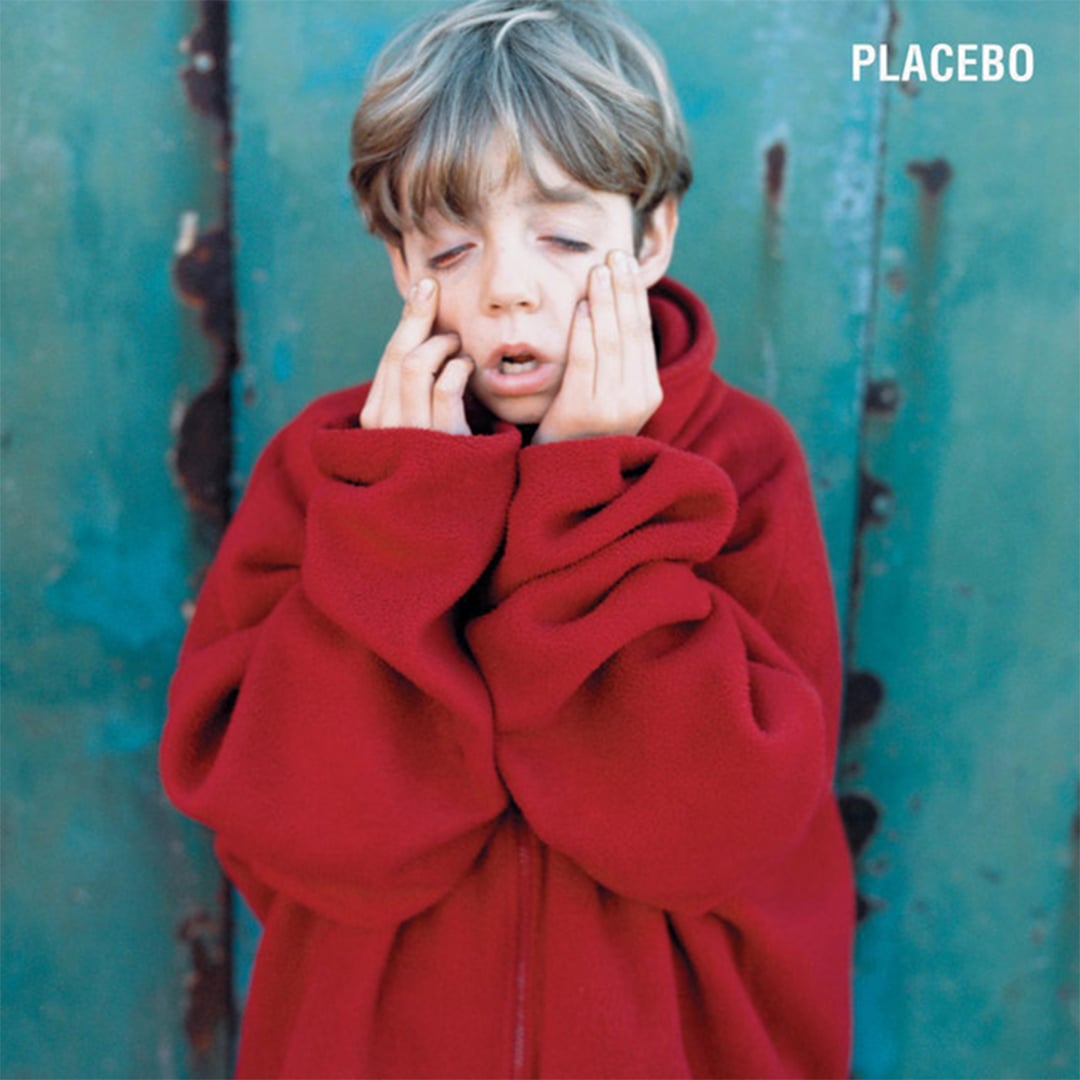
After a few singles that bubbled under the radar, ‘Nancy Boy’ was a massive hit that came out of absolutely nowhere. On the one hand, it hit number four on the UK singles charts, making them genuine, bona fide pop stars. On the other, it intensified the scrutiny on the band for the sake of a song that, as is always the case with the song that makes a band stars, the band didn’t really like. However, with time, Placebo learned to see just how much the song did for them.
In Molko’s words, “I have a very ambivalent relationship with ‘Nancy Boy’, I was still learning how to write songs, so I consider it one of my more immature ones. At one point, we got so sick of it that we stopped playing it for five years.”
One can sort of see the reasoning for this. Shock horror, a song with lines like “lose my clothes, lose my lube” trades on shock value, and that’s not a value that lasts forever. Placebo would become a much more interesting and deep band shortly after this, and one could easily see the band feeling like it’s the ‘Creep’ of their discography. An albatross the band long since outgrown.
Fortunately, the band know better than Radiohead. As Molko stated, “Now I can relate to it in terms of what it is. It opened so many doors for us. It went to number four in the chart, got us on Top Of The Pops and a tour with David Bowie.”
At a time when the Union Jack is just as ever-present in British culture, but for an even darker reason than the late 1990s, one hopes that someone takes a lesson from Placebo and sees the worth in standing against the tide of a culture gone hopelessly backward.
