


‘The Spirit of the Beehive’: Victor Erice’s quietly unsettling take on horror

On first viewing, The Spirit of the Beehive is not necessarily an all-out horror—the film is actually listed as a drama/classic when you search it on Google. But the 1973 beloved Spanish-language story is one of director Victor Erice’s masterpieces, with an approach to horror that’s so subtle that you could miss it.
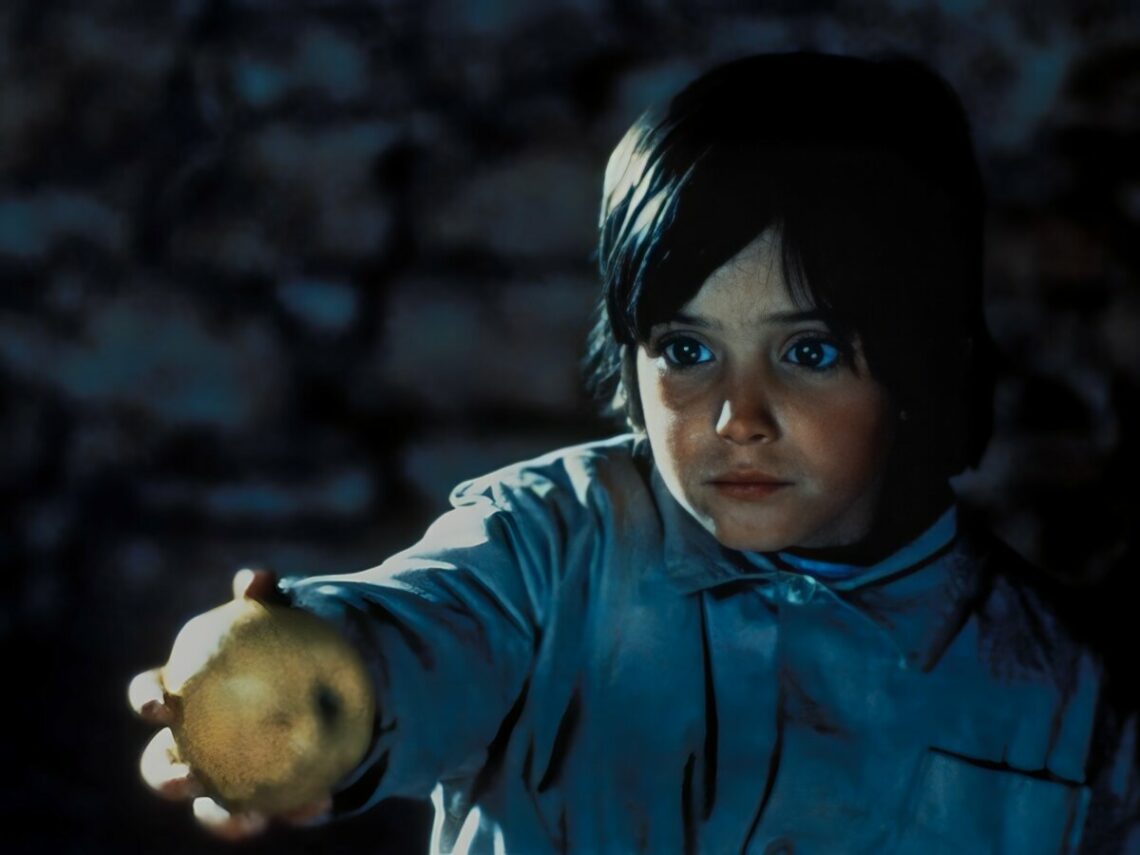
In Castilla around 1940, a travelling movie theatre brings James Whale’s black and white film classic Frankenstein to a small village. A little girl, Ana (Ana Torrent), is profoundly disturbed by the scenes in which the monster murders the little girl and is later killed himself by the villagers.
She questions her sister, Isabel (Isabel Tellería), about the profundities of life and death and believes her older sibling when she tells her that the monster is not dead, but exists as a spirit inhabiting a nearby barn, so of course they go in search of it. When a Loyalist soldier, a fugitive from Franco’s victorious army, hides out in the barn, Ana crosses from reality into a fantasy world of her own.
A few years separate Ana and Isabel, but Ana quickly becomes dependent on her sister to navigate her growth, especially understanding the mysteries in the film. What follows is considered a coded message about Franco’s fascist regime, but more definitively, The Spirit of the Beehive seems to be a strong ode to how children’s imaginations can lead them into mischief and often help them understand or avoid the troubles around them.
Of course, the inclusion of Frankenstein as a means for the entire plot to play out heavily leans towards the horror genre; there’s no disputing that. But what is perhaps more fascinating is our point of view, which is that of Ana’s, a childlike wonderment, which isn’t entirely scared of the horrific monster but more intrigued by it. The wounded soldier in the barn is not exactly a monster, but in Ana’s imagination, he is. She treats him well and wants to help him, suggesting that perhaps we aren’t born scared of ‘monsters’, and although they are scary at first, given Ana’s original trauma, they can be just like us.
Erice’s exploration of what a monster is makes The Spirit of the Beehive a bit different from other films at the time – it acts partly as a horror film itself whilst commenting on the horror genre as a whole from an outside perspective. The cannibal family in The Texas Chain Saw Massacre, the possessed Regan in The Exorcist, and the ravenous coven in Suspiria are all pure evil, with no rhyme or reason, and seemingly come from nowhere.
What Erice does is essentially humanise the monster, using a child’s point of view to talk us through it. The Spirit of the Beehive largely deviates from anything the parents or any adults have to say in the town, choosing to focus on Ana and Isabel and, ultimately, their perspective. The fact that Ana is now exposed to the soldier, of course, puts her life at risk – they are on opposite sides – but there’s an oddly serene atmosphere in their scenes together.
Cinematographer Luis Cuadrado makes some purposeful decisions that add to the overall effect, and with the interiors of the family home, he creates vistas of empty rooms where footsteps echo. The house doesn’t seem to be occupied by the family much. The girls are often alone. The parents are also in separate rooms. This all works to widen the world of the children, as large, empty spaces will make smaller people smaller and the space bigger, a horror trope once again.
Many of the father’s poems also involve the mindless churning activity of his beehives, and the house’s yellow-tinted honeycomb windows make an unmistakable reference to these beehives, hence the film’s title. This unsettling detail is one that Erice no doubt slaved over, too, evoking a feeling that the house is, in essence, a beehive, with the family acting as the bees, surely with some sort of link back to the Spanish Civil War.
The way Erice combines subtle elements like these whilst tying everything together with a horror classic like Frankenstein makes for an unsettling take on horror, and the film’s quietness and serenity only make things more disconcerting – starkly different to the more outrageous horrors of the time. The Spirit of the Beehive is often still cited as one of the best Spanish films of all time, and with such an unconventional take on a genre, that’s pretty unsurprising.
