


The three songs that made Paul Simon realise he was being breathed “upon by God”

The Spanish call it Duende.
This mystic term from the foothills of the Sierra Nevada mountains was defined by poet and (perhaps) purely platonic love interest of Salvador Dalí, Federico Garcia Lorca, as exalted emotion unearthed from within, “a mysterious force that everyone feels and no philosopher has explained. The roots that cling to the mire from which comes the very substance of art”. Paul Simon knows all about it.
One of his own favourite songwriters, Hoagy Carmichael, offered up the American equivalent when he proclaimed, “And then it happened, that queer sensation that this melody was bigger than me. Maybe I hadn’t written it all. The recollection of how, when and where it all happened became vague as the lingering strains hung in the rafters in the studio. I wanted to shout back at it, ‘maybe I didn’t write you, but I found you’.”
In more modern, clinical terms, psychologists have called it the ‘creative flow’ state. In a discussion with Simon about this sensation for the Big Issue back in 2023, the poet Paul Muldoon happened upon a different phrase for it: “It means ‘breathing upon’ by God or some force beyond oneself.”
While often humble and usually very wary of pretensions, Simon identified with this feeling that art can often come from elsewhere. On three occasions throughout his career, this has been perfectly clear – his pen was moving, but he couldn’t be certain whether it was entirely his thoughts forcing it across the page in a whirl of inspired notes and sutured poetry.
“It will be words, or music, and it flows very freely from a source that you can’t identify. It has a natural quality to it. And sometimes something more to it,” Simon reflected. I realised years ago that I had been experiencing those moments for much of my life.” We all need to. And to some extent, we all do – those rare moments where we’re in the moment and apart from it, like scissors gliding through the wrapping paper.
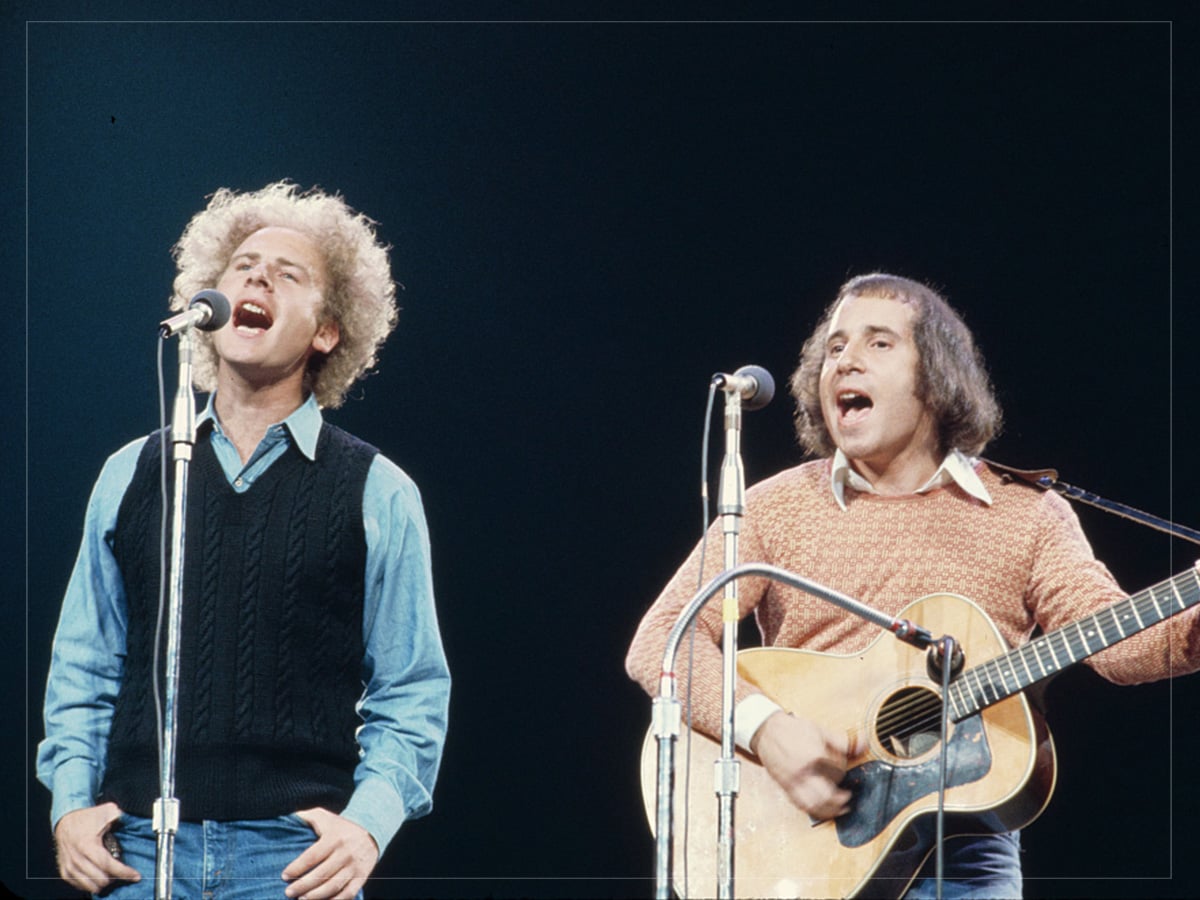
Rarely, however, do our efforts in the flow state go on to change the world. But for Simon, three inspired incidents still stand out as memorable. “For example,” he begins, “When I wrote ‘The Sound of Silence, when I was 22, I thought, ‘Well, that’s probably my best song. I can close this set with this.’”
While it might have taken the world a while, and a serendipitous stroke of luck to agree, most of us now stand in agreement that Simon uncovered something sublime when crafting the wintery classic.
But he sought after that feeling more and more, like a surfer’s first wave. It didn’t take him all that long to happen upon it again. “When I wrote ‘Bridge Over Troubled Water’, I thought, ‘That’s better than I usually write’. And it came quickly.”
These jolts of seemingly divine inspiration didn’t stop there either. “Same happened with the song ‘Graceland’,” he concludes. “There are times when you’re in what you could call ‘flow’. When it’s easy to write and time doesn’t exist.”
Simon even sought a deeper explanation for this profound feeling that seemed to craft a trio of masterpieces that the world would be different without, asking a neuroscientist what it all meant. “And he said, ‘Well, it’s a combination of serotonin, dopamine and adrenaline’. Serotonin gives us a sense of well-being. Dopamine is the spiritual, mystical experience. And adrenaline is ‘How did it get to be three in the morning, when I last looked it was six at night.’”
And if you’re reading this thinking, ‘Lucky for some’, the affirming feeling of flow doesn’t have to come with the pressure of matching Simon’s unmatchable songwriting, as Kurt Vonnegut urged, “Nobody will stop you from creating. Do it tonight. Do it tomorrow. That is the way to make your soul grow – whether there is a market for it or not! The kick of creation is the act of creating, not anything that happens afterward. I would tell all of you watching this screen: before you go to bed, write a four line poem. Make it as good as you can. Don’t show it to anybody. Put it where nobody will find it. And you will discover that you have your reward.”
