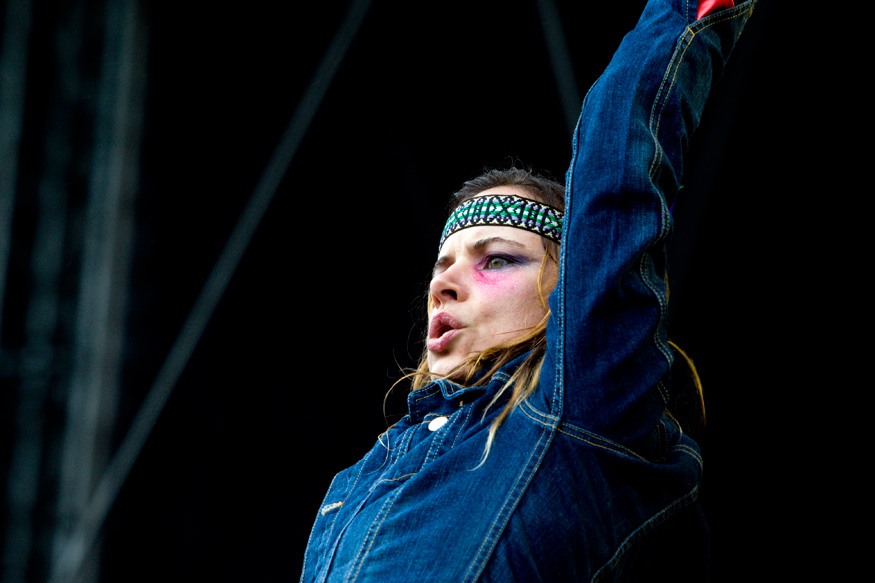
The song that transformed Juliette Lewis: “My own personal tornado”

There’s sometimes a strange disparity that comes with appreciating those who pivot from one industry to another. If, like Juliette Lewis, someone moves from film or television to music, following their heart because they’re a fan just like everybody else, it can make people feel weirdly protective, like someone doing something “just because” isn’t authentic enough. But often, it is.
It’s the same thing that comes up sometimes when looking at contemporary artists like Djo, or in a strange backwards way, Dead Man’s Bones. Because it wasn’t their first profession, or their sole profession, or the place they established their name, it’s rarely seen as “serious”, or not as respected as others who have been in the game for longer. In some cases, they’re one-hit wonders (like how many describe ‘End of Beginning’).
It’s probably the same reason why musicians trying out acting face more criticism and scrutiny than their (more accomplished) acting counterparts. Or one of the many reasons that explains why Mark E. Smith once threw his toys out of the pram, saying, “It irritates me all these actors in groups. Their actors and they form their own groups, as though that’s what they always wanted to do – I think that should be banned!”
Or it’s why some musicians-turned-directors face harsher critics. If it’s not their line of work to begin with, they’re in for a world of surprises. But with Juliette Lewis, there seems to be a bit more immunity there, even though she never shied away from the very real fact that she, too, started to follow her musical career path as an empassioned music lover, sourcing enjoyment from it to begin with even if it wasn’t destined for success.
But in her world, it wasn’t just about reframing all the musicians she’d loved in her own work; it was about finding a place where film and music could coincide to make even better storytelling. As she once said: “[It’s] the relationship between sound and vision, drama, and the record is really very cinematic. A lot of the songs take you on this visual journey and I’m so excited about it because it’s the first time I have tried to merge the two aspects: the heightened sense of fantasy and drama, and the sonic forces that I’m pretty excited about.”
Perhaps that’s why it also comes as no surprise, therefore, that one band in particular that Lewis always felt a particular pull towards was the master of fantastical storytelling himself, Robert Smith. The Cure, for Lewis, wasn’t just a blueprint but a lesson in the foundations of bringing stories and emotions to life without having to dilute the darkness that comes with it. Because, often, it’s the grittiness that shines a light on life’s beauty, mixing together like a gorgeous palette of everything that makes us human.
For many, the quintessential Cure listening experience is no doubt Disintegration, and Lewis became particularly endeared to the title track, once telling Louder that its initial appeal was that it had “depth of despair and anguish” in a way that felt “deeply personal”. She said that even though she knew very little about Smith, it’s “all in the fucking song”. At first, ‘Fascination Street’ opened her eyes to the album in a way she’d least expected, coming into her life when she’d just finished filming Natural Born Killers.
“I’d gone through my own personal tornado, so it was a track that spoke to me and that I needed, and I feel that’s what a lot of The Cure’s music is,” she said, returning to ‘Disintegration’ to pick out the lyrics: “Through the glass of the roof / Through the roof of your mouth / Through the mouth of your eye / Through the eye of the needle / It’s easier for me to get closer to Heaven / Than ever feel whole again.”