


The 1983 song Bob Dylan thought he ruined: “That could’ve been a great song”

“I change during the course of a day,” Bob Dylan once said, “I wake up and I’m one person, and when I go to sleep, I know for certain I’m someone else.”
As ever with Dylan, it’s a statement that contains multitudes and you can take it in a myriad of ways. However, one thing that it imparts for certain is just how much of an enigma the original vagabond truly is. He’d arguably be the worst Mr & Mrs contestant in human history.
As Sam Shepard said of Dylan when documenting the Rolling Thunder Revue tour, “Myth is a powerful medium because it talks to the emotions and not to the head. It moves us into an area of mystery.”
The playwrite continued, “Some myths are poisonous to believe in, but others have the capacity for changing something inside us, even if it’s only for a minute or two. Dylan creates a mythic atmosphere out of the land around us. The land we walk on every day and never see until someone shows it to us.”
As Dylan said himself: “All the truth in the world adds up to one big lie.” In some of his work he poetically welcomes you into a fable with more verity than fact. But perhaps his finest feat of all is that sometimes these analogies and allegories lie somewhere beyond our grasp.
You can’t quite gauge the terrain of this new land Shepard speaks of, and before you know it, like the world’s most unreliable tour guide, Dylan has gone his way, and you’ve gone yours, but you’re left in a world of wonder, nevertheless. Then, 30-years and plenty life experience down the line, the penny suddenly drops: ‘Oh, that’s what that song is about’.
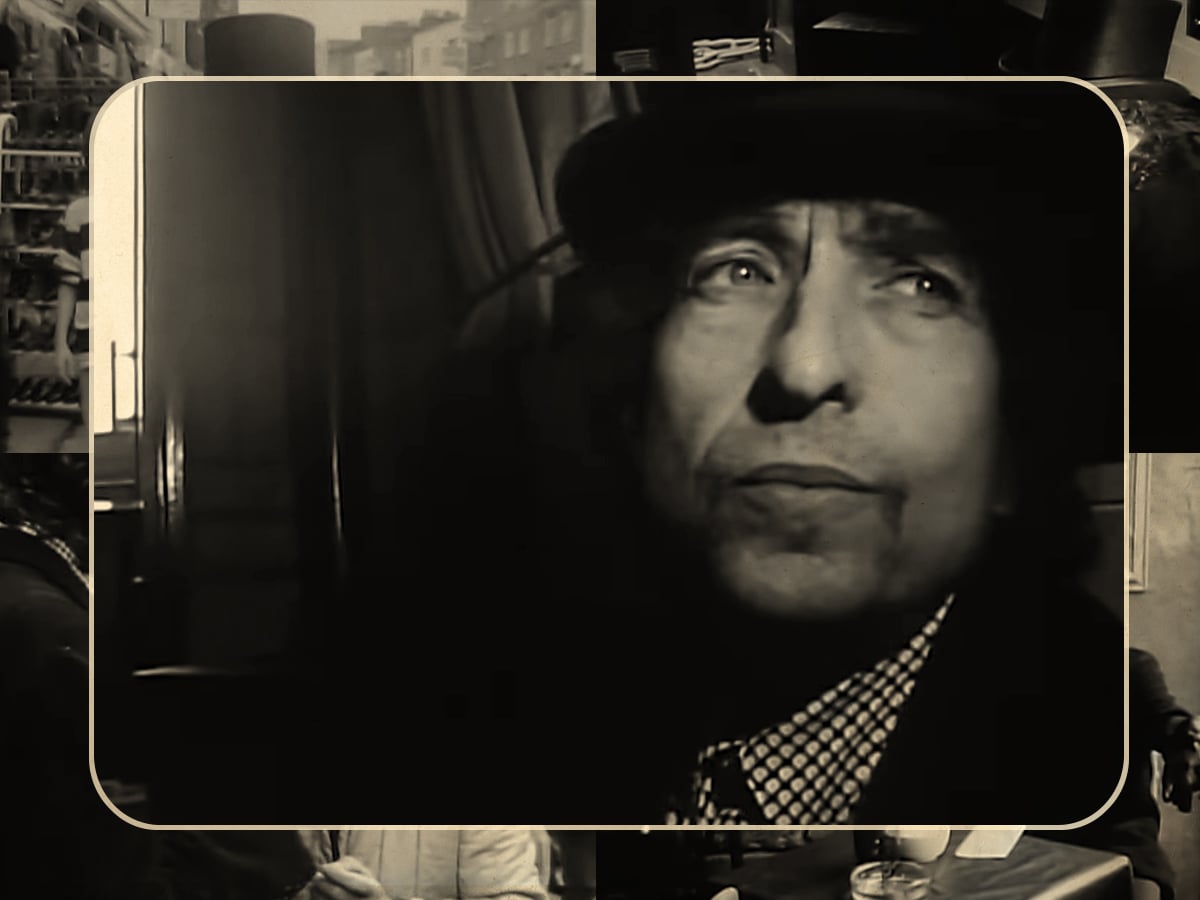
Bob Dylan’s most mystic song?
That is most certainly the case with ‘Jokerman’. What the hell is this song all about? Flashes of biblical touchstones have you delving into a Christian theme, but maybe that’s just because it came in the wake of his Born-Again phase. Then a small, face-licking dog enters, and you wonder whether Dylan’s bible reading has been beset by a sudden bout of meshuga.


Ultimately, ‘Jokerman’ is a song that stands out like an alligator trying to blend into a procession of crocodiles in the beauteous back catalogue of our dearly beloved Bob. It’s the bard’s black sheep. The main reason for this is that it is entirely berserk. Before you get into the utterly anti-Dylan musicology, you have to deal with the wild cascade of imagery in the truly surrealist unspooling lyric sheet.
After a fallow period for Dylan when critics questioned his Christian output, he decided not to return to the tried and tested ways of folk, but to push on once more, like a rolling oddball refusing to gather moss. That became hugely apparent with this 1983 oddity. With a sleek soundscape, the original vagabond sings of snakes in a baby’s grasp, hurricanes, dream twisters and a Jokerman dancing to a nightingale tune.
It’s a joy and a thing of unrivalled mystery. There’s a sense of liberated irreverence in the reality that you will never solve this peculiar beast. Does Dylan even know what it is about? Is it just a song of surrealist expression? Because there is no doubt that it somehow conveys a knowable feeling despite the absurdity. And along with the catchiness, that surely makes it an ‘80s cracker (perhaps his best from the entire period even).
However, in Dylan’s eyes, he pushed things a bit too far and he lives with the regret. As he said of the Infidels classic: “That’s a song that got away from me. Lots of songs on that album got away from me,” he mourned, “they just did.” Determined to find reinvention and turn the corner of a fruitless period he suffered the onset of creatively itchy feet. If you’ve got the stew on the hob for days on end, then you’re bound to sprinkle a few too many things in there.
As Dylan continued: “[The songs] were better before they were tampered with. Of course, it was me tampering with them. Yeah, that could’ve been a good song,” he said of ‘Jokerman’, adding with regret, “It could’ve been.” Many would argue that it is, and perhaps that even benefits from the superfluous madness in the mix, but his just comments certainly have the mind racing toward what could’ve been.
The evolution of Bob Dylan
In truth, this tale is a paradigm of what makes Dylan great. It is the sword that he lives and dies by. He is forever searching out his niche in the world and he is amorphous enough to be whatever his muse chooses to be. Over the years, he has expressed this himself in his own poetic way, extolling: “All I can do is be me, whoever that is.”
And Shepard ratified this firsthand as being far from a mere pithy line, proclaiming: “Dylan has invented himself. He’s made himself up from scratch.”
Continuing, “That is, from the things he had around him and inside him. Dylan is an invention of his own mind. The point isn’t to figure him out but to take him in. He gets into you anyway, so why not just take him in? He’s not the first one to have invented himself, but he’s the first one to have invented Dylan.”
The allure is that there is always meaning beneath the mask so you can’t take things at face value. His songs are gorgeous ditties when it comes to melody, but it’s the depth of poetry that proves to be a riptide, dragging you further into them.
With the help of Jamaican musicians Sly Dunbar and Robbie Shakespeare, he crafts a synthy Caribbean feel like a lot of songs in the era, but unlike the others, you can’t listen to this 1983 gem without hearing a torrent of question marks floating along the tumble of words and rhythm.

Never Miss A Tale
The Far Out Bob Dylan Newsletter
All the latest stories about Bob Dylan from the independent voice of culture.
Straight to your inbox.