


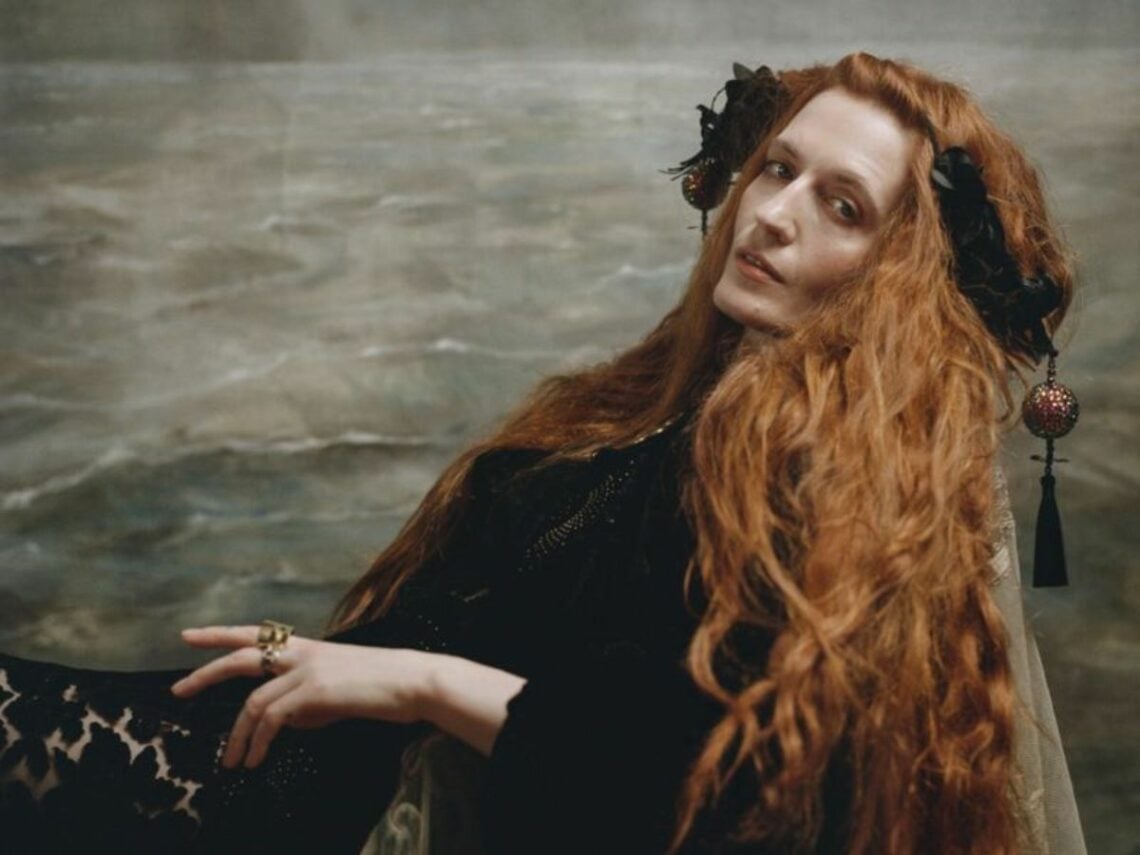
The singers who inspired Florence Welch to greatness: “She elevates everything”

Recently, the machine that is Florence Welch has felt more powerful than ever.
Ever since 2009’s masterful debut, Lungs, Florence and the Machine have become forerunners in emotionally literate indie power-pop. Welch herself has gained a reputation in her own right as the red-headed force with a vocal range so impressive it almost feels make-believe. But this only enhances the power of the Machine itself; with world-building so expansive that it all comes down to the core principles of humanity itself.
For those who have been paying close attention, themes exploring the crossover between stardom, worship and witchcraft predate the recent Everybody Scream. Welch’s interest in the sacrificial nature of celebrity whimsy is something that has existed since day one, with metaphors crawling their way through many of their best songs, including ‘Seven Devils’, ‘Heaven is Here’, and ‘Rabbit Heart’. Not to mention the core visual of Welch’s aesthetic and the folklorish nature of their performances and music videos.
However, as the band teased in the build-up to Everybody Scream, clarity is power. This record holds these themes with far more precision than any previous effort, spotlighting Welch’s own struggle with the spotlight and how it feels like a constant ritualistic show of push and pull. Welch might be stealing the show right now when it comes to witchy music, but when we think of the ultimate legend, there’s only one name that comes to mind.
And incidentally, though not so surprisingly, it’s someone who had a major influence on Welch. “I get inspirations from all over the place,” she once said. “I’m pretty obsessed with Stevie Nicks, from her style to her voice. I like watching her on YouTube and her old performances, the way she moves and everything.” There’s a lot of Nicks in the way Welch uses her voice and body as a performance technique, especially when it comes to leaning into the darker, more gothic realms to explore the uncanny nature of art and fame.
Growing up, Welch was also drawn to soulful voices, especially ones who could tell an entire story with their voice alone, like Otis Redding, Lorraine Ellison, and Sam Cooke. For the same reasons, folk legend Tom Waits is someone she’s always looked up to – once even admitting she wishes she were him. “His songs are so visceral and bloody,” she told EW. “I just love his use of imagery.”
In Welch’s world, behind every good storyteller is a kaleidoscope of pain. In her eyes, and in that respect, Janis Joplin is the ultimate muse – someone with an unimaginable amount of “suffering and intensity” but who poured everything into her performances. “She tore herself apart, yet on stage she was totally different,” she said. “She was so unrestrained, so free, and she wasn’t afraid to wail.”
She went on, “There was always a sense of longing, of searching for something. I think she really sums up the idea that soul is about putting your pain into something beautiful. And that’s why she’s so important to me.”
Other singers, like Grace Slick and Alanis Morrisette, also had a heavy hand in shaping Welch’s voice and approach to emotive singing. However, someone she once described as her “north star”, and who had an impact on her so great that she wrote a song about her, was Patti Smith. For Welch’s fourth album, High as Hope, she wrote the popular track ‘Patricia’, in tribute to Smith.
“I’ve always loved her, and it was actually through her writing that I feel I really got to know her,” Welch told the BBC. “She writes about life in such a beautiful way that it seems to endow even the smallest things with a sense of spirituality or reverence. Whether it’s going to the coffee shop or what you eat for breakfast in the morning. She kind of elevates everything, and it was like a little north star to follow, as like how to have a creative life as a whole.”
