


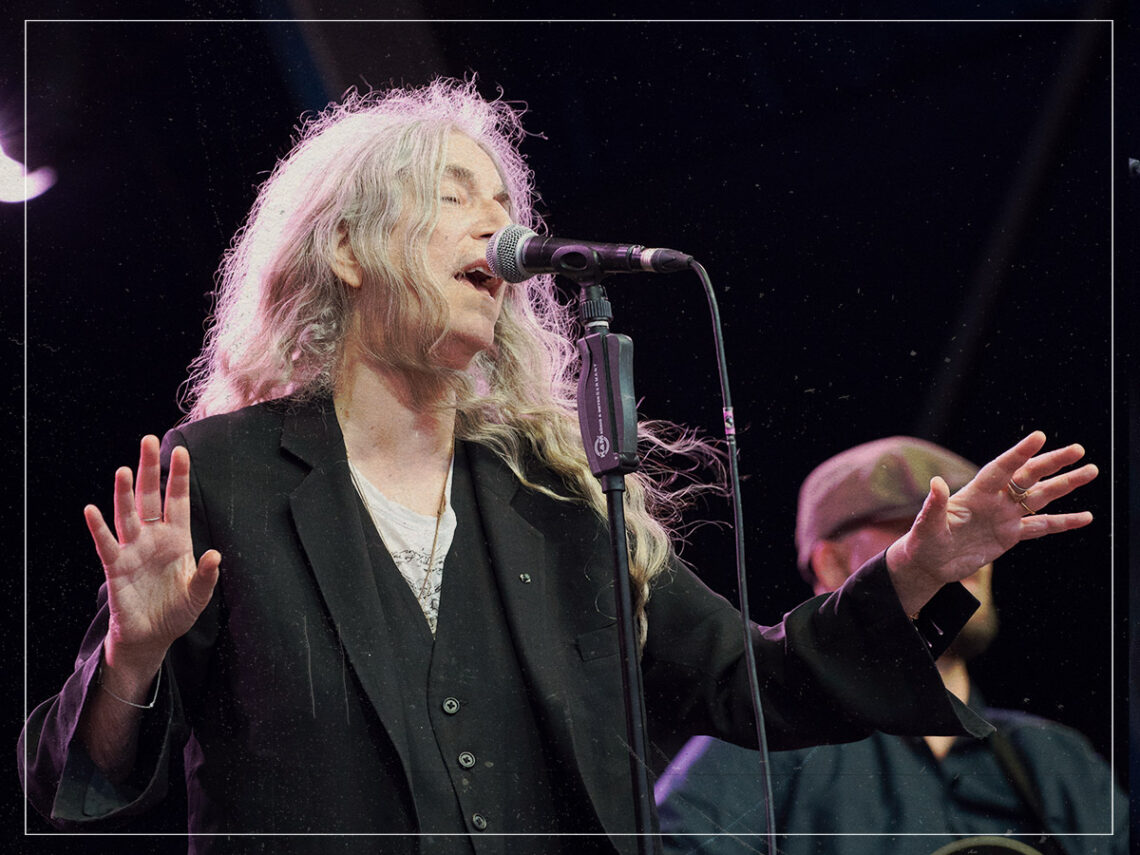
Maria Callas: The one singer Patti Smith wished she could be like

Early on, Patti Smith realised that a humdrum life working the nine-to-five wasn’t for her. Born to a former jazz singer mother, she was exposed to the arts from an early age, and this proved immensely formative as she already possessed what all great artists do: a vivid imagination.
Although her parents didn’t have much money—her father was a machinist for Honeywell and her mother a waitress—they fostered their daughter’s creative spirit. Early albums that made a mark on her were Harry Belafonte’s Shrimp Boats, Patience and Prudence’s The Money Tree, and, reflecting her mother’s forward-thinking nature, Bob Dylan’s 1964 album, Another Side of Bob Dylan.
In the mid-late 1960s, inspired by the countercultural sounds of Dylan and bands like The Doors – the group she says most changed her life – Smith started exploring her musical talent. This prompted trips to Paris busking and a move to Manhattan in New York, where she rubbed shoulders with creatives and soaked up the vibrant creative atmosphere. In 1973, she formed The Patti Smith Group, and her raw poetry, delivery, and dynamic rock sound would become a key part of the city’s emergent countercultural wave: punk.
She would eventually become known as the ‘Poet Punk Laureate’, with tracks like ‘Horses’, ‘Gloria’ and ‘Because the Night’, absolute staples of the era. Her captivating presence, expressive vocal delivery and knack for piercing lyrics confirmed her as one of the most important artists of all time and an exemplary force for other women wanting to break down the misogynistic barriers of society.
Although Smith’s work has a long attachment to punk and a spiritual grounding in countercultural rock music, she cites an array of pivotal sources outside of these eras. They include Arthur Rimbaud and even J M Barrie’s fictional hero, Peter Pan, all of whom she managed to channel into her artistry in some way or another. According to Smith, there was another monumental inspiration who she always wanted to be like: the great Maria Callas. While she couldn’t sing like Callas, she knew she could replicate her in other ways.

Like most of Smith’s influences, Callas had an almost fictional story. Not only was the American-Greek soprano one of the 20th century’s most important forces in opera, known for her bel canto technique and dramatic style, but she had been raised by an overbearing mother who openly wanted a son instead, established a career in Italy, and lived with near-sightedness that nearly made her fully blind. She also had a notoriously capricious personality, leading to a rivalry with fellow opera singer Renata Tebaldi and several other scandals. Despite her prima donna nature, though, Smith was a big fan of her stunning work as a child, and she still is today.
“It’s the music that I gravitated toward as a child, I just have no talent for it,” Smith said of Callas at the Metropolitan Opera House’s 132nd annual opening night gala in 2017. “I love being part of an evening like this because it was so [financially] out of grasp when I was younger. Believe me, if I could sing like Maria Callas I would be up there doing ‘La Traviata.’ I think I would be great. I know that sounds so conceited, but I just know I would know what to do.”
Despite their markedly different sounds and personalities, Callas and Smith share a deeper connection, and the opera singer taught the punk legend a few key artistic values. In 2020, she told Bernard Zuel that Callas’s passionate narrative delivery was crucial for her approach.
She said: “What I learned from Maria Callas, from listening to her and studying her over and over is how to deliver the inner narrative of the song with feeling. So that the listener feels it, feels what the message or the essence of the song is.
Although Smith didn’t know what most of Callas’s songs were about when she was younger, mostly because she didn’t speak the languages she was singing or have a libretto to guide her, her emotional delivery was emphatic. It elicited such a strong response that she would cry tears of sadness and elation. She has always sought to produce this effect in her music and has achieved it on numerous occasions in narrative and delivery.
