


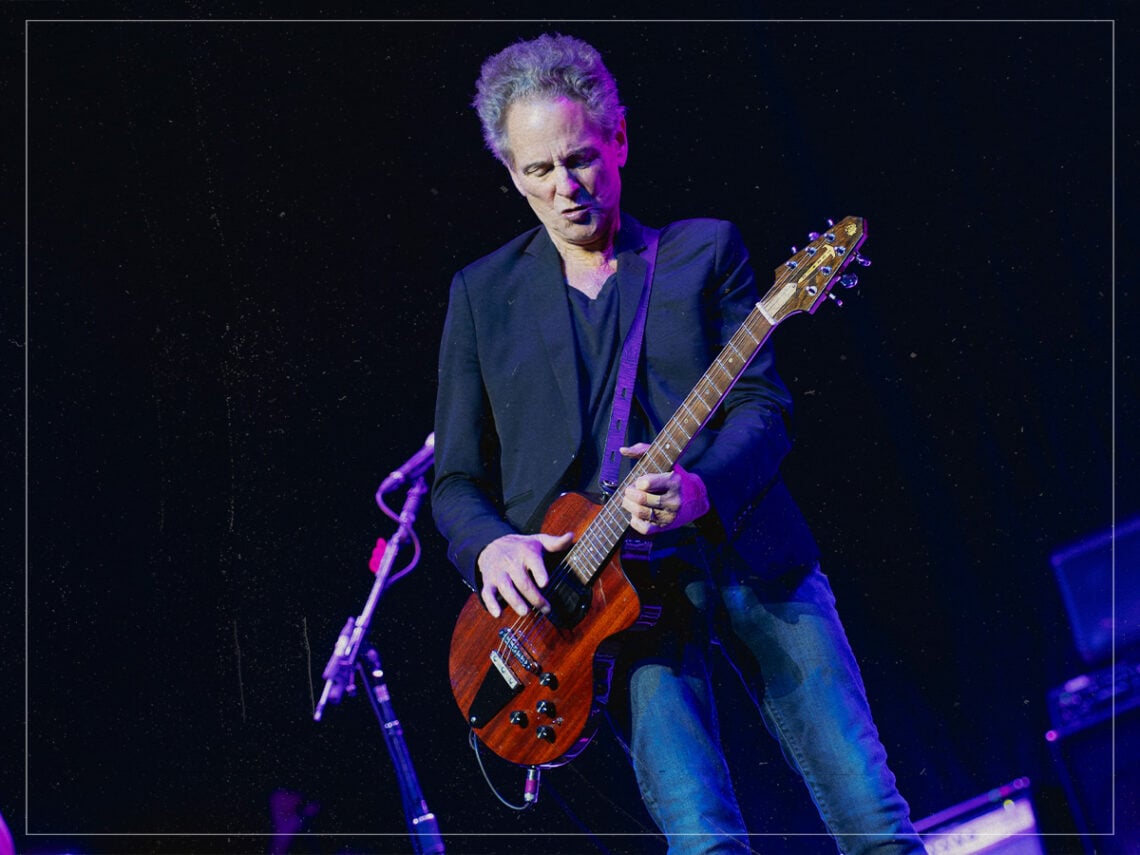
The singer Lindsey Buckingham described as the best of both worlds

There were a lot of moving parts that went into any Fleetwood Mac song that Lindsey Buckingham was involved with.
He was never going to settle for good enough whenever he got behind the glass, and even when he had an idea completed to perfection, he was always going to find ways of mixing it up and trying to find different sounds that no one had touched on before. But even if he had songs where he worshipped at the altar of artists like Brian Wilson, they needed to have the right emotion behind them or else all of that hard work would mean nothing.
That’s half the reason why Stevie Nicks’s songs ended up working so much better when they came up on a Fleetwood Mac project. Buckingham may have helped her do some of the heavy lifting whenever she started writing tunes like ‘Rhiannon’ and ‘Landslide’, but even if she only used two chords on a song like ‘Dreams’, the reason why it works so well is because you can hear a relationship in its bitter end stages through the speakers.
It’s a special kind of talent that can create that sense of heartache, and while Buckingham did have a lot of passion behind what he did, it was a lot more difficult for him to share that side of himself. Look no further than their massive comeback album, Say You Will. The record is phenomenal for what it is, but it does feel like Buckingham has too much of a chip on his shoulder, especially when he started making tunes like ‘Murrow Turning Over in His Grave’ or ‘What’s This World Coming To’ compared with Nicks’s songs like the title track.
But it’s not like Buckingham fully ignored the lyrics whenever he listened to records. He had already dissected some of the greatest Beatles songs well before he even started making his own records, and his love for people like Bob Dylan came from his capturing a feeling in his lyrics whenever he sang rather than focusing on his superior vocal technique whenever he sang one of his songs.
Each artist had their different strong suits in his mind, but Buckingham was transfixed when he heard what someone like Bruce Springsteen could do. The power behind the rest of the E Street Band helped give them a lot more weight than the traditional rock and roll outfit, but when Springsteen opened his mouth to sing, it wasn’t the typical rock and roll fare. He wanted to tell stories about people down on their luck and looking for the American dream, and that combination was absolutely perfect for Buckingham.
So while a lot of Buckingham’s were a lot more structured, he felt that ‘The Boss’ had the best songwriting style anyone could have hoped for, saying, “You take someone like Springsteen, who has the best of both, I think, in terms of being a writer and someone who knows what he’s doing. His phrasing can go from a certain timing in one line, and in the next line it’ll be totally different, because the words are different. Whereas if I was thinking of those two lines in a song, I might just think of repeating the same thing over and over.”
That’s not to say that one method is necessarily better than the other, but there’s a lot more power to what Springsteen is doing on many of his records. He doesn’t even have to have the best chords or anything like that, but when he kicks off one of his songs, there’s no doubt that he’s putting his heart and soul into every one of his lines, even if the story itself is a lot darker than what most people realise.
Buckingham’s method is a bit more labor-intensive when he’s working in the studio, but Springsteen has the same kind of cunning instinct that all great rock and rollers are born with. He still puts all of his efforts into making the best songs he possibly can, but he knew that the ones that would resonate came from lyrics that people felt in their gut whenever you sang them in concert.
