


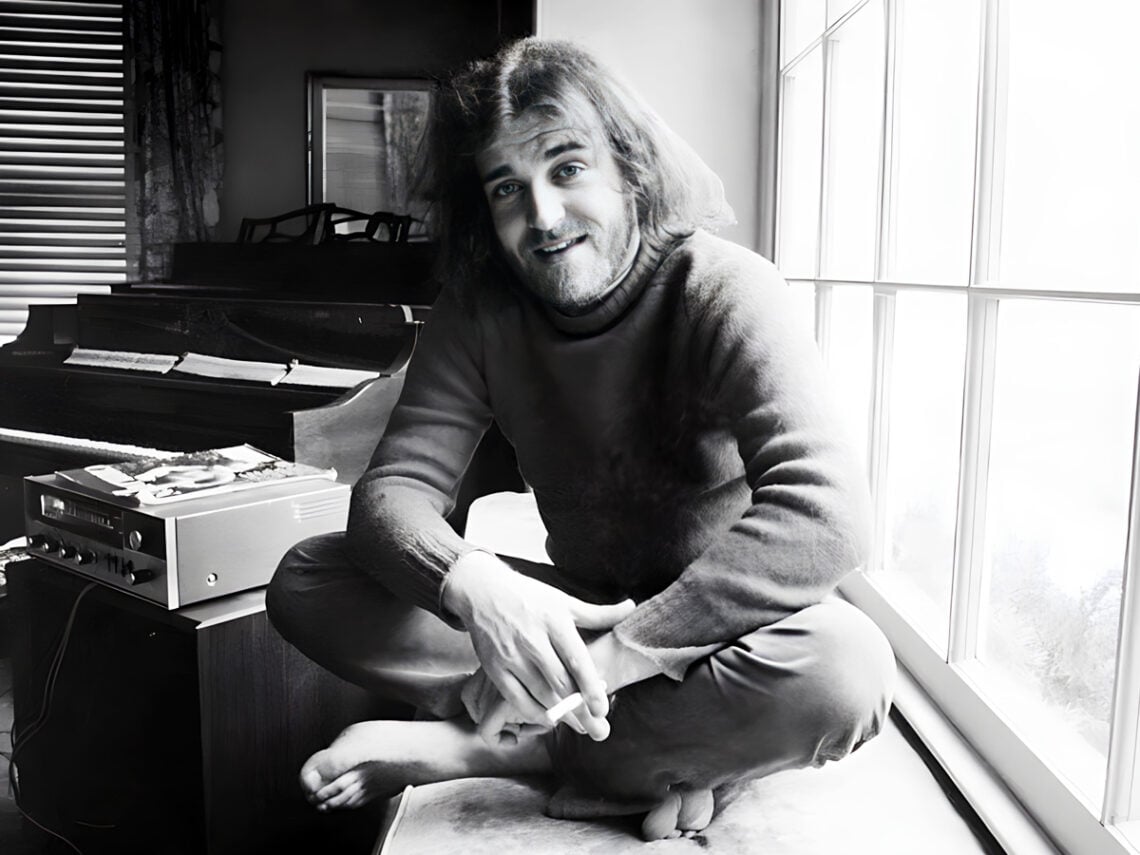
The singer Joe Cocker admitted to “really copying” early in his career

Despite its place of distinction within the opening ten minutes on one of the most famous albums in rock history, The Beatles’ original version of ‘With a Little Help From My Friends’, taken from 1967’s Sgt. Pepper’s Lonely Hearts Club Band, is arguably the second most famous rendition of that tune.
A year after its release, a 24-year-old kid from Sheffield covered the track, transforming it from a poppy little music hall number with a silly Ringo vocal into an epic gospel soul experience, fronted by some sort of South Yorkshire cousin of Ray Charles.
Yes, Joe Cocker definitely seemed to be either subconsciously inspired by the ‘Genius of Soul’ or doing a sort of shameless impersonation. The gritty vocal acrobatics were one thing, but the physicality – once you saw the face behind the voice – was arguably a step beyond homage. Cocker had not lost his sight at the age of six, or at all for that matter. Nor had he grown up in poverty and segregation down in the Florida heat. But when he sang, the ghost of Ray Charles climbed into his soul and manipulated his bones, sending him into mild convulsions like a charlatan televangelist zapping the demons out of his congregation. Only there were no demons, and Ray Charles was still very much alive.
“At one time, I was really copying Ray Charles, trying to imitate him,” Cocker admitted in an interview with the Boston Globe, although this was in 1969, only a year removed from his breakout hit and shortly after his famous appearance at the Woodstock festival.
“As I got older, and as [Charles] changed, I found myself on my own. I don’t consciously copy him anymore, but his influence is still deep.”

Maybe as a consequence of the numerous Ray Charles comparisons that had come his way, Cocker seemed a tad defensive in these early years, and even willing to lightly stab his hero in the back in order to separate himself thoroughly from him.
“Ray’s attitude has obviously changed,” Cocker added, dismissing some of Charles’ late ‘60s career choices. “First he added those Hollywood strings, which he never needed. Now he’s into ‘sock-it-to-me’ without much success.”
Like so many of his fellow British musicians, Cocker had been drawn in as a kid first to the skiffle sound of Lonnie Donegan, then Buddy Holly and The King, and finally the great blues men. The late ‘50s and early ‘60s sound of Ray Charles was the one that stood out the most, though, with Cocker recalling that he “really flipped” for it.
In essence, then, Cocker’s inspiration was more about channelling that energy and passion from the earlier Charles records, before Ray began his forays into country and western music and quasi easy-listening.
Over time, as Cocker proved to be more than a flash in the pan himself, the comparisons tailed off, and Ray Charles himself even became a fan in return.
“He had much feeling in his voice; that really tearful sound,” Charles said of Cocker in a 1983 interview. “It really caught my attention straight away.”
You know the old saying about imitation and flattery, etc. etc.
