


The Rolling Stones music video slammed for glamorising violence

The Rolling Stones are well-versed in controversy, but in 1983, they experienced a backlash of a strange kind. This came when the band were slammed by elements of the media for releasing a music video perceived to glamorise violence, which led to the BBC refusing to air it altogether. Even for a band notorious for their rough and rowdy ways, this seemed – and still seems – like a tremendous overreaction.
During the early 1980s, the band struggled to find their place in the world. Punk had come and gone, and electronic instruments were gradually changing what it meant to be a rock band, meaning that the rockstars of the past were going out of vogue.
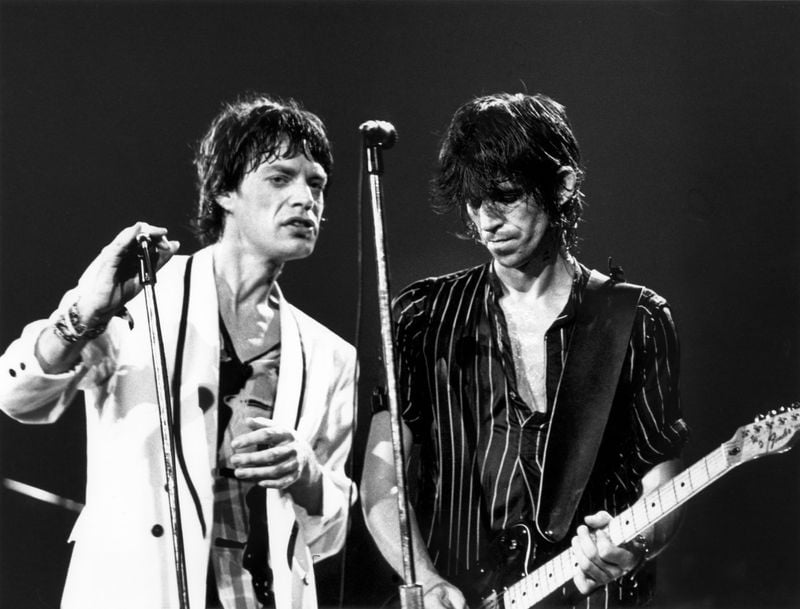
With all the change, it just so happened that guitarist Keith Richards was clean for the first time since the 1960s. In addition, frontman Mick Jagger was exercising more control over the band than ever before, experiencing a period of heightened ego that Richards would later call “Lead Vocalist Syndrome”. This led to the pair, who were once inseparable partners in crime, having a more strained relationship than ever before.
Jagger knew the group needed to stay relevant. In his quest to do so, he checked out what other big hitters such as David Bowie were working on, as well as what was happening on the dancefloor of New York’s home of disco, Studio 54, for inspiration. He eventually came across William S. Burroughs’ 1981 novel Cities of the Red Night, the most successful book of the day as well as the most critically acclaimed work the controversial beat novelist had ever produced.
Jagger’s reading of the book would lead to him writing ‘Undercover of the Night’ in Paris, France, circa late 1982. The singer later explained how the novel influenced the song in the liner notes for the 1993 compilation, Jump Back. The frontman said it was “heavily influenced by William Burroughs’ Cities Of The Red Night, a free-wheeling novel about political and sexual repression. It combines a number of different references to what was going down in Argentina and Chile.”
For the music video, the Stones enlisted auteur du jour, Julien Temple. He later reflected on the tension of Jagger and Richards’ relationship and how this influenced the violence depicted in the music video. He said: “I wrote an extreme treatment about being in the middle of an urban revolution and dramatised the notion of Keith and Mick really not liking each other by having Keith kill Mick in the video. I never thought they would do it. Of course, they loved it”.
Adding: “I went to Paris to meet with the band. Keith was looking particularly unhappy. He was glowering with menace and eventually said, ‘Come downstairs with me.’ My producer and I went down to the men’s room. Keith had a walking stick, and suddenly he pulled it apart. The next thing I know, he’s holding a swordstick to my throat. He said, ‘I want to be in the video more than I am.’ So we wrote up his part a bit more. That was Keith’s idea of collaboration!”
Set in a fictional version of South America, the clip sees a heroic journalist played by Jagger, battling against Keith Richards and his posse of criminals. Duly, it is the grittiest video The Rolling Stones have ever made. Despite this apparent edge, the reality is that the whole this is really not that bad. As Jagger explained, there was a point to the violence. It was a comment about the political violence regularly occurring in America at the time.
The video caused such a stir that the BBC eventually outright refused to screen it, with the regulators, the Independent Broadcasting Authority, also nervous about the violence it contained. Elsewhere, it was reported that even MTV, the hip new music network, were also apprehensive.
The reaction of the networks to the video seemed over the top, even for the time. Both the BBC and independent channels such as Channel 4 screened films and TV series that contained much bloodier violence. However, the political message is what made the bigwigs so fidgety. Embedded in the video is a suggestion that America was sponsoring some of the dictatorships in South America. For all the protests against the powers that be, the Stones were correct in their inference. This earned them a fresh amount of kudos with many younger consumers, including those who had hitherto hated the band.
What followed was an interview that Jagger and Temple gave on the music serial The Tube later that year. Interviewed by Muriel Gray, they were asked to justify why they thought the violence in the ‘Undercover of the Night’ video was so “necessary”. They demonstrated exactly why the criticism of the video was so flawed. Shortly after, Gray said: “The fuss is exactly this. That is a video for your single. There’s a great guitar riff over all these awful shootings. Doesn’t that glamorise it? Doesn’t that lessen what’s happening in real life?”
Temple responded with muscle: “Let me tell you that the average kid in America, when he gets to the age of 21, has seen 65,000 killings on TV, and that devalues the meaning of killing. It makes people immune to it. If we’d made a documentary for six weeks in El Salvador, all the kids who might see this would have turned it off. This film is about the song, about what is happening in parts of the so-called civilised world.”
No wonder The Rolling Stones enjoyed a resurgence after this interview.
