


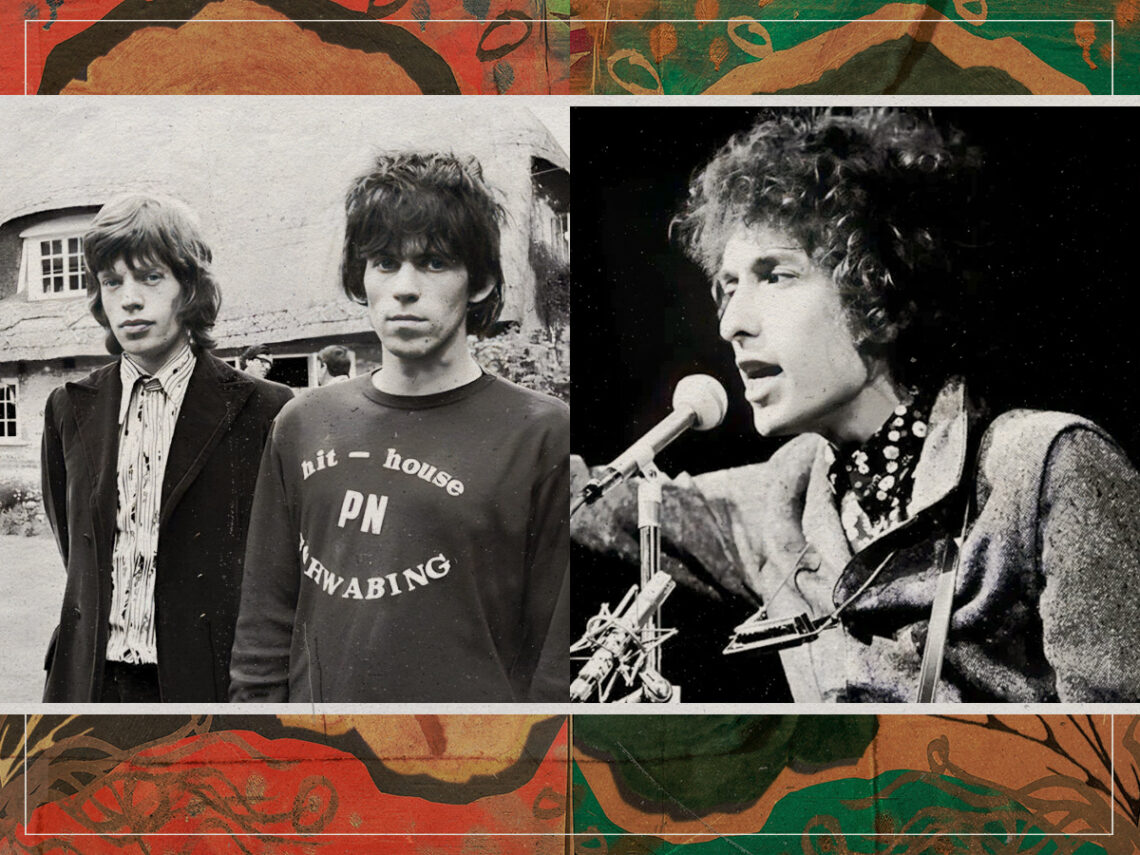
‘Doo Doo Doo Doo Doo (Heartbreaker)’: The Rolling Stones’ answer to ‘Desolation Row’?

The Rolling Stones and Bob Dylan are two of the most influential artists of all time, but their impacts on music history are markedly different. While Dylan occupied the world of folk and protest music, the Stones were rockers through and through. The harmonica enthusiast focused on words and worldliness, while Mick Jagger mastered the role of the frontman and threw himself into the sex, drugs, and rock and roll lifestyle. Still, their differences didn’t stop them from harbouring a mutual admiration for one another.
Though Dylan admittedly wasn’t a fan of the Stones covering his own songs, he did once term them the greatest and last rock and roll band in the world. Meanwhile, Jagger found an appreciation for Dylan’s mastery of words. The Rolling Stones frontman was particularly enthusiastic about one of the folk lyricist’s writings: ‘Desolation Row’ from Highway 61 Revisited.
With a runtime that surpassed 11 minutes, ‘Desolation Row’ was one of Dylan’s most ambitious offerings. It commented on the state of the world through a series of characters while Dylan watched from Desolation Row. During a conversation with The Guardian, Jagger picked out the lengthy track as his favourite Dylan song, describing its lyrics as “just so interesting and diverse.”
“It isn’t a real street so you create your own fantasy,” Jagger continued, before explaining his own interpretation, “I imagine an unforgiving place, somewhere you don’t want to spend much time, peopled with strange characters.” Amidst the beautiful imagery and apocalyptic scenes, Jagger surmised that the song was about “governmental, military control” and praised Dylan’s ability to pair pretty instrumentals with dismal lyricism.
Jagger and Keith Richards, who formed the main songwriting partnership in the Stones, weren’t quite as committed to poetry and politics as Dylan, but they did occasionally venture into these realms. When they weren’t writing songs about seeking satisfaction through sex and drugs, they considered evil through the eyes of the devil and grief on ‘Paint It Black’.
Perhaps the closest the Stones came to ‘Desolation Row’ was ‘Doo Doo Doo Doo Doo (Heartbreaker)’, which was featured on their 11th album, Goats Head Soup, in 1973. It certainly wasn’t as ambitious – or as poetically penned – as Dylan’s song, but it seemed to tackle similar sentiments, ideas and images.
Like ‘Desolation Row’, ‘Doo Doo Doo Doo Doo’ paired dark imagery with a seemingly unmatched soundscape. The Stones weren’t playing around with pretty folk guitars, but they did afford the song a funky groove and Jagger’s slick vocals, giving it a stylish feel on the surface. But when you take a closer listen to the lyrics, it’s a much darker song than it sounds.
“The police in New York City, they chased a boy right through the park,” Jagger sings in the opening verse, “In a case of mistaken identity, they put a bullet through his heart.” He goes on to sing of a young girl residing on a street corner, “sticking needles in her arms.” Like Dylan, he picks out specific characters to illustrate the state of the world, declaring, “I want to tear that world apart.”
The Stones frontman himself claims not to know what the inspiration for the song was, providing another similarity to ‘Desolation Row’. He once told Uncut, “It’s the timing. New York as a violent place. America as a heavy handed police state. We can go back 100 years and it’s probably even heavier. Obviously, all that time ago it was heavy in a lot of places, heavy now and heavy before.” Even though Jagger may not have acknowledged it, Dylan’s influence certainly does seem to be present.
With even Jagger unable to pinpoint the events that inspired ‘Doo Doo Doo Doo Doo (Heartbreaker)’, the song is just as open to interpretation as ‘Desolation Row’, though the lyrics are a little less surreal. But even though Stones’ lyrics aren’t quite as literary or as lengthy as Dylan’s, the song can certainly be seen to act like Jagger’s interpretation of the same themes, his own walk down Desolation Row.

Never Miss A Tale
The Far Out Bob Dylan Newsletter
All the latest stories about Bob Dylan from the independent voice of culture.
Straight to your inbox.