


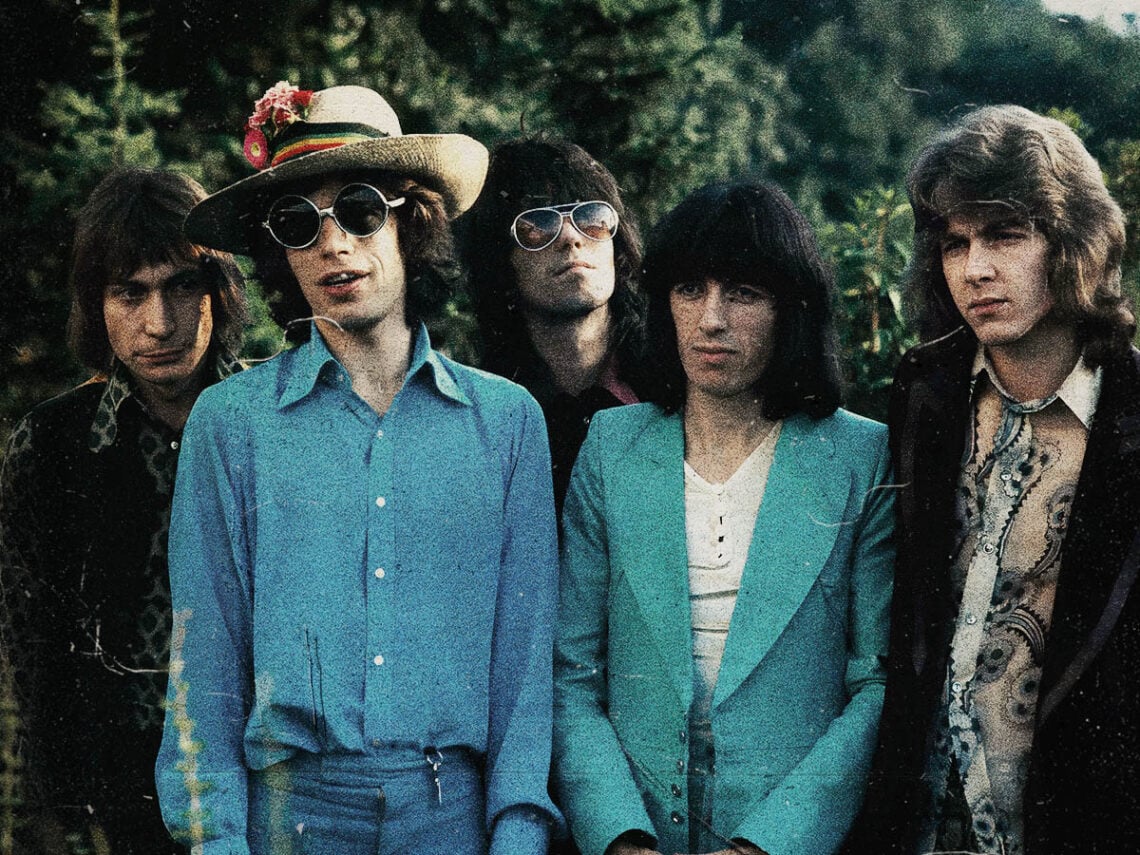
Bullshit, bowjobs, The Beatles, and The Rolling Stones album even Keith Richards dismissed as “a load of crap”

The very moment that Anita Pallenberg made Brian Jones wear lipstick, a Nazi SS uniform, and whipped him, one of them should’ve known that somewhere along the line, things had gone too far.
To some extent, it is easy to see how people’s internal alarm systems were dulled amid the occult-tinged haze of late-’60s Carnaby Street, where excess and experimentation had long since blurred into the everyday to such an extent that the most popular coffee shop on the street was run by a cult.
All the same, the spirit of the age did little to protect the couple, permanently docked in a tempestuous bay of volatile sex, drugs and rock ‘n’ roll, from what lay ahead. In less than two years, Jones would be dead, Pallenberg would be a heroin addict, and The Rolling Stones would be closing the decade with their stormy masterpiece, ‘Gimme Shelter’.
Back in ‘67, the demise of Jones and Pallenberg as Carnaby’s quirky ‘it’ couple was becoming increasingly clear. As the summer approached, an ugly paradigm of their moribund relationship would present itself, later to be brutally described in unflinching detail in Keith Richards’ own memoir, Life. While Jones was convulsing in the grips of a drug-induced mental episode in a hospital in Toulon, France, his fellow guitarist was receiving oral sex from Pallenberg in the back of his chauffeur-driven Bentley.
Needless to say, at this stage, the band had taken even more of a backseat than this ill-fated blowjob. Somehow, they were still working, but they were doing so in a delirious state of waywardness. They were still determined to be one of the premier British bands, but it was proving hard to summon the necessary spirit. With art secondary to a scandalous lifestyle, they turned to their peers for easy inspiration.
Music is always a product of the times, and that was especially apparent during the 1960s as two bands fought for the top spot and attempted to outdo each other with each release. Those bands were The Rolling Stones and The Beatles, and each of them was being swayed by an array of fractious distractions.
Retrospectively, because they survived this period as a band, it is often thought that the Stones were a tad more cohesive than their Revolver counterparts when things were fraying as the ‘60s wore on, but if anything, the pickle that they found themselves in was even more corrosively bitter than what befell the Fab Four.
Recognising their fraught position, they seemingly slunk back, allowed The Beatles to hold possession and craft pioneering new sounds, and then counter-attacked with a more visceral approach. The long-running debate of whether this constituted The Rolling Stones effectively ‘copying’ The Beatles has lingered for so long that even Paul McCartney offered his retrospective view on the age-old debate.
Speaking to Howard Stern in 2020, McCartney reflected: “I mean, we started to notice that whatever we did, The Stones sort of did it shortly thereafter… We did Sgt. Pepper; then The Stones did a sort of psychedelic album, there was a lot of that.”
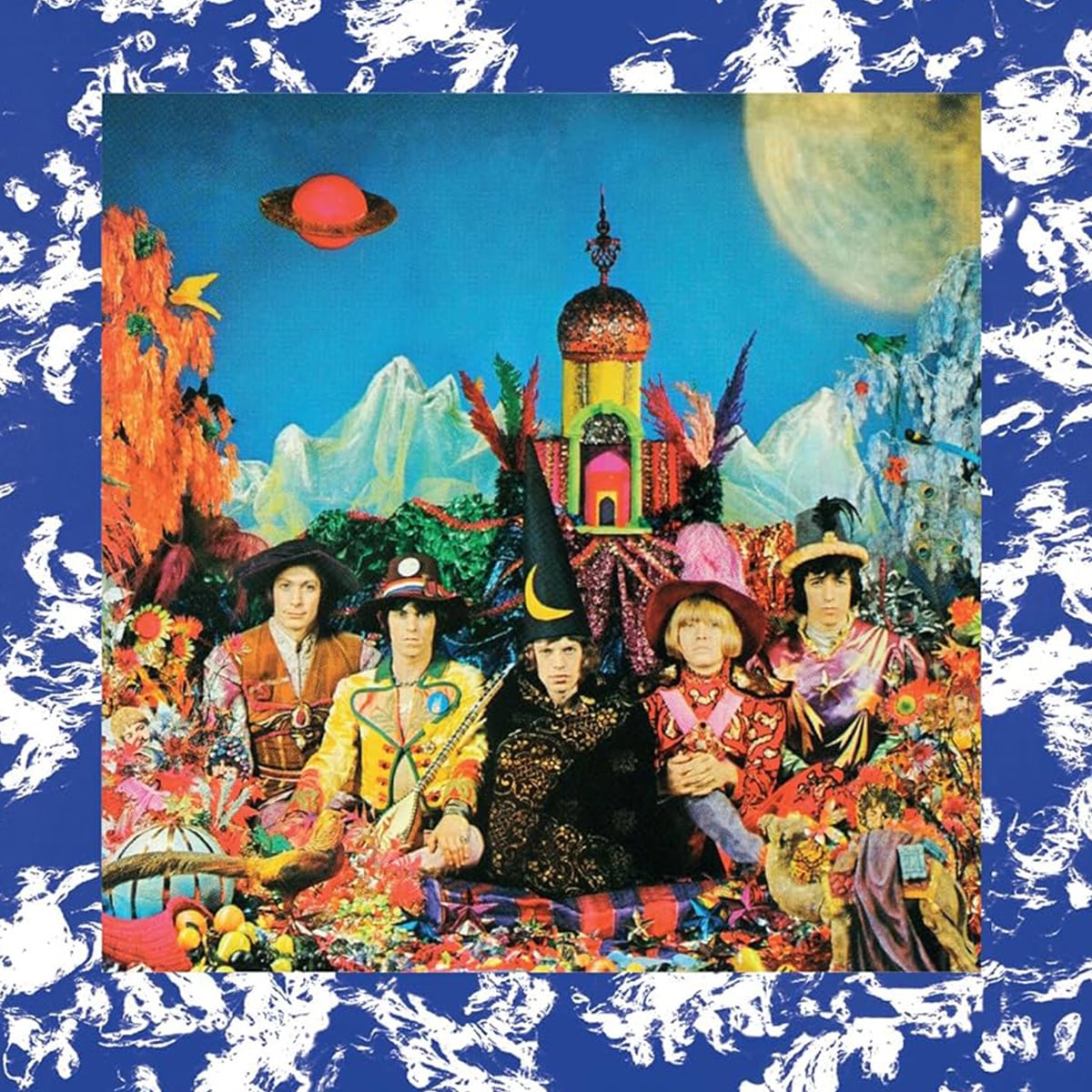
The album McCartney is referring to is Their Satanic Majesties Request, where The Beatles’ influence over the dapper lads from Dartford was most patently self- evident. Even the album cover appeared to be an ironic nod to Sgt Pepper’s Lonely Hearts Club Band and its kaleidoscopic, LSD-inspired aesthetic, released just six months earlier.
However, as McCartney suggests, The Stones’ work was always deeply rooted in the blues, a foundation that didn’t naturally blend with the Hindustani influences that were then shaping The Beatles’ musical direction. Thusly, their imitation felt like an obvious bandwagon leap.
There was no doubting that Jones and co had a newfound taste for the weird and the unconventional – the Stasi sex acts alone should tell you that – but it seemed conceited when this predilection suddenly became little more than shorthand for ‘sitar’.
Mick Jagger and Keith Richards both agree with this assessment. The frontman has outright dismissed Their Satanic Majesties Request as “nonsense”, while Richards firmly believes that they strayed too far from their blues roots in an attempt to emulate The Beatles’ eclectic style. This departure, according to Richards, had a negative impact on their sound.
The guitarist once told Esquire: “If you’re the Beatles in the ’60s, you just get carried away – you forget what it is you wanted to do. You’re starting to do Sgt. Pepper. Some people think it’s a genius album, but I think it’s a mishmash of rubbish, kind of like Satanic Majesties -‘ Oh, if you can make a load of shit, so can we.'”
Later in his memoir, the guitarist claimed, “None of us wanted to make [Satanic Majesties], but it was time for another Stones album, and Sgt. Pepper’s was coming out, so we thought basically we were doing a put-on.”
It’s not difficult to see why they took this approach. As was clear from the image of Richards cavorting with Pallenberg while Jones lay in a perilous state somewhere in France, they simply weren’t in a position to do anything other than copy their peers if they wanted to remain in the game. Richards and his bandmates have claimed that they were simply so “strung out” from endless recording and touring in the period that they figured the easiest route would be to cruise on the backseat of a bandwagon, seemingly getting blowjobs along the way.
While Richards doesn’t mind the songs ‘2000 Light Years from Home’, ‘Citadel’ and ‘She’s a Rainbow’, he ultimately concludes that the record “was a load of crap” – the product of a period when the band were too strained to offer the sound that they had tirelessly honed either side of this oddly enforced departure.
Since then, they’ve dismissed it and all the bullshit ideology that it drummed up. They didn’t want to be part of the fad that the Fab Four had started, and perhaps rightly so. In the August ‘67, four months before Satanic Majesty was released, The Beatles dubbed the Transcendental Meditation Guru Maharishi Mahesh Yogi, their “spiritual advisor”. This was a mistake that Richards has lauded over them ever since.
The Beatles later renounced their association with their former guru when they learnt that he shelved spiritualism to make sexual advances on the actress Mia Farrow. In the wake of the troubling incident, less than a year after they dubbed him their spiritual advisor, they cut off all ties to Yogi and apologised for what they called “a public mistake”.
Richards didn’t hold back with his comments on this particular subject, not only condemning them for their association but exclaiming that he felt the need to turn away from them completely and “excommunicate”. It was his understanding that a phoney had conned them, and that reflected badly on their part.
Richards rebuked, “[Maharishi] was a fucking operator, a sucker job. But you have to think, what had being ‘The Beatles’ done to The Beatles?” Before musing that their penchant for the mystical realm of India during that period was a shot at escapism and nothing more. “They wanted somebody else to take them away,” he added.
Yet, he also offered a degree of empathy. “They didn’t want to be ‘God’ anymore,” he said, “so they plugged it all onto the Maharishi.” Beyond empathy, this fig leaf perhaps also serves as a slight excuse for the Stones’ own guilt by association when it comes to Satanic Majesty. They might not have consulted a guru for the record, but it is nevertheless awash with the same sentiments that befouled the ‘60s with an air of naive mysticism and dangerous dabblings.
So, the band quickly ditched the album and looked to get back to straight rock ‘n’ roll, endeavouring to regain their sense along the way. In fact, ‘2000 Light Years from Home’ and ‘She’s a Rainbow’ are the only two songs from the album that the band have ever played live.
Jagger and Richards may have cited fatigue and a loss of artistic direction as the key problems, but Bill Wyman also offers an explanation for the heady studio atmosphere at the time. The bassist wrote in his memoir, “Every day at the studio it was a lottery as to who would turn up and what, if any, positive contribution they would make when they did.”
He continues, “Keith would arrive with anywhere up to ten people, Brian with another half a dozen, and it was the same for Mick. They were assorted girlfriends and friends. I hated it! Then again, so did Andrew (Oldham) and just gave up on it. There were times when I wish I could have done, too.”
With all that in mind, from the flashes of excellence in the few songs Richards still likes, to the sense of a sham abounding, and the miracle that the band made it through, there’s an argument to be made that few albums capture the era more clearly than Their Satanic Majesties Request – the grisly and glorious moment counterculture stepped one toke over the line.
