


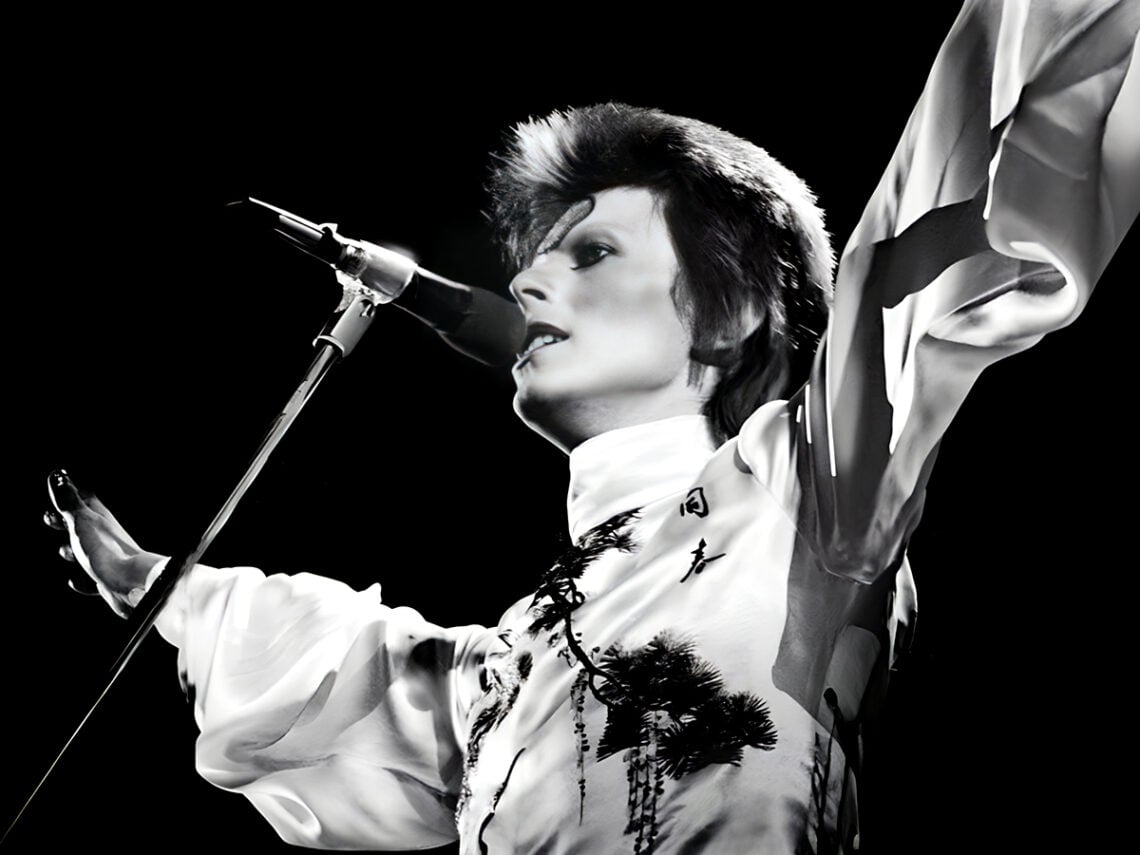
The rock anthem David Bowie called “a bitch to sing”

There was never any style of music that didn’t suit David Bowie. Throughout his years as a rock oddity, Bowie would try on any sonic costume that he thought suited him at the moment, either working on pioneering the sounds of glam rock with his ‘Ziggy Stardust’ persona or being at the forefront of krautrock when working on the album Station to Station. While every album served as a distinct pit stop in Bowie’s career, there was the occasional vocal line that would throw him for a loop.
After ‘The Starman’ carved out his niche in the world as a glam icon, he first started to challenge what people’s perceptions of him were supposed to be. Throughout recording albums like Young Americans, Bowie would work with various soul musicians to get the sound he wanted, making songs that were a love letter to the Philly soul that he loved as a kid.
Later, becoming enamoured with the sounds of artists like Kraftwerk, Bowie started to think of making music that didn’t necessarily line up with the traditional grid of pop music. Looking for a change of scenery after spending time snorting as much cocaine as possible while in Los Angeles, Bowie would move to Berlin for the next phase of his career, working with Brian Eno to conduct whatever sonic experiments felt right for them.
While albums like Low would feature Bowie’s voice taking a back seat to the music in its back half, “Heroes” would become one of the most celebrated albums of his career thanks to the title track. Featuring an ingenious production detail from Tony Visconti, Bowie’s lead vocal would be slightly distorted on the playback, sounding like he’s singing from the other side of existence as he talks about the endurance of humanity.
Even though the song features some of the most spellbinding vocal lines he ever made, Bowie said he didn’t come without a fight. After pushing his vocal cords to their limits, the frontman would later talk about how difficult it was to get the sounds he heard onto the final tape.
When talking about the title track, Bowie called it one of the most challenging songs that he ever had to sing, saying, “It’s a bitch to sing, ‘cos I really have to give it some towards the end. I pace myself throughout the show and often place it near to a point where I can take a vocal break afterwards. As long as I’m touring, I don’t see a time when I won’t be singing ‘Heroes.’ It’s a good one to belt out, and I get a kick out of it every time”.
Then again, Bowie’s vocal is only one piece of the puzzle. Outside of his performance, guitarist Robert Fripp would turn in one of his most inventive guitar parts on the record, creating his lines out of various feedback loops in the studio, which makes the guitar sound closer to a synthesiser or an electronic string section.
While Bowie may have been able to belt to the rafters whenever he played the song in concert, there’s no way of topping the performance he gave on record. As opposed to the stadium-rock bombast that can come with live performances, Bowie sounds like he’s on the verge of breaking down in the studio on the record, hoping that there will eventually come one day where he will feel like a king. Bowie may have been able to shapeshift into whatever singer was needed for the song, but sometimes songs require more emotional gravitas to sound earnest.
