


The riffs Jimmy Page took from The Yardbirds to Led Zeppelin: “I wasn’t going to throw all that away”

Having already carved a name for himself in the mid-to-late 1960s as a member of the Yardbirds, people were already acutely aware of the talents of Jimmy Page prior to him having become a founding member of Led Zeppelin. Initially a bassist for the group, he would eventually go on to replace Jeff Beck as the lead guitarist in the group in 1966 when his counterpart was ousted from the group, and this paved the way for Page to begin experimenting with a sound that shaped his guitar playing style for the rest of his career.
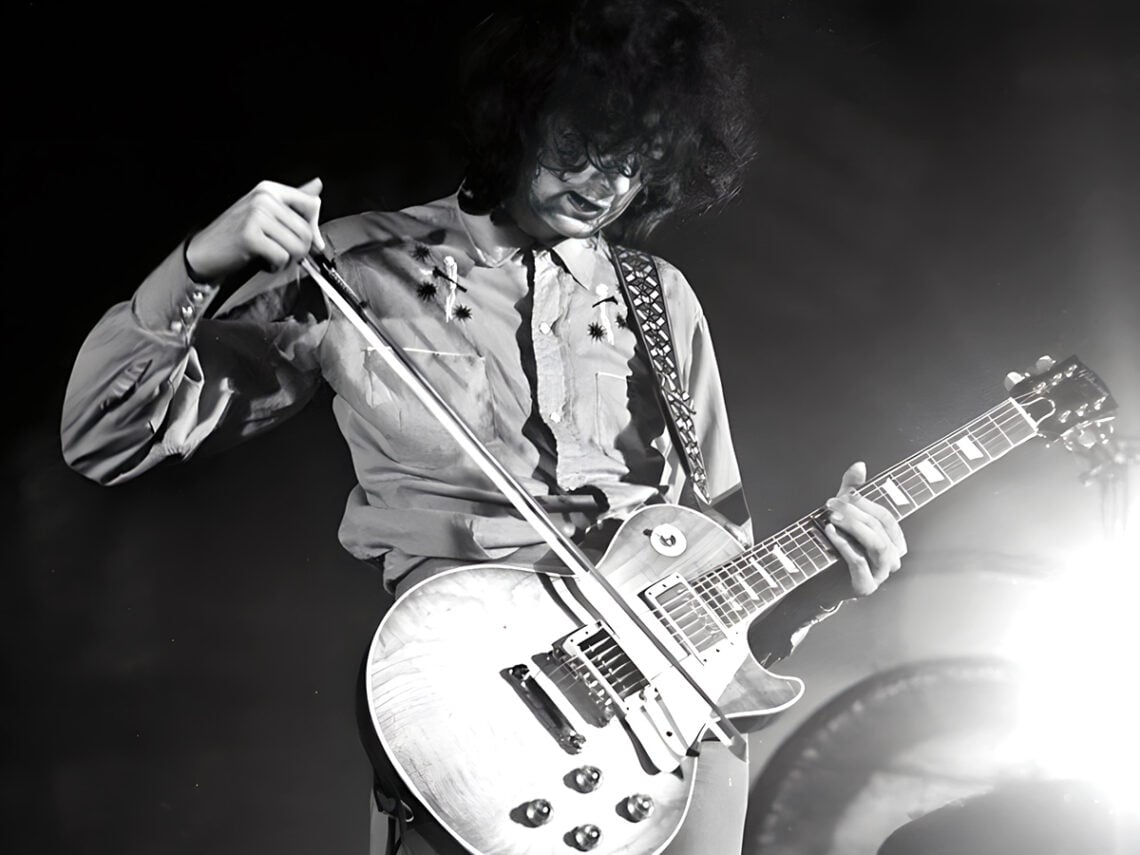
One of the main features of Page’s guitar innovations that he introduced during his tenure as the lead guitarist in the group was playing his instrument with a cello or violin bow; an unorthodox yet unique approach that he would repeat during his time with Led Zeppelin. While the band’s final album, Little Games, was a commercial flop that ultimately led to the Yardbirds’ demise, it saw the introduction of some of Page’s more innovative methods and highlighted his proficiency as a guitarist.
‘White Summer’ saw Page use non-standard tunings to emulate a hybrid of Celtic, Indian and Arabic folk music, which is something that he would repeat in some later compositions with Led Zep, and ‘Glimpses’ was an example of Page’s bowed guitar with further Eastern psychedelic influences. These tracks, along with Page’s arrangement of the Jake Holmes composition ‘Dazed and Confused’ were all songs that overlapped from the Yardbirds’ output into Led Zeppelin’s early live performances, and the crossover from the end of one act into the birth of another didn’t end there.
‘How Many More Times’ was the closing track on Led Zeppelin, Page’s new outfit’s debut album. While credited to Page, John Paul Jones, and John Bonham, it all stemmed from Page’s time in the Yardbirds, an idea that he was reluctant to throw away, having never recorded it with his former group.
Speaking to the BBC in an interview for the book The Guitar Greats, Page revealed that the skeleton of the song had existed for a little while prior to the band recording it for their debut album. “We had numbers from the Yardbirds that we called free form, where I’d come up with my own riffs and things,” he explained. “Obviously, I wasn’t going to throw all that away, as they hadn’t been recorded, so I remodelled those riffs and used them again.”
Realising the potential that some of his older experiments and jams with his old band had and not wanting his hard work to go to waste, he realised that bringing back the bowed guitar elements for songs on Led Zeppelin’s debut record would be a good way to tie in some of his unused work from the prior project. “The bowing on ‘How Many More Times’ and ‘Good Times, Bad Times’ was an extension of what I’d been working on with the Yardbirds,” Page continued to explain, “although I’d never had that much chance to go to town with it, and to see how far one could stretch the bowing technique on record.”
The technique would eventually become a staple of the Led Zeppelin’s live shows, and in the earliest years of the group, they would often extend ‘How Many More Times’ out to over ten minutes as the closing song of their live set. “It became quite a little showpiece in itself,” he said of the bowing technique, and its introduction to Led Zeppelin’s sound from the beginning was ultimately far more successful than it had been when brought to the table late into the Yardbirds’ career. It may not have been the band that gave Page his start, but Led Zeppelin was where his ideas truly came to life.

Never Miss A Beat
The Far Out Led Zeppelin Newsletter
All the latest stories about Led Zeppelin from the independent voice of culture.
Straight to your inbox.