


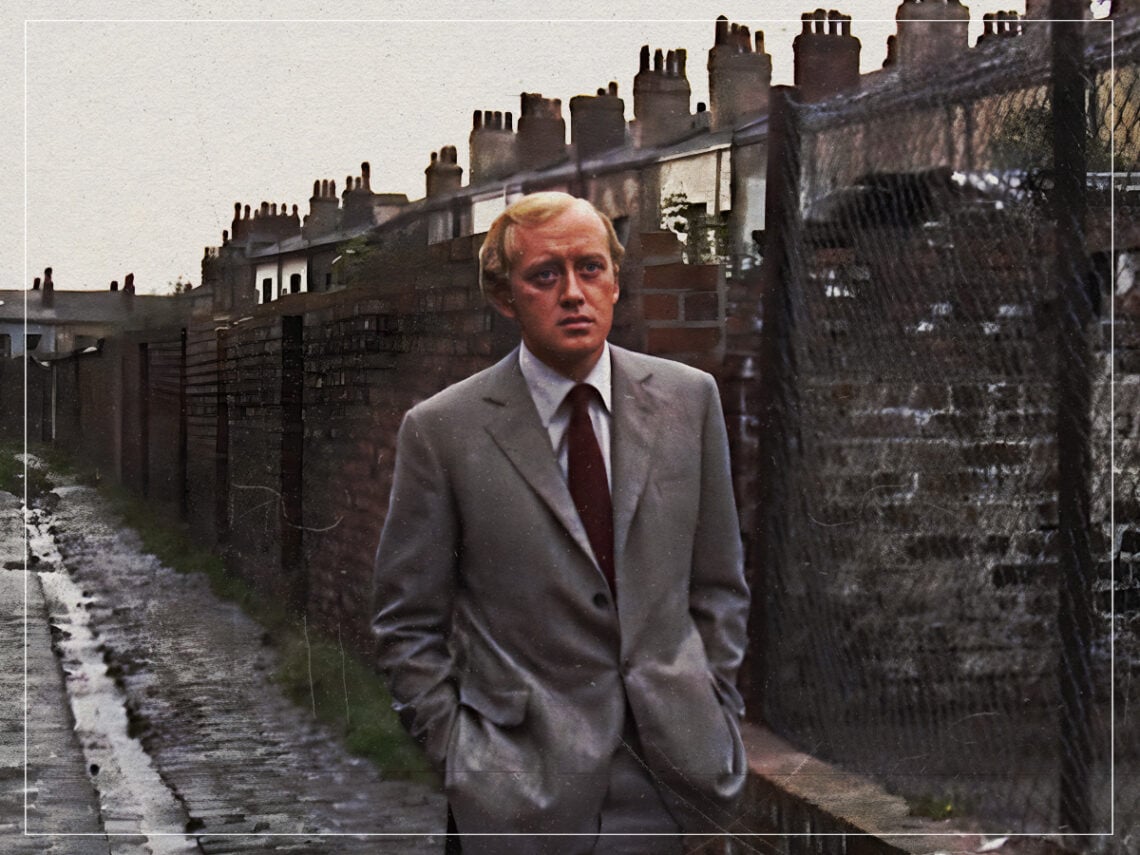
‘The Reckoning’: the movie that sowed the seeds for ‘Get Carter’

In the world of British crime cinema, there are a few movies that stand out as markers of genuine excellence. The likes of Jonathan Glazer’s Sexy Beast, Guy Ritchie’s Lock, Stock and Two Smoking Barrels and Mike Hodges’ Croupier all serve as some of the best British crime movies, but there’s another Hodges film that’s also well worthy of such consideration.
Several decades before Croupier, Hodges delivered his directorial debut in the shape of 1971’s Get Carter, starring Michael Caine, Ian Hendry, John Osborne, Britt Ekland and Bryan Mosley. Based on the 1970 novel Jack’s Return Home by Ted Lewis, Get Carter sees Caine play London gangster Jack Carter, who returns to his Newcastle home to look into his brother’s supposedly accidental death.
However, upon arrival back home, Jack begins to suspect foul play and seeks vengeance on those who caused his brother’s tragic and untimely end. Hodges’ film is a true classic in the British gangster genre, noted for its naturalist feel and realistic tone. The director goes to great lengths to research the criminal underworld of the North East.
Interestingly, there was another British crime movie that largely set the scene for Hodges’ Get Carter. In 1969, Jack Gold released The Reckoning, starring Nicol Williamson, Ann Bell, Rachel Roberts and Zena Walker, based on Patrick Hall’s 1967 novel The Harp that Once, a film that shares a number of thematic and aesthetic choices with Get Carter.
Both films sought to depict the British criminal underworld with a greater sense of gritty realism in reaction to the overly stylised efforts of previous years. The Reckoning tells of Michael ‘Mick’ Marler, a successful London businessman who returns to his Liverpool home in order to investigate the murder of his father.
Far from the glamour of the capital, Mick’s origins are shown in all their humility and his working-class upbringing is brought to the surface. In that light, the depiction of Jack Carter in Get Carter could be said to have its roots in Gold’s original movie, as can the direct and unfiltered portrayal of crime and violence.
Beyond the setting and story, though, there are also some character similarities between the two films. For instance, both Jack and Mick are morally complex individuals. Mick seems to be torn between his working-class roots, the quest for his father’s justice, and his professional London life, while Jack is driven by a code of familial honour. Both men are willing to push their ethical boundaries to discover the truth about their loved ones’ deaths.
Aesthetically, both films would also become pivotal works in showing a new kind of British crime cinema, with the cities of Liverpool and Newcastle both being shown in uncompromising, grey manners. The stark and honest cinematography of The Reckoning would be taken on in Get Carter just two years after it was released, and it details the kind of unflinching violence in just as much brutality.
By exploring social issues in a gritty and realistic style and having morally ambiguous characters at the centre, both The Reckoning and Get Carter began a new era for the British crime film. Though Hodges’ work is often one of the most talked about and admired by Brian De Palma and Quentin Tarantino, it was Gold’s earlier effort that laid the groundwork for its success.

Never Miss A Tale
The Far Out Michael Caine Newsletter
All the latest stories about Michael Caine from the independent voice of culture.
Straight to your inbox.