


The real story behind Patti Smith’s ‘Free Money’

Famously, Patti Smith immortalised her life in downtown New York City in the 1970s in her memoir, Just Kids.
Existing on the adrenaline of “art for art’s sake”, Smith survived in humble dwellings, scarce food and the motivation to become a prolific poet. She chronicled this time in her life not to romanticise, but to acknowledge her sheer will: she knew, subconsciously, that New York held the key to granting her the life that she aspired towards, and if it meant living in the crumbling, destructive city, then so be it.
While her life as told in Just Kids gave Smith a new resonance among a younger audience, many of whom did not grow up listening to her music (or perhaps, not knowing that she was a musician until finishing the book), little is said of Smith’s life before her pilgrimage to New York. She has never kept her upbringing a secret, quite the opposite, in fact. The glimpses are there for us to digest in her music, particularly her debut album, Horses.
Born in Chicago and following a brief stint in Pennsylvania, Smith was raised in southern New Jersey. The eldest of three children, Smith has often recalled her childhood as one spurred by imagination and, despite her parents’ financial burdens, filled with love. In her most recent memoir, Bread of Angels, she details her parents’ efforts to make ends meet for their family while attempting to shield their children from their unstable reality as much as possible.
She recounts the story of her birth: a sickly baby, her parents had to shield her from the cold by holding her over a steaming washtub. “But I knew nothing of these things,” she writes, “neither the hopes of my father nor the labors of my mother”. Smith, an ever-observant child, knew from an early age that want and desire came at a price, and such was one that did not come forth without struggle.
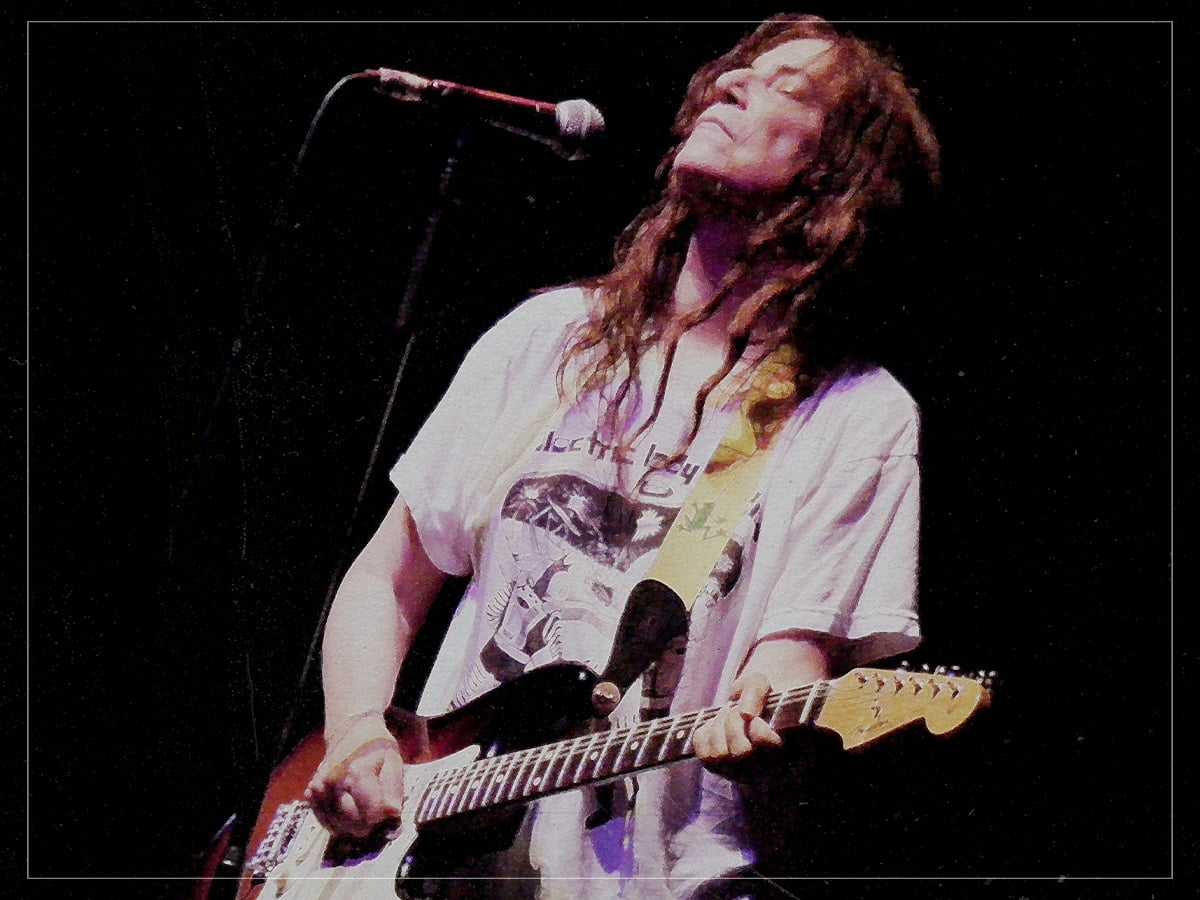
Before Horses, Smith wrote in the footsteps of her heroes, such as Arthur Rimbaud and Dylan Thomas, radical poets who eradicated boundaries and conjured spirits in their writing. Immersed in the burgeoning punk scene, Smith had the inspiration to set her poetry to song with guitarist Lenny Kaye, her own soundtracked spoken word. This was the genesis of an album that would permanently redefine rock music; as Smith wrote in the ad copy for it, “three chords merged with the power of the word”.
Horses is a storyteller’s album, both fantastical and deeply rooted in reality. Most importantly, it held a mirror to who Smith was, her emergence as a fully-fledged artist. She was a poet with deep regard for every soul she crossed paths with, and thus, she filled Horses with songs in tribute to her heroes, both aspirational and real-life. One of the most evocative on the album is ‘Free Money’, a song that is often misunderstood, even half a century later.
In conversation with the New York Times, Smith spoke of the song’s significance. “So many people think it’s a love song. I wrote it as, ‘Oh baby,’ as if perhaps it is, but it was really for my mother,” she explains. “My family struggled financially, sometimes to the point of not having enough food on the table. They worked hard their whole life. “They couldn’t really support me. But I never lacked love.”
The song begins, fittingly, as a piano ballad, while Smith sings of her nightly dreams of finding a lottery ticket to support her family. “Every night before I rest my head / See those dollar bills swirling ‘round my bed,” she envisions, likening them to pearls swept up from the sea. Growing up with scarcity warrants this imagination of money being the gateway to salvation, but as the title suggests, it is a contradiction.
“I know they’re stolen but I don’t feel bad,” Smith sings of her newfound wealth, “I take that money, buy you things you never had.” The song bursts into a rapturous punk ballad, the guitars and bass played with a mischievous glint. Smith fantasises about taking her mother onto a jet plane, soaring through space and time, away from the burdens of reality.
Smith makes a repeated promise of “When we dream it,” assuming the responsibility of providing what her family has always hoped for. The chant of “free money” dominates the song, as if Smith is trying to will a fortune into existence. As with some of her most spirited works, ‘Free Money’ channels punk’s adrenaline into heartbreaking lyrics, turning one of her most personal stories into an anthem for generations of devotees to resonate with.
