


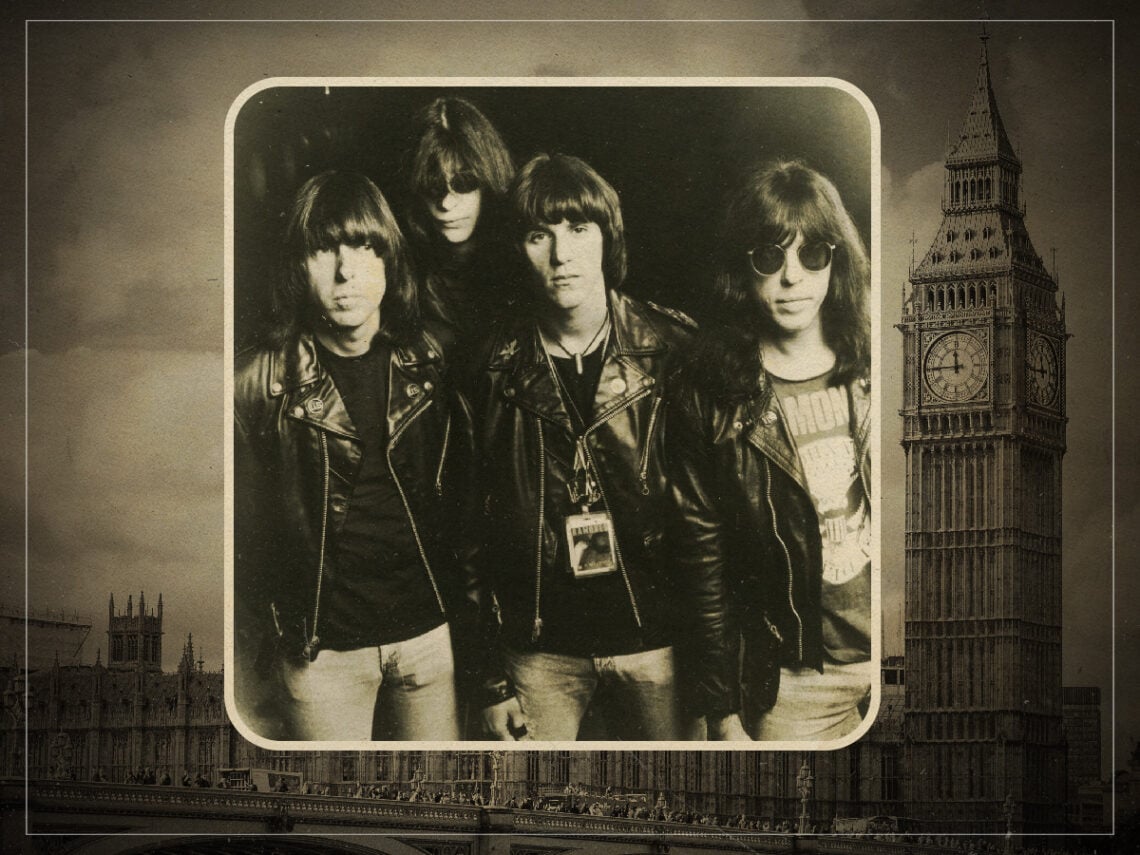
The Ramones spent two days in London and changed music forever

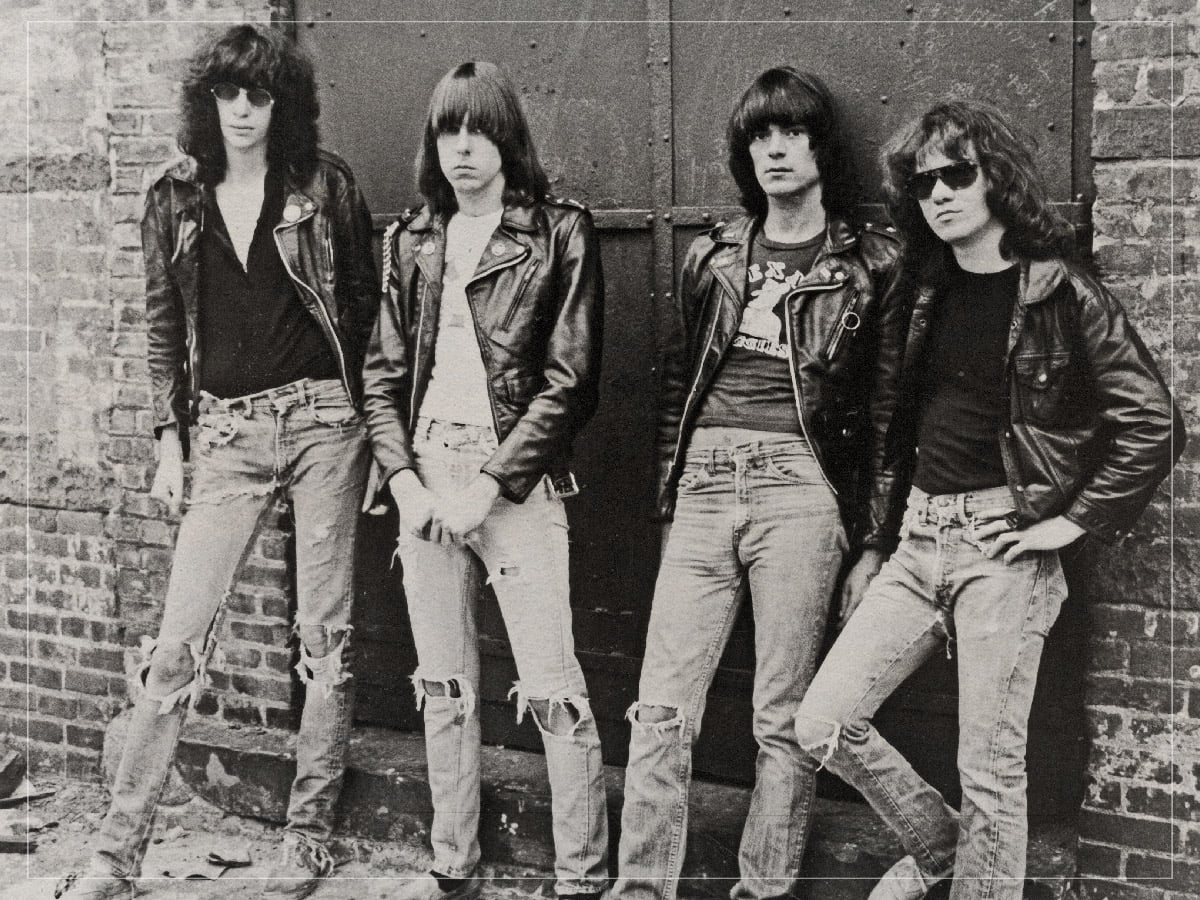
When you hear the “Ramones“, chances are you picture the iconic black-and-white image of Joey, Johnny, Dee Dee and Tommy Ramone standing in near-identical leather and denim outfits, standing against a graffiti-covered brick wall.
The image, taken by photographer Roberta Bayley, appears on the cover of their self-titled debut album, released on April 23rd, 1976. Ramones turned the four men from Forest Hills, Queens, into overnight sensations. Before punk even had a proper name, they became its poster boys, honing the genre’s intensity with fast-paced rhythms and songs about life in New York City. In doing so, they helped drive a shift in rock music, blending garage rock with a renewed burst of energy.
Weeks after Ramones was out in the world, the band were set to bring their raucous live gigs to London, booked to play the Roundhouse and Dingwalls on the July 4th weekend. It would be the Ramones’ first time playing outside of the United States. They and their manager, Danny Fields, arrived at the Holiday Inn in Camden to crowds of fans waiting for them outside, an indicator of chaos that would ensue.
Reflecting on the Ramones’ time in London in Square Mile, Fields notes that there was pressure placed on the band themselves to be “better musicians” before performing to the public. “The Ramones disabused so many great musicians of the tyranny of having to be good musicians,” Fields writes, noting the showmanship of some of rock’s greatest acts to come out of London: The Rolling Stones, David Bowie, Led Zeppelin, The Who and more. “I think that’s the important thing they really did in London.”
The fanaticism in London surrounding the supposed “scene” brewing in New York spurred excitement at the prospect of seeing the Ramones in the flesh. Music publications, including NME and Melody Maker, had reported on the Ramones and their peers in the CBGB circuit, and, in turn, according to Fields’ account, thousands of fans showed up to the Roundhouse hoping to catch a glimpse.
“The always important teenage word of mouth was raging in England,” Fields asserts.
For both London dates, the Ramones were billed as support for the Flamin’ Groovies, a rock band from San Francisco. “We agreed to alternate the closing slot,” Johnny Ramone recalled, as quoted by Fields, “but when we got there, they insisted on closing both nights. We couldn’t care less. Everybody was there to see us.”
As Fields recounts, the Ramones’ performances both nights were a masterclass in adrenaline: “They raised the energy level so high when they played that there was no place to go afterwards but down,” he describes. “Most of the audience, already giddy and drained, were gone by the time the Flamin’ Groovies came on stage to do their show.”
Some soon-to-be famous faces joined the rapturous crowds to see the Ramones, including members of The Clash and the Sex Pistols. Fields remembers Johnny Ramone giving some advice to an awestruck Paul Simonon, impressed with the crowds that the Ramones conjured and questioning why The Clash couldn’t do the same.
“We can’t play, we’re terrible musicians,” Johnny asserted. “But the kids don’t care about that; they want a show. So we give them a show, loud and fast.”
Quoted by Fields, Joe Strummer described the Ramones’ performance as being “like white heat, because of the constant barrage of tunes. One ended, the next began. You couldn’t put a cigarette paper between them.”
The Ramones’ two nights in London set the tone for “punk” to grow from a New York phenomenon to a global shift in music. Now, 50 years after their debut, the band’s sound and presence remain at the core of what “punk” is (however heavily debated the meaning of the term may be): a source of rebellion and power, growing from an idea to an energy exerted on stage.
