


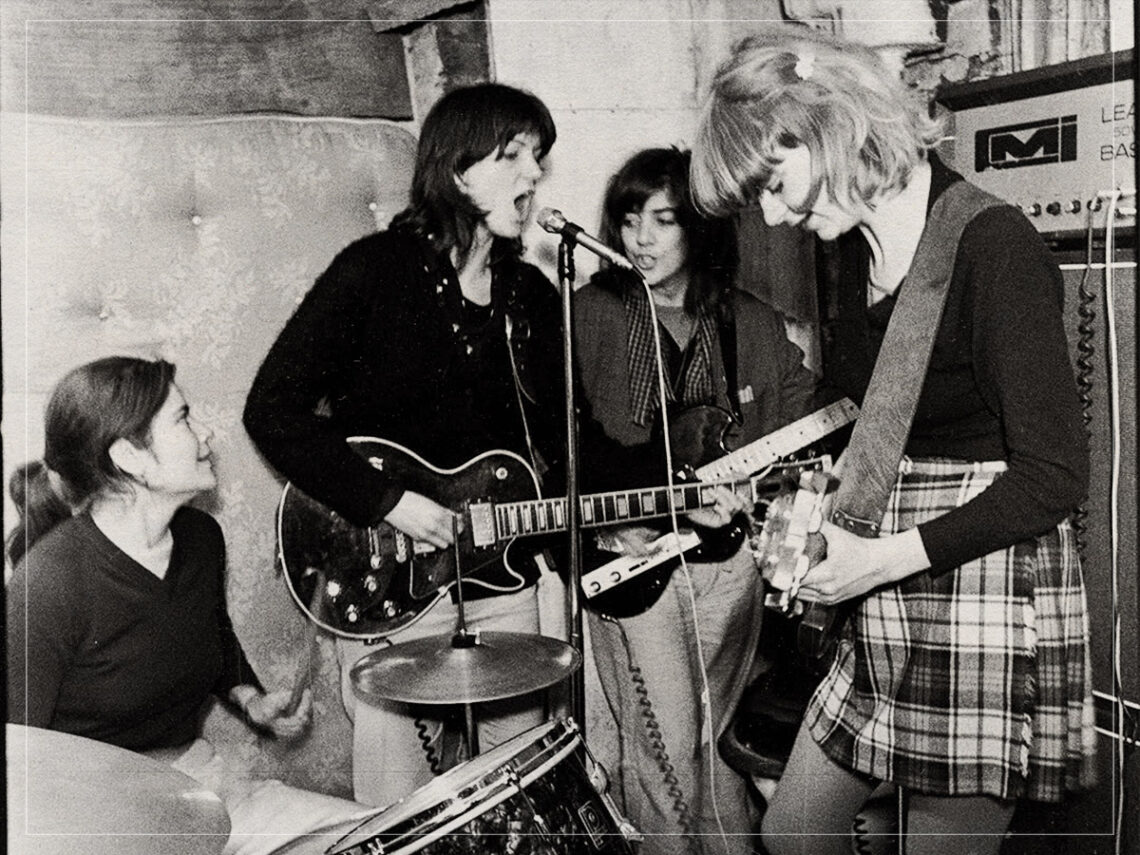
The Raincoats: A pivotal force behind the indie boom

Among the litany of early releases in Rough Trade Records’ late-1970s infancy, The Raincoats more than most anticipated the indie wave that would dominate the following decade’s alternative charts.
It all started with a Slits show. Witnessed early 1977 at punk’s height, founding member and bassist Gina Birch was inspired to form her own band after the inspiring sight of a majority female band taking the stage and forging their own urgent dub sound at a time when women had yet to become truly ubiquitous in the rock world.
Proving extra fortuitous, The Slits’ original drummer Palmolive would join The Raincoats’ first settled line-up, along with Ana da Silva and classically trained violinist Vicky Aspinall, for their debut album. Released in 1979, The Raincoats dwells in an artful, ramshackle place that would predict the lo-fi culture and NME‘s C86 shufflers by several years.
Rickety and skewed yet colourful and full of fuzzy texture, The Raincoats borrowed a little of John Cale’s distinct viola playing from his days in The Velvet Underground, but swapped avant-garde belligerence for jumbled-up post-punk cheer, gleaning sharp examinations on consumerism, feminism, and urban dramas amid their crooked house arrangements.
Along with labelmates Young Marble Giants and Zürich’s Kleenex/LiLiPUT, The Raincoats effortlessly pulled their unique take on punk to a new realm that’d be namechecked by artists for decades to come. Following 1981’s Odyshape and 1984’s Moving, the group’s ramshackle arrangements had found their way into many a music fan’s record collection from all over the world.
Sonic Youth and Nirvana’s Kurt Cobain would namecheck The Raincoats in the early 1990s—the latter famously including the eponymous debut in his ‘Top 50 albums’ diary entry—and a whole host of feminist punks from Bikini Kill, Heavens to Betsy, and Bratmobile all charged with The Raincoats’ DNA during the day’s Olympia underground.
Birch would continue to pursue the arts after The Raincoats’ initial hiatus and a string of other musical projects—1996 would see them enter the studio again for Looking in the Shadows—and picking up where she left off as a student at Hornsey College of Art. Studying film at the Royal College of Art, Birch would direct music videos, notably co-directing New Order’s alternate video to the ‘Crystal’ remix, and create innovative video installations.
To the applause of her fans, she joined forces with producer Youth to cut the solo records I Play My Bass Loud from two years ago and last year’s follow-up, Trouble. Praised for their fresh songcraft and offbeat arrangements authentically lifted from The Raincoats’ pioneering heyday, Birch had garnered the mantle of elder statsewoman of indie, despite never one to rest on her laurels, and has spoken candidly over the years as to how a generation of indie acts have, in turn, inspired her as an artist.
“As The Raincoats, we’re always extremely happy to hear that our work has opened things up for them and given them courage,” Birch told Magnet, adding, “I was very inspired by what happened with riot grrrl and beyond. I’m happy that more young women now have access to making their own decisions and using their own voices to tell their own stories. I like people doing things that don’t play the game and find their own way.”
