


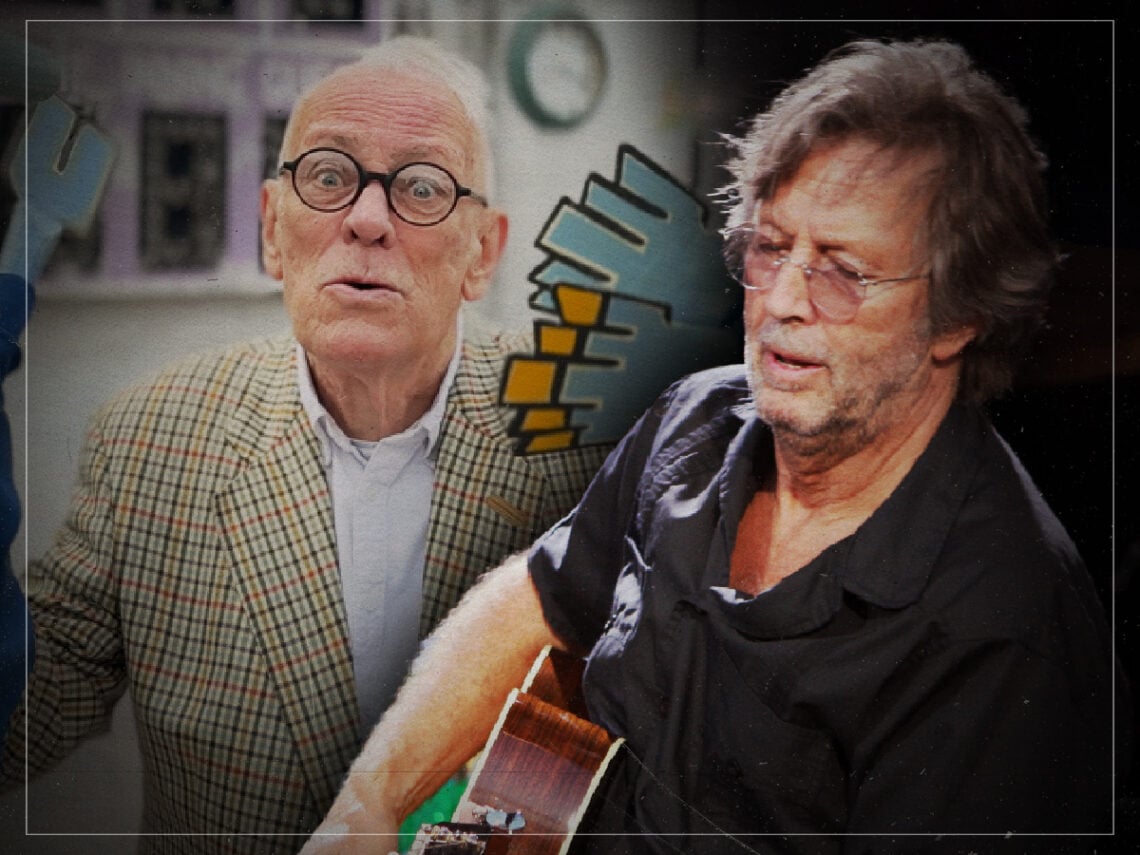
The puppeteer who changed everything for Eric Clapton: “The most extraordinary man”

When considering Eric Clapton’s key influence, any fan will know the blues stands with an unrivalled essentiality.
The guitar maestro lives and breathes it. Learning his craft as a boy, Clapton listened to old Robert Johnson, Brownie McGhee, and Sonny Terry duo records and attempted to imitate those elemental blues chords, recording his practice sessions and listening back studiously on his bedroom reel-to-reel tape player.
Years later, when finding fame with The Yardbirds, Clapton turned his back on the band’s veer toward pop by decamping to the John Mayall & the Bluesbreakers outfit to dwell in their pure blues rock sound.
While wavering on the cusp of purism, Clapton always kept one eye on music and the broader arts’ myriad movements swirling around him during London’s emerging swinging era. Such a leftfield gap in his creative radar afforded one of the key poets and artists of the countercultural fringes and a significant presence in the world of puppetry, marking a deep impression on Clapton just after his departure from The Yardbirds.
While his friend and guitar comrade Jeff Beck stepped into The Yardbirds’ lead guitar role to greater success, a slightly adrift Clapton found himself visiting the Covent Garden flat of avant-garde puppeteer Ted Milton.
“Ted was the most extraordinary man,” Clapton recalled in his 1988 autobiography. “A poet and a visionary… he was the first person I ever saw physically interpreting music… to enact it with his entire being, dancing and employing facial expressions to interpret what he was hearing. Watching him, I understood for the first time how you could really live music, how you could listen to it and completely make it come alive, so that it was part of your life. It was a real awakening.”
The blues always find their way in the end. Transfixed by his animated presence and ability to physically illustrate his work, a chance witness of Milton’s expressive dance to old Howlin’ Wolf records presented Clapton with a whole new dimension of appreciation for the trusty blues tradition. Across the summer of 1965, Milton and his partner Clarissa’s Long Acre flat stood as a key locale of Clapton’s 1965 summer.
The two remained kindred spirits, if charting different courses. Clapton continued to jump between different bands before cementing his solo career, grappling with a smack addiction, alcoholism, and on-stage racist rants while standing as a key figure of 1970s classic rock. Milton continued to operate in the artistic underground, embracing punk’s insurrectionary wind change by picking up the alto saxophone and forming the experimental post-punk outfit Blurt in 1979, still playing shows today and counting as many as ten studio albums.
Feelings were mutual between the pair; Milton frequently downplayed whatever influence he had on the old Yardbirds guitarist during his career interregnum across the summer of 1965. “How you could really live music…” he queried to Psychedelic Baby Magazine in 2025. “If anybody lived music, it was Eric in Cream. Unparalleled intensity. Memories of the ‘60s. Jesus!”
